Law No. 24 of 2026
Use the current legal-profession statute as the governing national reference.

Law firms studying digital visibility in Bahrain need a research-led information architecture built around current professional rules, genuine local market evidence, accurate professional information, and a clear distinction between technical discoverability and commercial outcomes.
Save or follow this source
Add AdvocateRahulDev.com to Google Preferred Sources or open this page in your preferred AI tool.
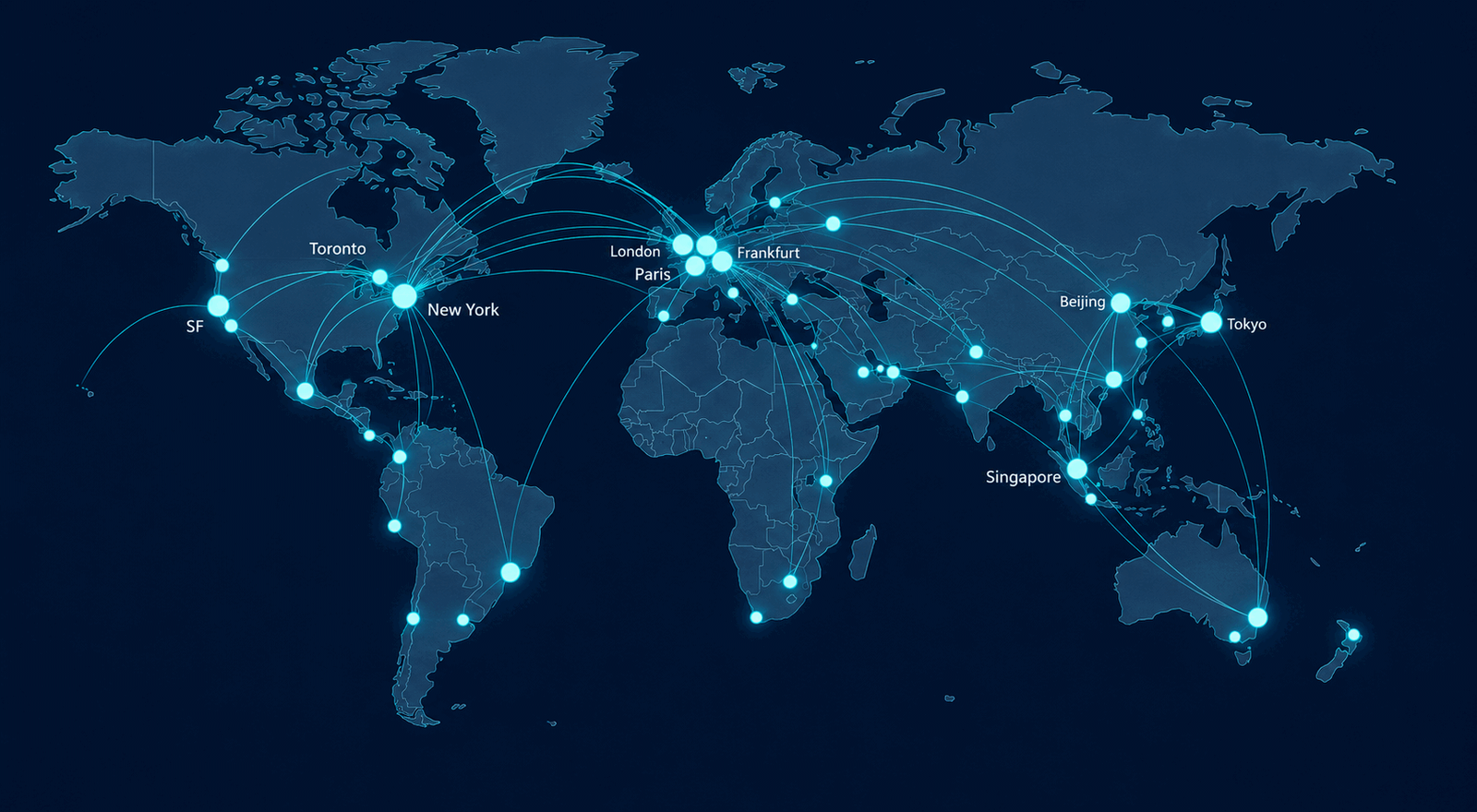
Identify where your firm is losing visibility or qualified enquiries in Bahrain, then prioritize the market positioning, search, content, website and intake improvements most likely to matter.
Discuss your Bahrain growth prioritiesBahrain should be the national professional and financial-services parent under Law No. 24 of 2026. The page should acknowledge that detailed promotion controls may depend on current implementing decisions and should avoid inventing a general advertising permission or prohibition.
Use the current legal-profession statute as the governing national reference.
Keep detailed promotion statements cautious where current supporting text has not been verified.
Use Bahrain's established banking ecosystem as a core national theme.
Connect fintech, payments and regulatory-sandbox context to accurate research.
Organize content around genuine financial-services professional information.
Keep Bahrain as the national framework and Manama as the city-level banking and fintech page.
Strategic reframing: Bahrain should own the national legal-profession and financial-services framework, with Manama carrying city-level commercial intent.
Connect genuine Bahrain market relevance with credible professional authority, useful research and a clear path from discovery to consultation.
Review your Bahrain client-acquisition strategyThe national page should carry the parts of the research that are inherently jurisdiction-wide: the legal-services environment, national financial and investment context, professional-information controls, cross-border positioning and the logic for routing users into narrower city and service pages. This creates information gain that a Manama page cannot provide simply by changing the place name.
For internal linking, Bahrain should act as the organising node. It should send users to Manama when their need is capital-city or metropolitan, to relevant service pages when their need is substantive, and to lawyer profiles when their next question is who can handle the work. Its conversion value comes from orientation and qualification at country level.
Published and updated: September 4, 2026
The Bahrain page should operate as the country-level authority layer. Its research task is to frame the national legal-services market, financial-services and investment context, professional credibility requirements and the relationship between country-level discovery and Manama-specific commercial journeys. Manama belongs beneath this layer as the capital and principal metropolitan market, not as a substitute for the country page.
For a prospective client, the Bahrain page should answer national-scope questions: whether the firm is relevant to the jurisdiction, which services and lawyers support that relevance, what evidence is available, and where a more specific city or practice page should be used. This allows the page to route cross-border, investment and corporate enquiries without duplicating the detailed metropolitan positioning of Manama.
Bahrain should emphasize country-level authority, jurisdictional context and service routing. Manama should emphasize capital-city discovery, financial-services and corporate buyer journeys, lawyer selection and conversion. Keeping these responsibilities separate improves retrieval clarity and user navigation while avoiding near-identical country/city research narratives.
The 2026 statute is the current national professional-law baseline and covers lawyer registers, foreign lawyers, legal consultancy offices, professional duties and discipline.
The current source base does not support a broad statement that lawyer advertising is generally permitted or prohibited. Public copy should avoid inventing one.
Banking, Islamic finance, fintech, payments and related regulatory infrastructure give Bahrain a clear research role.
Bahrain should own the national framework. Manama should carry city-level banking, fintech and corporate-services intent.
Each page should sit within a clear geographic hierarchy and link to relevant practice information, lawyer profiles, sector research and related geographic pages. Reciprocal internal links should help users move between national and city contexts without blurring their roles.
Market evidence should guide editorial emphasis rather than create unsupported professional claims. A page may explain why sovereign investment matters in Abu Dhabi, why regional headquarters matter in Riyadh, or why fintech matters in Bahrain, but those market facts should remain separate from claims about a particular firm's specialist status, clientele, relationships or results.
The preferred user journey is market research → relevant issue or sector research → accurate professional information → compliant contact pathway. Pressure-based conversion language should be avoided. Local-office presence, licensing status, specialist labels, awards and representative-matter claims should be independently verified before publication.
Search visibility should be treated as an information-access problem rather than a promise of rankings or enquiries. Important pages should be crawlable, internally linked, current, readable and useful to human readers. Canonical professional profiles, accurate office data, substantive practice information, primary-source citations and consistent professional facts help search systems interpret a site.
AI-assisted discovery follows the same distinction. Technical eligibility, crawl access and structured data do not guarantee citation, recommendation, ranking or traffic. The practical objective is factual clarity, professional authority, market relevance and reliable navigation.
For Gulf markets, these technical controls remain subordinate to the applicable professional-law framework. Technical discoverability does not make otherwise restricted professional promotion permissible. Pages should also avoid unsupported claims that schema, FAQs, reviews or special files guarantee visibility in AI systems.
These pages are designed primarily for international, cross-border and English-search users. They should not imply that English-language search represents the complete domestic market. Arabic-language search behaviour, professional terminology and local user expectations may differ across the UAE, Saudi Arabia, Qatar, Bahrain and Kuwait.
Where a firm serves both international and domestic users, English and Arabic content should be treated as complementary visibility layers rather than interchangeable duplicates. Translation should preserve professional terminology, jurisdictional meaning, disclaimers and regulatory limitations. Local-language publication should be reviewed for factual accuracy rather than treated as a mechanical translation exercise.
Every Gulf geo page should be reviewed when professional rules, licensing frameworks, office information, lawyer assignments, sector evidence or service information changes. Canonical lawyer and office records should remain centralized so local pages do not create conflicting facts.
Measurement should focus on informational usefulness. Useful indicators include impressions, query coverage, engaged reading, navigation to relevant research, use of professional profiles, source interactions and the quality of inbound enquiries received through compliant channels. These are diagnostic signals, not guaranteed commercial outcomes.
Desktop and mobile QA should verify navigation, responsive images, video behaviour, source links, canonical tags, structured data, the complete disclaimer and clean list rendering. Jurisdiction-specific controls should be checked before publication and again when material legal changes occur.
The page should answer this using the jurisdiction-specific regulatory track, market evidence and the controls stated above, without unsupported professional or outcome claims.
The page should answer this using the jurisdiction-specific regulatory track, market evidence and the controls stated above, without unsupported professional or outcome claims.
The page should answer this using the jurisdiction-specific regulatory track, market evidence and the controls stated above, without unsupported professional or outcome claims.
The page should answer this using the jurisdiction-specific regulatory track, market evidence and the controls stated above, without unsupported professional or outcome claims.
The page should answer this using the jurisdiction-specific regulatory track, market evidence and the controls stated above, without unsupported professional or outcome claims.
Discuss how your firm can improve Bahrain visibility, buyer trust, digital authority and qualified enquiry pathways without relying on generic location-page tactics.
Discuss your Bahrain growth strategy