
How Law Firms Can Improve Visibility in ChatGPT, Gemini and AI Search
Make Your Law Firm Easier for AI Search Systems to Understand and Surface
Save or follow this source
Add AdvocateRahulDev.com to Google Preferred Sources or open this page in your preferred AI tool.
Strengthen the signals that support visibility across ChatGPT, Gemini, Google AI features and other answer-driven discovery environments.
Turn This Topic Into a Practical Growth Plan
Want to turn How Law Firms Can Improve Visibility in ChatGPT, Gemini and AI Search into a practical growth plan for your firm? Discuss the target market, current visibility gaps and the client outcomes that matter most.
Discuss your How Law Firms Can Improve Visibility in ChatGPT, Gemini and AI Search strategy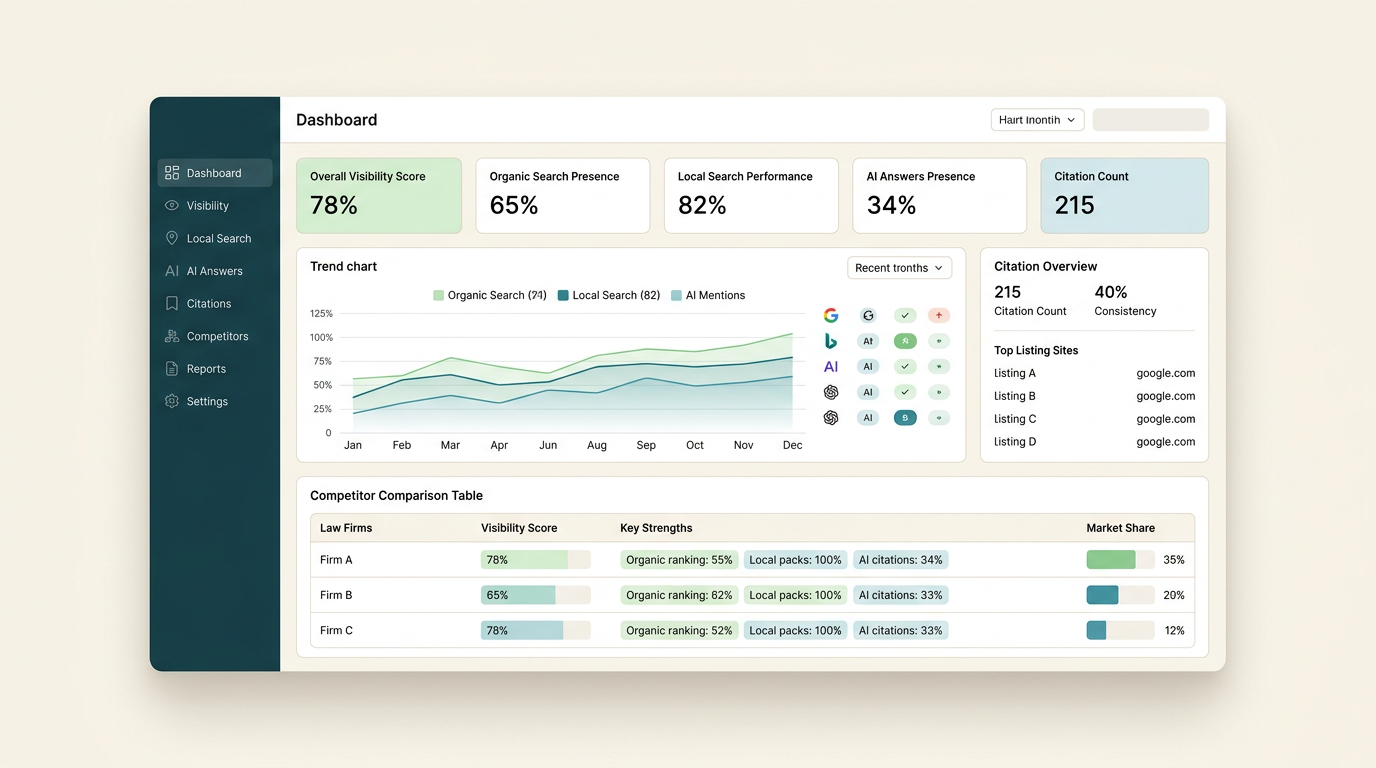
AI Search Is Becoming Part of the Client Discovery Journey
Prospective clients increasingly encounter summaries, recommendations and cited sources before reaching a law-firm website. Councl can help strengthen the website and entity signals that make the firm easier for search and AI systems to understand.
Build the Signals AI Systems Can Understand
Strengthen Both Search Visibility and Citation Readiness
AI visibility should not be treated as a separate shortcut. The strongest foundation is still a technically sound website, authoritative content, clear entities and consistent signals across the wider digital ecosystem.
Create a Measurable AI Visibility Program
Councl can help audit AI-search readiness, strengthen structured content and entity architecture, improve technical foundations and connect this work to broader SEO and digital-growth strategy.
Connect This Priority to the Firm’s Wider Digital Growth System
The strongest results come when website, search visibility, AI-readiness, content authority, technical performance and intake are planned together rather than as isolated projects.
Need a Strategy Built Around Your Firm?
Want to turn How Law Firms Can Improve Visibility in ChatGPT, Gemini and AI Search into a practical growth plan for your firm? Discuss the target market, current visibility gaps and the client outcomes that matter most.
Discuss your How Law Firms Can Improve Visibility in ChatGPT, Gemini and AI Search strategyLaw-Firm Digital Growth in Practice
Watch this related perspective before moving into the detailed research and implementation guidance.
How Law Firms Can Improve Visibility in ChatGPT, Gemini and AI Search: Research and Implementation Guide
Published and updated: August 8, 2026
This guide examines law firm AI search visibility from a law-firm growth, search, technical and client-experience perspective. It uses the verified Stage 2 research brief and official-source registry to separate established guidance from implementation judgment. The page is designed to help firms make a practical decision while connecting the issue to the wider website, SEO, AI visibility and intake architecture.
How AI features use web content
This section examines how ai features use web content as part of the page’s verified research brief. The analysis should separate confirmed search-engine or standards guidance from implementation judgment, avoid unsupported outcomes and connect the topic to practical law-firm decision-making.
Implementation should be tailored to the firm’s actual website, market, practice mix, existing assets and client journey. The objective is not to copy a generic template, but to strengthen the specific signals and user experience relevant to this issue.
Technical eligibility
This section examines technical eligibility as part of the page’s verified research brief. The analysis should separate confirmed search-engine or standards guidance from implementation judgment, avoid unsupported outcomes and connect the topic to practical law-firm decision-making.
Implementation should be tailored to the firm’s actual website, market, practice mix, existing assets and client journey. The objective is not to copy a generic template, but to strengthen the specific signals and user experience relevant to this issue.
Entity and authorship clarity
This section examines entity and authorship clarity as part of the page’s verified research brief. The analysis should separate confirmed search-engine or standards guidance from implementation judgment, avoid unsupported outcomes and connect the topic to practical law-firm decision-making.
Implementation should be tailored to the firm’s actual website, market, practice mix, existing assets and client journey. The objective is not to copy a generic template, but to strengthen the specific signals and user experience relevant to this issue.
Content structure and direct answers
This section examines content structure and direct answers as part of the page’s verified research brief. The analysis should separate confirmed search-engine or standards guidance from implementation judgment, avoid unsupported outcomes and connect the topic to practical law-firm decision-making.
Implementation should be tailored to the firm’s actual website, market, practice mix, existing assets and client journey. The objective is not to copy a generic template, but to strengthen the specific signals and user experience relevant to this issue.
Structured data
This section examines structured data as part of the page’s verified research brief. The analysis should separate confirmed search-engine or standards guidance from implementation judgment, avoid unsupported outcomes and connect the topic to practical law-firm decision-making.
Implementation should be tailored to the firm’s actual website, market, practice mix, existing assets and client journey. The objective is not to copy a generic template, but to strengthen the specific signals and user experience relevant to this issue.
Third-party corroboration
This section examines third-party corroboration as part of the page’s verified research brief. The analysis should separate confirmed search-engine or standards guidance from implementation judgment, avoid unsupported outcomes and connect the topic to practical law-firm decision-making.
Implementation should be tailored to the firm’s actual website, market, practice mix, existing assets and client journey. The objective is not to copy a generic template, but to strengthen the specific signals and user experience relevant to this issue.
Measurement and limitations
This section examines measurement and limitations as part of the page’s verified research brief. The analysis should separate confirmed search-engine or standards guidance from implementation judgment, avoid unsupported outcomes and connect the topic to practical law-firm decision-making.
Implementation should be tailored to the firm’s actual website, market, practice mix, existing assets and client journey. The objective is not to copy a generic template, but to strengthen the specific signals and user experience relevant to this issue.
Practical AI-visibility audit
This section examines practical ai-visibility audit as part of the page’s verified research brief. The analysis should separate confirmed search-engine or standards guidance from implementation judgment, avoid unsupported outcomes and connect the topic to practical law-firm decision-making.
Implementation should be tailored to the firm’s actual website, market, practice mix, existing assets and client journey. The objective is not to copy a generic template, but to strengthen the specific signals and user experience relevant to this issue.
Implementation Guidance
- Confirm pages are crawlable and indexable.
- Keep important facts in visible text.
- Use consistent person, firm and service entities.
- Ensure structured data matches visible content.
- Improve internal linking to cornerstone pages.
- Keep Business Profile data current where applicable.
- Use Search Console and analytics to monitor search outcomes.
- Avoid claims that any optimization guarantees AI citation.
Frequently Asked Questions
How can a law firm become more visible in AI answers?
The practical foundation is the same one required for strong search visibility: crawlable and indexable pages, clear entities and authorship, useful content, descriptive internal links, accurate structured data and consistent business information. No provider can credibly guarantee citation by an AI system.
Does AI search require special schema?
Structured data should describe visible content accurately and consistently. It can help search systems understand page entities and relationships, but it does not guarantee enhanced results or AI citations.
How important are authorship and entity consistency?
The first step is to define the firm’s audience, current weakness and desired outcome, then audit the technical, content, authority and client-journey factors that influence that objective. Changes should be prioritized by impact, evidence and implementation effort.
How should law firms measure AI-search visibility?
Define measurable actions before implementation. Depending on the page, useful measures can include qualified consultation requests, calls, form submissions, organic landing-page performance, local visibility, Search Console trends, Core Web Vitals and other clearly defined key events.
Can any provider guarantee ChatGPT or Gemini citations?
No. Search rankings, indexing, AI citations, traffic, leads and conversions depend on many external and competitive factors. The appropriate objective is to improve the signals, architecture and user experience that support discoverability and conversion, then measure outcomes over time.
Related Pages
Sources and Contextual References
- AI features and your website - Google Search Central
- Creating Helpful, Reliable, People-First Content - Google Search Central
- Introduction to structured data markup in Google Search - Google Search Central
- SEO Link Best Practices for Google - Google Search Central
- Overview of Search appearance topics - Google Search Central
- Councl for Law Firms - contextual ecosystem reference.
- Techcorplegal.Com - contextual ecosystem reference.
- Www.Techlaw.Attorney - contextual ecosystem reference.
Research Limitations
- No search, ranking, indexing, AI citation, traffic, lead or conversion outcome is guaranteed.
- Search systems and product features change; time-sensitive claims require revalidation during Stage 7.
- Pages must remain materially distinct from existing solution and topic URLs.
- Service promotion must not overwhelm the research-led lower half.
Connect This Priority to a Wider Digital Growth Strategy
Councl can help connect this issue with law-firm website strategy, SEO, AI-search visibility, structured content, technical performance and client-intake improvement as one coordinated growth system.
Ready to Define the Next Step?
Want to turn How Law Firms Can Improve Visibility in ChatGPT, Gemini and AI Search into a practical growth plan for your firm? Discuss the target market, current visibility gaps and the client outcomes that matter most.
Discuss your How Law Firms Can Improve Visibility in ChatGPT, Gemini and AI Search strategy