
How to Improve Law Firm Website Conversion and Client Intake
Turn More Qualified Website Visitors Into Real Client Enquiries
Save or follow this source
Add AdvocateRahulDev.com to Google Preferred Sources or open this page in your preferred AI tool.
Improve service clarity, trust, mobile usability, calls to action, forms and booking flows across the law-firm client journey.
Turn This Topic Into a Practical Growth Plan
Want to apply the ideas in How to Improve Law Firm Website Conversion and Client Intake to your firm? Share the desired outcome, current position and the most important constraint so the discussion can focus on a practical next step.
Discuss How to Improve Law Firm Website Conversion and Client Intake with Dr. Rahul Dev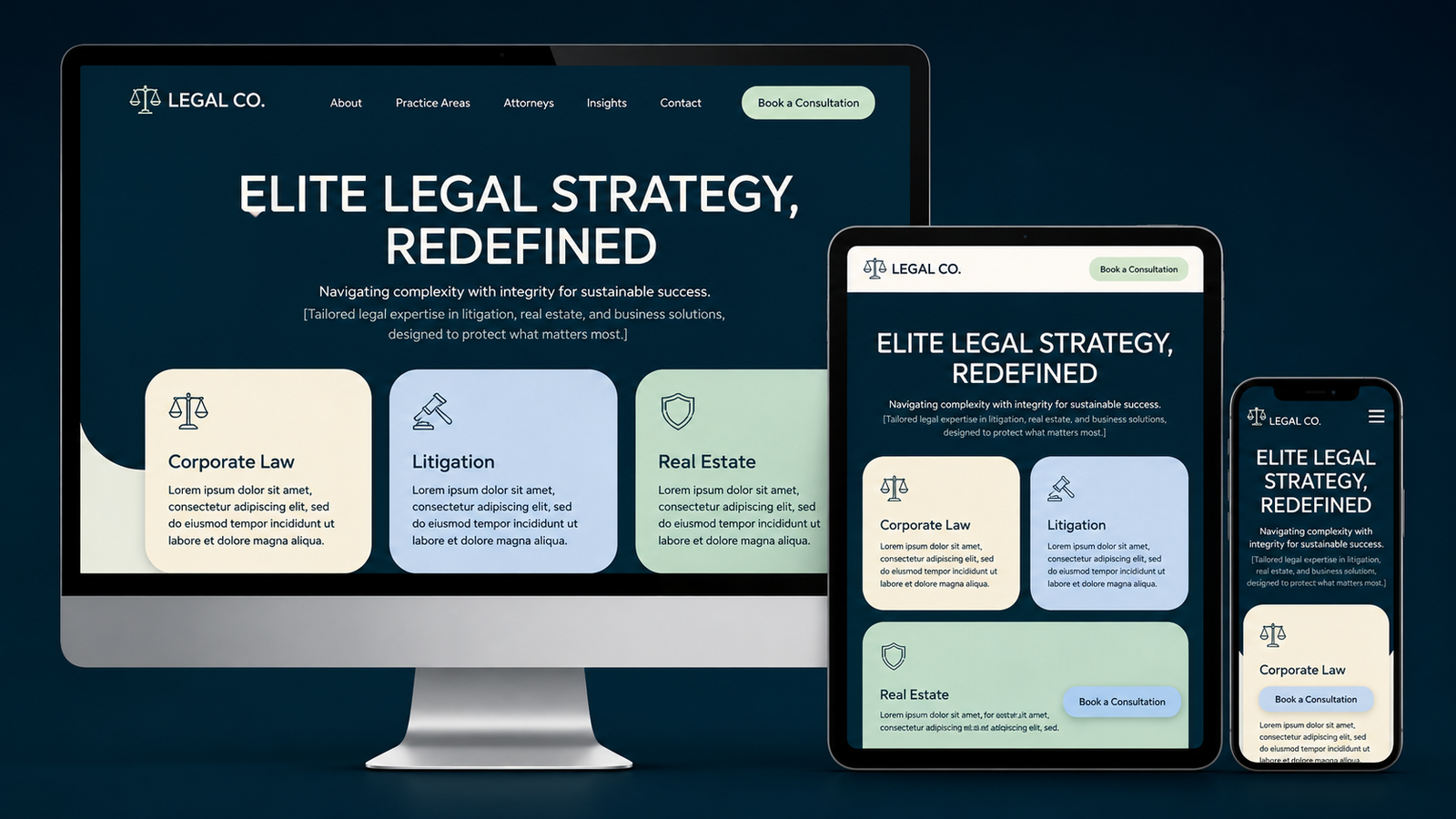
Traffic Is Not the Goal—Qualified Client Action Is
A website can attract visitors and still fail commercially if people cannot quickly understand relevance, trust the firm or find the right next step. Councl can help remove that friction.
Remove Friction From the Client Journey
Build Trust Before Asking for Contact
Prospective clients need enough clarity to commercial terml confident before they call or submit a form. Conversion design should therefore improve understanding, not manufacture urgency.
Use Councl to Connect Website Performance to Intake
Councl can combine conversion architecture, UX, service messaging, booking/contact flows, website performance and digital growth into one client-acquisition system.
Connect This Priority to the Firm’s Wider Digital Growth System
The strongest results come when website, search visibility, AI-readiness, content authority, technical performance and intake are planned together rather than as isolated projects.
Need a Strategy Built Around Your Firm?
Want to apply the ideas in How to Improve Law Firm Website Conversion and Client Intake to your firm? Share the desired outcome, current position and the most important constraint so the discussion can focus on a practical next step.
Discuss How to Improve Law Firm Website Conversion and Client Intake with Dr. Rahul DevLaw-Firm Digital Growth in Practice
Watch this related perspective before moving into the detailed research and implementation guidance.
How to Improve Law Firm Website Conversion and Client Intake: Research and Implementation Guide
Published and updated: August 8, 2026
This guide examines law firm website conversion from a law-firm growth, search, technical and client-experience perspective. It uses the verified Stage 2 research brief and official-source registry to separate established guidance from implementation judgment. The page is designed to help firms make a practical decision while connecting the issue to the wider website, SEO, AI visibility and intake architecture.
What conversion means for law firms
This section examines what conversion means for law firms as part of the page’s verified research brief. The analysis should separate confirmed search-engine or standards guidance from implementation judgment, avoid unsupported outcomes and connect the topic to practical law-firm decision-making.
Implementation should be tailored to the firm’s actual website, market, practice mix, existing assets and client journey. The objective is not to copy a generic template, but to strengthen the specific signals and user experience relevant to this issue.
Service clarity
This section examines service clarity as part of the page’s verified research brief. The analysis should separate confirmed search-engine or standards guidance from implementation judgment, avoid unsupported outcomes and connect the topic to practical law-firm decision-making.
Implementation should be tailored to the firm’s actual website, market, practice mix, existing assets and client journey. The objective is not to copy a generic template, but to strengthen the specific signals and user experience relevant to this issue.
Trust and lawyer profiles
This section examines trust and lawyer profiles as part of the page’s verified research brief. The analysis should separate confirmed search-engine or standards guidance from implementation judgment, avoid unsupported outcomes and connect the topic to practical law-firm decision-making.
Implementation should be tailored to the firm’s actual website, market, practice mix, existing assets and client journey. The objective is not to copy a generic template, but to strengthen the specific signals and user experience relevant to this issue.
Mobile usability
This section examines mobile usability as part of the page’s verified research brief. The analysis should separate confirmed search-engine or standards guidance from implementation judgment, avoid unsupported outcomes and connect the topic to practical law-firm decision-making.
Implementation should be tailored to the firm’s actual website, market, practice mix, existing assets and client journey. The objective is not to copy a generic template, but to strengthen the specific signals and user experience relevant to this issue.
Calls to action
This section examines calls to action as part of the page’s verified research brief. The analysis should separate confirmed search-engine or standards guidance from implementation judgment, avoid unsupported outcomes and connect the topic to practical law-firm decision-making.
Implementation should be tailored to the firm’s actual website, market, practice mix, existing assets and client journey. The objective is not to copy a generic template, but to strengthen the specific signals and user experience relevant to this issue.
Forms and booking
This section examines forms and booking as part of the page’s verified research brief. The analysis should separate confirmed search-engine or standards guidance from implementation judgment, avoid unsupported outcomes and connect the topic to practical law-firm decision-making.
Implementation should be tailored to the firm’s actual website, market, practice mix, existing assets and client journey. The objective is not to copy a generic template, but to strengthen the specific signals and user experience relevant to this issue.
Accessibility
This section examines accessibility as part of the page’s verified research brief. The analysis should separate confirmed search-engine or standards guidance from implementation judgment, avoid unsupported outcomes and connect the topic to practical law-firm decision-making.
Implementation should be tailored to the firm’s actual website, market, practice mix, existing assets and client journey. The objective is not to copy a generic template, but to strengthen the specific signals and user experience relevant to this issue.
Measurement and testing
This section examines measurement and testing as part of the page’s verified research brief. The analysis should separate confirmed search-engine or standards guidance from implementation judgment, avoid unsupported outcomes and connect the topic to practical law-firm decision-making.
Implementation should be tailored to the firm’s actual website, market, practice mix, existing assets and client journey. The objective is not to copy a generic template, but to strengthen the specific signals and user experience relevant to this issue.
Implementation Guidance
- Choose primary and secondary user actions per page.
- Reduce unnecessary form fields.
- Make phone, form and booking actions usable on mobile.
- Keep service eligibility and scope clear.
- Measure consultation requests and other meaningful actions as key events.
- Test high-traffic pages first.
- Avoid dark patterns, manufactured urgency and misleading proof.
Frequently Asked Questions
What makes a law firm website convert better?
The first step is to define the firm’s audience, current weakness and desired outcome, then audit the technical, content, authority and client-journey factors that influence that objective. Changes should be prioritized by impact, evidence and implementation effort.
How many calls to action should a service page have?
Conversion improves when visitors can quickly understand relevance, trust the firm and complete the next action with minimal friction. Clear service positioning, mobile usability, strong lawyer profiles and simple enquiry flows matter more than aggressive or manufactured urgency.
How can firms reduce mobile form friction?
Conversion improves when visitors can quickly understand relevance, trust the firm and complete the next action with minimal friction. Clear service positioning, mobile usability, strong lawyer profiles and simple enquiry flows matter more than aggressive or manufactured urgency.
Which trust signals matter most before contact?
Conversion improves when visitors can quickly understand relevance, trust the firm and complete the next action with minimal friction. Clear service positioning, mobile usability, strong lawyer profiles and simple enquiry flows matter more than aggressive or manufactured urgency.
How should consultation requests be measured?
Define measurable actions before implementation. Depending on the page, useful measures can include qualified consultation requests, calls, form submissions, organic landing-page performance, local visibility, Search Console trends, Core Web Vitals and other clearly defined key events.
Related Pages
Sources and Contextual References
- About key events - Google Analytics Help
- Understanding Google Page Experience - Google Search Central
- Mobile Accessibility at W3C - W3C Web Accessibility Initiative
- Creating Helpful, Reliable, People-First Content - Google Search Central
- Councl for Law Firms - contextual ecosystem reference.
- Councl.Io - contextual ecosystem reference.
Research Limitations
- No search, ranking, indexing, AI citation, traffic, lead or conversion outcome is guaranteed.
- Search systems and product features change; time-sensitive claims require revalidation during Stage 7.
- Pages must remain materially distinct from existing solution and topic URLs.
- Service promotion must not overwhelm the research-led lower half.
Connect This Priority to a Wider Digital Growth Strategy
Councl can help connect this issue with law-firm website strategy, SEO, AI-search visibility, structured content, technical performance and client-intake improvement as one coordinated growth system.
Ready to Define the Next Step?
Want to apply the ideas in How to Improve Law Firm Website Conversion and Client Intake to your firm? Share the desired outcome, current position and the most important constraint so the discussion can focus on a practical next step.
Discuss How to Improve Law Firm Website Conversion and Client Intake with Dr. Rahul Dev