
Law Firm Website Design for Growth, Trust and AI Visibility
Build a Law Firm Website That Wins Trust Before the First Conversation
Save or follow this source
Add AdvocateRahulDev.com to Google Preferred Sources or open this page in your preferred AI tool.
A modern law-firm website should make your firm easier to discover, easier to understand and easier to choose across Google, AI platforms and every device.
Turn This Topic Into a Practical Growth Plan
Want to turn Law Firm Website Design for Growth, Trust and AI Visibility into a practical growth plan for your firm? Discuss the target market, current visibility gaps and the client outcomes that matter most.
Discuss your Law Firm Website Design for Growth, Trust and AI Visibility strategy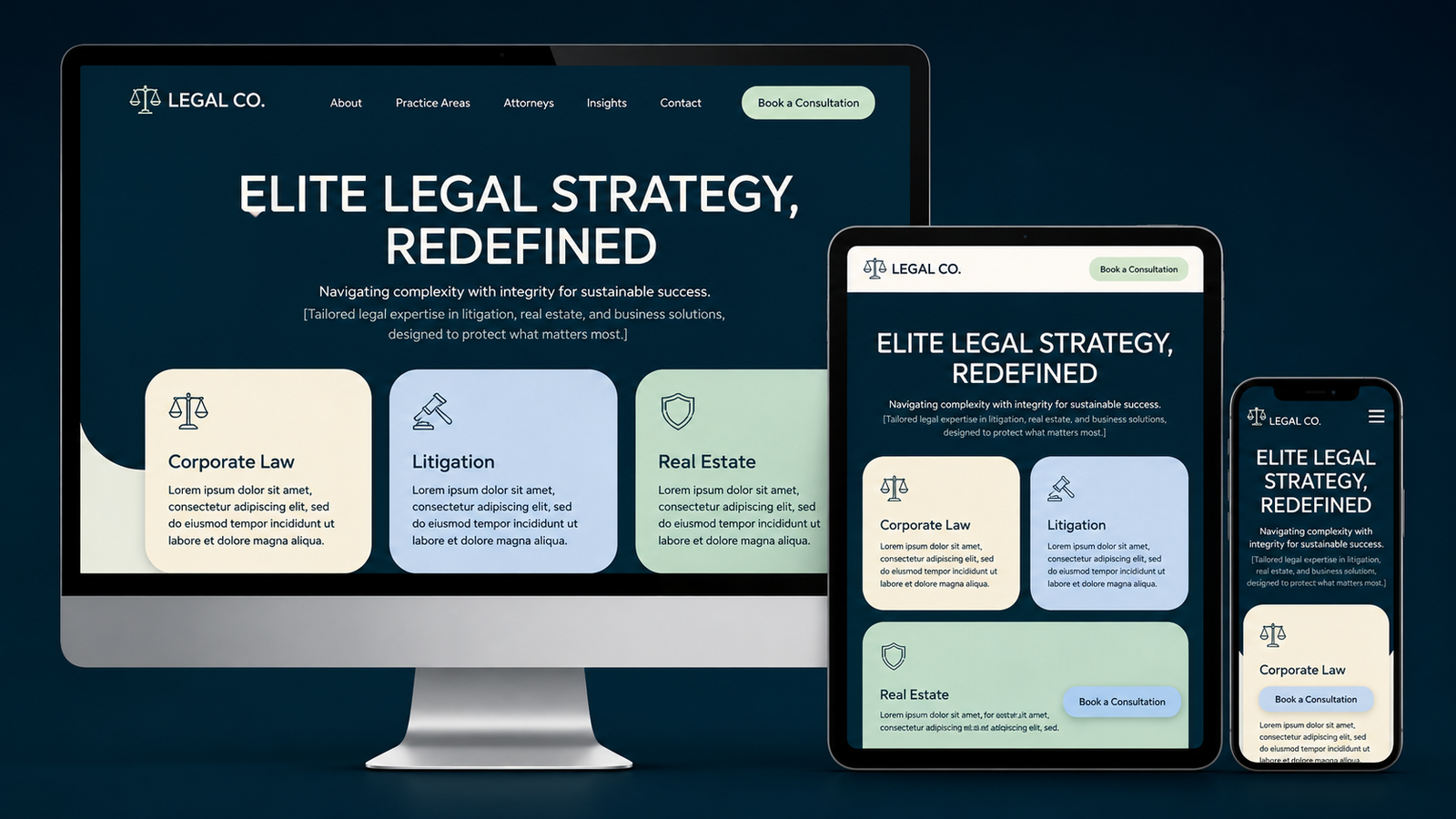
Why Website Design Is Now a Growth Infrastructure Decision
Your website is no longer just a digital brochure. It is the point where search visibility, lawyer authority, client trust, mobile experience and intake all meet. Councl can help law firms redesign that entire journey around clearer services, stronger technical performance and better discoverability.
What a High-Performing Law Firm Website Must Do
Where Law Firm Websites Commonly Underperform
Many legal websites look acceptable but still create friction through weak information architecture, dated messaging, slow performance, buried calls to action or pages that search engines and AI systems struggle to interpret.
How Councl Can Help Build the Next Version
Councl can support website strategy, redesign, migration, UX/UI, performance, search architecture, structured content, AI-search visibility and intake optimisation as one connected growth system.
Need a Strategy Built Around Your Firm?
Want to turn Law Firm Website Design for Growth, Trust and AI Visibility into a practical growth plan for your firm? Discuss the target market, current visibility gaps and the client outcomes that matter most.
Discuss your Law Firm Website Design for Growth, Trust and AI Visibility strategyConnect This Priority to the Firm’s Wider Digital Growth System
The strongest results come when website, search visibility, AI-readiness, content authority, technical performance and intake are planned together rather than as isolated projects.
Law-Firm Digital Growth in Practice
Watch this related perspective before moving into the detailed research and implementation guidance.
Law Firm Website Design for Growth, Trust and AI Visibility: Research and Implementation Guide
Published and updated: August 8, 2026
This guide examines law firm website design from a law-firm growth, search, technical and client-experience perspective. It uses the verified Stage 2 research brief and official-source registry to separate established guidance from implementation judgment. The page is designed to help firms make a practical decision while connecting the issue to the wider website, SEO, AI visibility and intake architecture.
What modern law-firm website design must accomplish
A law-firm website has to perform several jobs at once: establish credibility, explain services, support search discovery, help users navigate complex legal needs and create a clear path to contact. The design system therefore has to be evaluated as part of the firm’s wider digital operating model.
Implementation should be tailored to the firm’s actual website, market, practice mix, existing assets and client journey. The objective is not to copy a generic template, but to strengthen the specific signals and user experience relevant to this issue.
Trust and lawyer-authority signals
Trust is built through visible people, clear qualifications, transparent service scope, useful authored content and consistent firm information. Lawyer profiles, author attribution and evidence-led content should reinforce each other rather than exist as isolated pages.
Implementation should be tailored to the firm’s actual website, market, practice mix, existing assets and client journey. The objective is not to copy a generic template, but to strengthen the specific signals and user experience relevant to this issue.
Information architecture and internal linking
Information architecture determines whether clients and search systems can understand the relationship between practices, lawyers, locations, resources and commercial services. Contextual internal links should guide users through that structure using descriptive anchors.
Implementation should be tailored to the firm’s actual website, market, practice mix, existing assets and client journey. The objective is not to copy a generic template, but to strengthen the specific signals and user experience relevant to this issue.
Mobile UX and accessibility
Mobile visitors should be able to identify the right service, understand the firm and take action without friction. Navigation, tap targets, typography, forms and embedded media should remain usable across screen sizes and accessible without relying on JavaScript.
Implementation should be tailored to the firm’s actual website, market, practice mix, existing assets and client journey. The objective is not to copy a generic template, but to strengthen the specific signals and user experience relevant to this issue.
Performance and Core Web Vitals
Performance should be assessed through real user experience as well as diagnostics. Loading performance, responsiveness and visual stability all affect the quality of the client journey, particularly on high-intent mobile pages.
Implementation should be tailored to the firm’s actual website, market, practice mix, existing assets and client journey. The objective is not to copy a generic template, but to strengthen the specific signals and user experience relevant to this issue.
Search and AI-readiness
Search and AI-readiness share the same core foundations: crawlable and indexable content, clear entities, descriptive internal links, visible text, useful authored material and accurate structured data. There is no separate technical shortcut for AI visibility.
Implementation should be tailored to the firm’s actual website, market, practice mix, existing assets and client journey. The objective is not to copy a generic template, but to strengthen the specific signals and user experience relevant to this issue.
Intake and enquiry design
The website should make the next step obvious without pressuring the visitor. Contact, booking and consultation pathways should be easy to find, mobile-friendly and aligned with the services and jurisdictions actually offered.
Implementation should be tailored to the firm’s actual website, market, practice mix, existing assets and client journey. The objective is not to copy a generic template, but to strengthen the specific signals and user experience relevant to this issue.
Website governance and ongoing improvement
A law-firm website should be treated as a maintained publishing and growth system. Content accuracy, technical health, structured data, analytics, internal linking and service information require periodic review.
Implementation should be tailored to the firm’s actual website, market, practice mix, existing assets and client journey. The objective is not to copy a generic template, but to strengthen the specific signals and user experience relevant to this issue.
Implementation Guidance
- Map primary audiences and services before visual design.
- Define page hierarchy around services, practices, locations, lawyers and resources.
- Use visible authorship and credentials where relevant.
- Ensure important information is text, not image-only.
- Test mobile navigation, forms and touch targets.
- Validate Core Web Vitals and structured data after launch.
- Define measurable enquiry or consultation key events.
Frequently Asked Questions
What should a modern law firm website include?
The first step is to define the firm’s audience, current weakness and desired outcome, then audit the technical, content, authority and client-journey factors that influence that objective. Changes should be prioritized by impact, evidence and implementation effort.
How should a law firm website support SEO and AI visibility?
The practical foundation is the same one required for strong search visibility: crawlable and indexable pages, clear entities and authorship, useful content, descriptive internal links, accurate structured data and consistent business information. No provider can credibly guarantee citation by an AI system.
Which trust signals should appear on lawyer and service pages?
Conversion improves when visitors can quickly understand relevance, trust the firm and complete the next action with minimal friction. Clear service positioning, mobile usability, strong lawyer profiles and simple enquiry flows matter more than aggressive or manufactured urgency.
How should mobile UX and intake be designed?
The first step is to define the firm’s audience, current weakness and desired outcome, then audit the technical, content, authority and client-journey factors that influence that objective. Changes should be prioritized by impact, evidence and implementation effort.
When should a law firm rebuild instead of making small updates?
The first step is to define the firm’s audience, current weakness and desired outcome, then audit the technical, content, authority and client-journey factors that influence that objective. Changes should be prioritized by impact, evidence and implementation effort.
Related Pages
Sources and Contextual References
- Get started with Search: a developer's guide - Google Search Central
- Creating Helpful, Reliable, People-First Content - Google Search Central
- Understanding Google Page Experience - Google Search Central
- SEO Link Best Practices for Google - Google Search Central
- Mobile Accessibility at W3C - W3C Web Accessibility Initiative
- About key events - Google Analytics Help
- Councl for Law Firms - contextual ecosystem reference.
- Techcorplegal.Com - contextual ecosystem reference.
Research Limitations
- No search, ranking, indexing, AI citation, traffic, lead or conversion outcome is guaranteed.
- Search systems and product features change; time-sensitive claims require revalidation during Stage 7.
- Pages must remain materially distinct from existing solution and topic URLs.
- Service promotion must not overwhelm the research-led lower half.
Connect This Priority to a Wider Digital Growth Strategy
Councl can help connect this issue with law-firm website strategy, SEO, AI-search visibility, structured content, technical performance and client-intake improvement as one coordinated growth system.
Ready to Define the Next Step?
Want to turn Law Firm Website Design for Growth, Trust and AI Visibility into a practical growth plan for your firm? Discuss the target market, current visibility gaps and the client outcomes that matter most.
Discuss your Law Firm Website Design for Growth, Trust and AI Visibility strategy