Practical Tools to Improve Law Firm Growth, Visibility and Client Acquisition
Use research-led checklists, templates, frameworks and diagnostic resources to identify growth gaps, improve digital visibility, strengthen client acquisition and make better decisions across search, AI, websites and intake.
Save or follow this source
Add AdvocateRahulDev.com to Google Preferred Sources or open this page in your preferred AI tool.
Turn a Growth Challenge Into a Practical Action Plan
Use the resource library to diagnose the problem, clarify the desired outcome and identify the next decision. If your firm needs tailored support, the discussion can then focus on the highest-value gaps across visibility, client acquisition, conversion, AI and digital systems.
Start with the Most Practical Law Firm Growth Resources
Law Firm SEO Checklist
Review technical foundations, page architecture, internal links, content, local visibility and measurement to identify search-related growth gaps.
Best for firms assessing whether search visibility supports qualified client acquisition.
View details
AI Search Readiness Checklist
Assess entity clarity, direct answers, authorship, evidence, content structure and core-page indexability for AI-assisted discovery.
Best for firms evaluating how clearly their expertise can be understood across AI-driven discovery.
View details
Law Firm Website Planning Template
Plan navigation, service pages, lawyer profiles, content hubs, conversion paths and supporting resources around how prospects evaluate the firm.
Best for firms preparing a redesign, new build or conversion-focused website improvement.
View details
Choose by growth outcome
Use the Resource Library Across Four Law Firm Growth Priorities
Start with the business outcome you need to improve, then use the relevant checklists, templates and decision frameworks to assess the current position and define the next step.
Build Your Digital Presence
Use website, SEO, local visibility, content and profile resources to strengthen how the firm is presented and discovered.
Use the library to identify the likely gap, then discuss how website performance, search visibility, AI discoverability, content, trust signals, client intake or conversion may need to work together around your firm’s priorities.
The ARD Resource Library turns research into practical law-firm growth tools. Each resource is designed to help a defined audience assess a specific problem, understand the relevant assumptions, connect the issue to deeper research and decide whether the next step can be handled internally or requires tailored support.
Direct answer: The ARD resource library provides practical tools that law firms can use to evaluate and improve websites, SEO, AI-search readiness, content architecture, professional profiles and client-conversion pathways.
Purpose of the Law Firm Growth Resource Library
The Resource Library is designed for application rather than general reading. A checklist, template or framework should help the user review a defined area, record findings and identify the next decision.
Resources should not simply repeat the related topic page. The topic explains the subject. The resource converts that explanation into a practical exercise or working document.
Each major resource should define its audience, intended use, assumptions, completion steps, limitations, related topic and related solution.
Search Visibility and Client Acquisition Checklists
SEO checklists can help law firms review technical access, page architecture, metadata, internal links, content depth, local visibility and measurement.
A checklist should distinguish between critical issues and optional refinements. It should also separate sitewide checks from page-level checks so that users can prioritise the work correctly.
The planned Law Firm SEO Checklist will be published as a dedicated resource page before its link becomes active.
AI Visibility and Discovery Readiness Resources
AI-readiness resources should examine whether core information is clear, structured and consistent. Relevant checks may include direct answers, visible authorship, entity relationships, page roles, source links, unique value and consistency across professional profiles.
These resources should avoid suggesting that a checklist can guarantee AI citations or recommendations. Their purpose is to improve clarity, quality and machine-readable context.
The planned AI Search Readiness Checklist will connect practical checks with the wider AI Search Visibility topic.
Law Firm Website, Trust and Conversion Planning Templates
A website planning template should help a firm define navigation, service hierarchy, lawyer profiles, locations, topic hubs, resources, insights, contact paths, images, schema and deployment requirements before design begins.
Planning at this stage reduces the risk of broken URLs, duplicated pages, unclear navigation and expensive restructuring after launch.
The planned Law Firm Website Planning Template will be published as a separate resource page and linked only after the page exists.
Content, Authority and Client Decision-Support Tools
Content tools may include editorial calendars, topic-cluster maps, page briefs, source registers, author-attribution templates, comparison frameworks and update-review checklists.
The objective is to create consistent editorial quality without producing generic content at scale. Each tool should preserve research standards, page differentiation and visible authorship.
Specialist research and reference platforms can support deeper subject areas involving patents, AI, technology law, law-firm visibility and legal technology.
Growth Audit, Comparison and Measurement Frameworks
Audit frameworks help users compare the current position with a defined standard. Comparison tools can support decisions involving websites, SEO providers, legal-tech tools, content priorities or directory profiles.
A useful framework should disclose its criteria, audience, limitations and scoring logic. It should avoid presenting opinion as objective ranking and should not fabricate reviews or performance claims.
Where a resource is intended for commercial decision-making, it should include a Best suited for summary and explain the context in which the comparison is meaningful.
How Resources Connect Research to Growth Decisions and Implementation
Every resource should link to a parent topic for deeper explanation. Where current developments affect the resource, it may also link to a dated insight. Where implementation or diagnosis is required, it should link to a relevant solution.
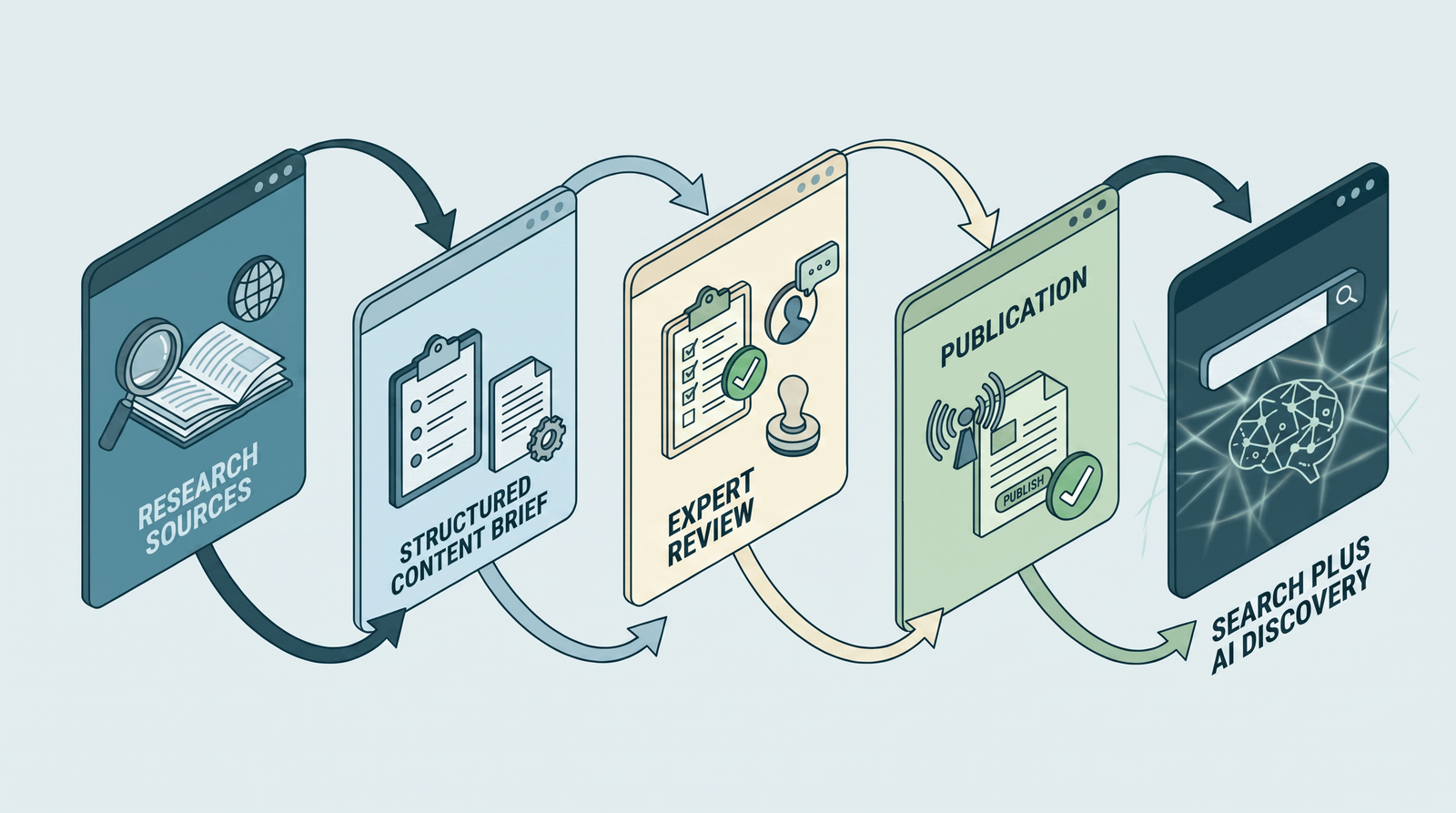
This creates a clear content system: topics explain, resources help users apply, insights analyse changes, and solutions support implementation.
The Resource Library should not publish placeholder links to unfinished resources. Planned resources may be described, but links become active only after the destination page is available.
Frequently Asked Questions
What are law firm marketing resources?
They are practical checklists, templates, frameworks, planning documents and guides that help law firms assess and improve websites, SEO, AI visibility, content and conversion.
What should a law firm SEO checklist include?
It should include technical access, indexation, architecture, metadata, internal links, content quality, local visibility, performance and measurement.
How does an AI-search readiness checklist help?
It helps identify whether the firm’s information is clear, structured, visibly authored, distinctive, well-sourced and consistent across core pages and profiles.
What belongs in a law firm website planning template?
It should cover navigation, services, lawyer profiles, locations, topic hubs, resources, contact paths, images, schema, redirects, deployment and ownership responsibilities.
Are ARD resources a substitute for professional advice?
No. They support planning and self-assessment but may not address the legal, technical or commercial circumstances of a specific firm.
Dr. Rahul Dev is a PhD Data Scientist, Technology Law and Patent Attorney, AI Educator, and international business advisor with more than 20 years of professional experience. His work spans artificial intelligence, emerging technology, intellectual property, digital growth, technical research, and business strategy. He advises law firms, founders, CEOs, and CXOs on how technology, content, data, and legal systems influence authority, visibility, innovation, and commercial growth.
The practical value of Practical Digital Growth Resources for Law Firms depends on reading the page together with the specific context in which the information will be used. Users should distinguish general website information from a professional engagement, identify which statements describe the site's own practices and which statements are broader guidance, and check any time-sensitive source before relying on it for a consequential decision. Clear scope protects both the reader and the publisher because it reduces the chance that a general explanation is treated as a complete answer to a situation with different facts. Where a question depends on jurisdiction, confidentiality, deadlines or professional duties, those factors should be raised directly in an appropriate consultation.
Transparency supports more reliable decisions
A useful Practical Digital Growth Resources for Law Firms page should make its purpose, limits and relevant contact route easy to understand. Readers should be able to see who operates the platform, how research or editorial material is prepared, what kinds of information may be collected, and where separate legal or policy pages provide more detail. These relationships matter because trust is built through consistency across the site rather than through a single statement. When the same author identity, contact information, methodology and disclaimer framework appear coherently across pages, users can evaluate the source with less guesswork and can decide whether they need further information before acting.
Implementation Checkpoint
For this topic, the strongest implementation plan should connect the commercial objective to a small number of observable decisions. Define the target market or client segment, identify the page or service journey that should change, assign ownership across internal teams and vendors, and choose a review period before expanding the work. This keeps the project focused on a business outcome instead of on activity volume. If the evidence shows that the bottleneck sits elsewhere in the funnel, the plan should be adjusted before adding more content, software or campaign spend. That discipline is especially important when several workstreams depend on one another.
Ready to Turn the Research Into a Growth Decision?
Share the growth outcome, current position and most important constraint. The next discussion can focus on the specific visibility, acquisition, conversion, AI or digital-system decision that matters most.