1
Need
A person or business identifies a legal problem, risk or opportunity.

Dr. Rahul Dev helps law firms improve how they are discovered, evaluated, contacted and converted across Google, AI platforms, websites, local search and digital channels. Connect strategy, content, technology and client intake into one practical growth system.
Save or follow this source
Add AdvocateRahulDev.com to Google Preferred Sources or open this page in your preferred AI tool.

Identify where your firm may be losing visibility, enquiries or conversion opportunities, then connect the right combination of website strategy, search, AI visibility, content, intake and technology around the outcomes you want to improve.
Discuss Your Law Firm Growth Priorities
Prospective clients rarely make decisions from a single search result. They may move between Google, AI assistants, local listings, directories, reviews, articles, lawyer profiles and your website before deciding whether to contact your firm.
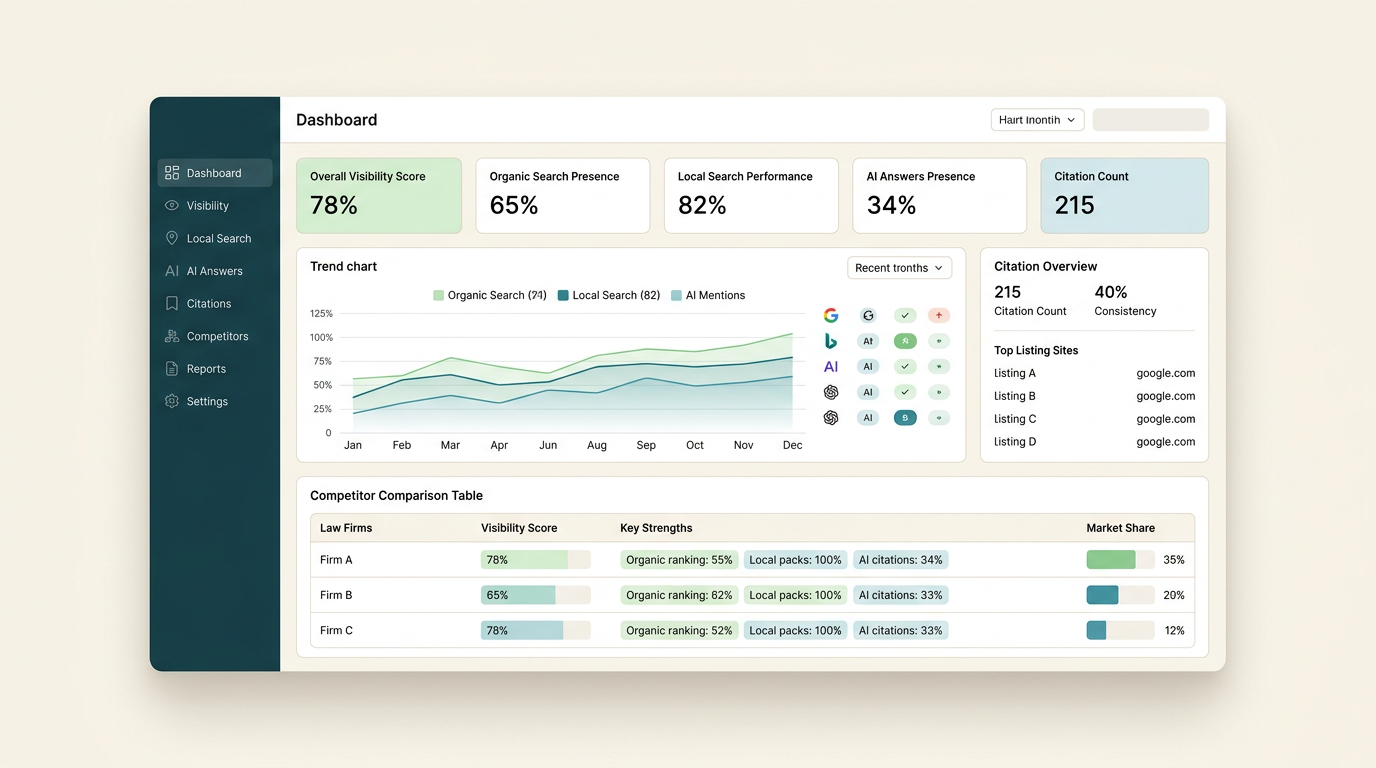
A law firm’s digital presence should support every stage between the first legal need and a meaningful enquiry.
A person or business identifies a legal problem, risk or opportunity.
Search, AI, referrals, directories and local results surface possible firms.
Prospects assess expertise, lawyers, content, reviews, credibility and fit.
They compare firms on relevance, trust, responsiveness and perceived value.
The strongest digital and professional experience earns the next conversation.
Strong growth usually comes from improving several connected parts of the client journey rather than relying on one marketing tactic.
Create a stronger foundation across your website, search visibility, content, local presence and professional profiles.
Build Your PresenceImprove how the firm attracts relevant prospects through search, AI discovery, practice-area visibility and market-specific demand.
Improve Client AcquisitionStrengthen website conversion, trust signals, client intake and follow-up so more qualified interest becomes meaningful conversations.
Improve Conversion & IntakeUnderstand what is working, identify gaps and prioritize the investments most likely to improve visibility, acquisition and conversion.
Review Growth PerformanceEach capability supports one or more stages of the client journey and connects to deeper research, practical resources and advisory solutions.
Improve credibility, usability, conversion and the way your expertise is presented online.
Explore Law Firm WebsitesIncrease discoverability across relevant legal searches while building durable topical authority.
Explore Lawyer SEOMake the firm’s expertise easier for AI-driven discovery systems to understand and retrieve.
Explore AI Search VisibilityCreate useful content that supports discovery, trust and client decision-making.
Explore Legal Content StrategyStrengthen visibility where prospective clients are actively searching for nearby legal services.
Explore Local SEOUse AI, automation and digital workflows to improve client experience and operational efficiency.
Explore Legal TechnologyStrategy and implementation support for law firms seeking stronger visibility, better client acquisition, improved conversion and more effective use of technology.
Build a clearer, faster and more persuasive digital experience around how prospects evaluate and contact your firm.
Improve Website PerformanceImprove discoverability across high-value searches through technical quality, authority and useful content.
Strengthen Search VisibilityStrengthen how your firm’s expertise is represented across AI-assisted discovery environments.
Improve AI DiscoverabilityDevelop content that educates prospects, strengthens authority and supports commercial priorities.
Build a Content SystemConnect website, search, content, technology, intake and growth priorities into one operating plan.
Plan Growth PrioritiesIdentify where your firm is being found, overlooked or losing opportunities across the digital client journey.
Request a Visibility ReviewAdvocateRahulDev.com provides research, strategic perspective and decision frameworks. Councl for Law Firms provides a connected pathway for firms seeking support across visibility, digital presence, technology and implementation.

Dr. Rahul Dev combines technology, legal, business and research experience to assess law-firm growth as an interconnected commercial system rather than a collection of marketing channels.
The work considers how prospective clients discover the firm, how expertise is presented, how search and AI systems interpret that information, how visitors move through the website, and how digital workflows support the eventual enquiry and client relationship.
Sustainable law-firm growth increasingly depends on how well the firm connects visibility, authority, client experience and conversion. Search engines remain important, but prospects may also begin their research through AI assistants, local listings, directories, professional profiles, referrals, reviews and educational content.
The practical challenge is therefore larger than SEO. A law firm needs a digital system that helps the right prospects discover relevant expertise, evaluate the people behind the firm, understand the firm’s capabilities and move confidently toward a consultation.
A scalable SEO strategy begins with the relationship between the homepage, service pages, topic hubs, resources, insights and individual guides. Search engines need clear signals about which pages are foundational, which pages provide detailed support and how related subjects connect.
For that reason, AdvocateRahulDev.com is organised around structured topic hubs rather than disconnected blog posts. Each hub contains a central overview page, supporting guides, practical resources, relevant insights and links to related advisory solutions. This makes the website easier to navigate for users and easier to interpret as a coherent body of expertise.
AI-driven discovery systems do not evaluate a law firm only through a single ranking position. They may rely on structured website content, clear entity relationships, lawyer profiles, service descriptions, citations, trusted third-party references and the consistency of information across digital properties.
Law firms therefore need content that is written for human readers while remaining structurally clear to machines. This includes descriptive page titles, logical headings, strong internal linking, author information, meaningful schema, concise explanations and a consistent relationship between the firm, its lawyers, its services and its areas of expertise.
Publishing volume alone does not create authority. A strong legal content system should cover important questions in sufficient depth, distinguish between informational and commercial intent, avoid unnecessary duplication and connect each page to a broader topic structure.
Research-led content can support several goals at once: educate prospective clients, clarify complex legal or technical subjects, strengthen search relevance, demonstrate expertise and give AI systems more reliable context about the firm’s capabilities.
A law firm website may attract qualified traffic and still fail if visitors cannot quickly understand who the firm helps, what it does, why its professionals are credible and what action to take next. Trust is influenced by the clarity of service pages, lawyer profiles, contact pathways, site performance, design consistency, evidence of expertise and the absence of unsupported claims.
This is why each page on the platform will use a dual structure. The top half will operate as a powerful, conversion-focused landing page, while the bottom half will provide substantial research-led information for search visibility, topical authority and informed decision-making.
A structured review can identify gaps across website performance, search visibility, AI discoverability, content, trust signals, client intake and conversion, then prioritize the areas most worth addressing.
Discuss Your Growth PrioritiesEvidence-led research and practical analysis on visibility, client acquisition, AI discovery, websites, content, intake and technology.
A practical framework for connecting website architecture, content, professional credibility and conversion.
Read the GuidePractical checklists, planning tools and diagnostic resources to help law firms identify growth gaps and make better digital decisions.
A practical checklist covering architecture, content, links, local visibility and technical foundations.
Open ResourceAssess whether your firm’s website and professional information are structured for AI-driven discovery.
Open ResourcePlan navigation, service pages, lawyer profiles, topic hubs, conversion paths and supporting content.
Open ResourceA Law Firm Visibility Review can assess how effectively the firm is being discovered, understood and converted across website architecture, technical performance, search, AI discovery, content, professional profiles, local visibility, trust signals and client intake.
Connect search, AI, website experience, content and client intake around how prospective clients discover, evaluate and contact your firm.
Additional context on how search, AI, websites, content and client intake are becoming increasingly connected in legal-service discovery.

A law firm growth strategy connects client acquisition, search visibility, website experience, content, intake, technology and measurement around clearly defined business priorities.
SEO is one acquisition channel. Law firm growth considers the broader system that moves a prospect from discovery through evaluation, enquiry and client intake.
AI-assisted search can surface information from websites, profiles and other authoritative sources. Clear entity information, useful content, consistent expertise signals and strong technical foundations can make the firm’s information easier to interpret.
Depending on scope, it can assess website architecture, search visibility, AI discoverability, content depth, professional profiles, local presence, trust signals, intake and conversion pathways.
Discuss the visibility, client-acquisition, website, AI, content or intake challenges most relevant to your firm and identify the practical next steps worth prioritizing.
Discuss Your Law Firm Growth Priorities