High-intent local services
Local search, reputation and conversion may deserve greater weight.

SEO still matters, but it now sits alongside local visibility, AI discovery, content, reputation, website experience and client intake.
Save or follow this source
Add AdvocateRahulDev.com to Google Preferred Sources or open this page in your preferred AI tool.
Want to turn Modern Digital Marketing for Law Firms Is a Connected Discovery and Conversion System into a practical growth plan for your firm? Discuss the target market, current visibility gaps and the client outcomes that matter most.
Discuss your Modern Digital Marketing for Law Firms Is a Connected Discovery and Conversion System strategy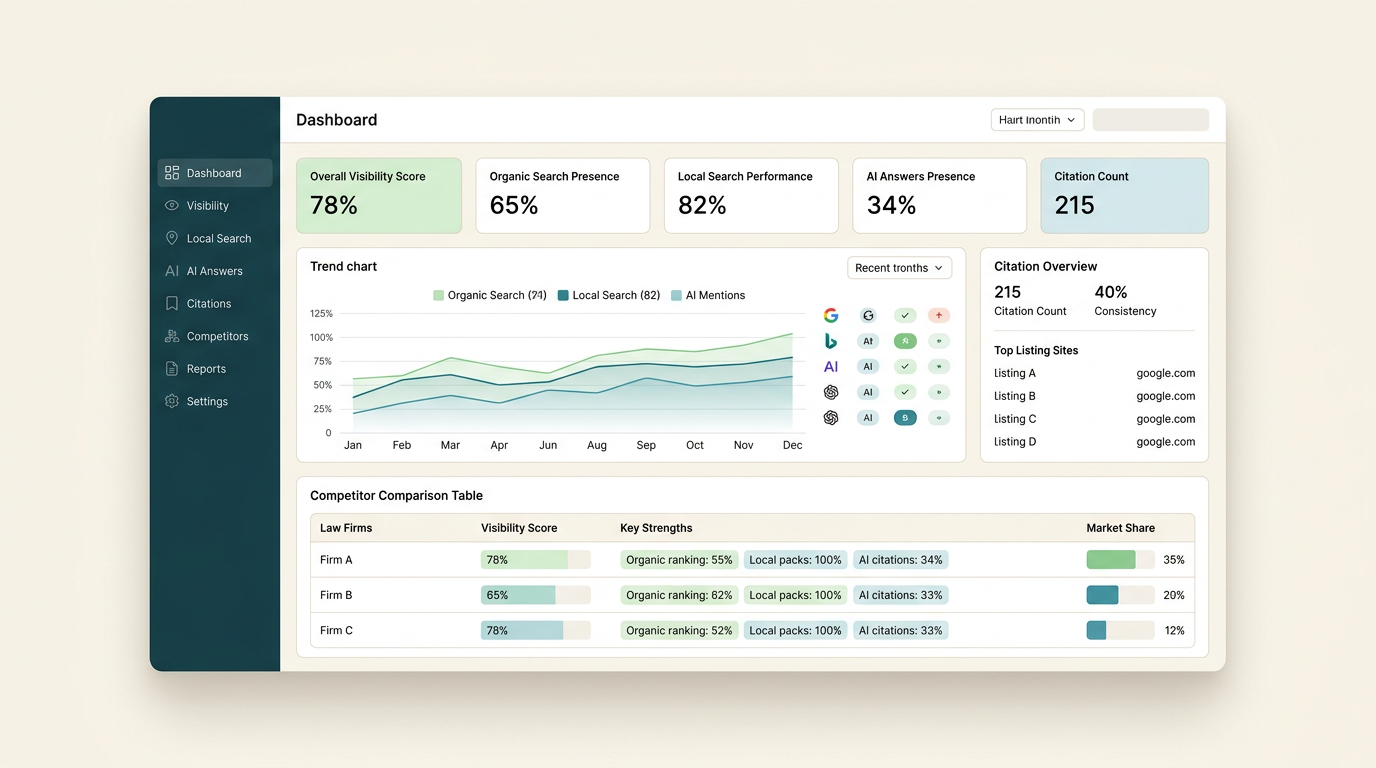
Prospective clients may discover a firm through search, reviews, social content, directories, referrals or AI-mediated answers, then evaluate the firm's website and professional credibility before contacting it. Digital marketing should therefore be designed as one connected journey rather than as a set of independent channels.
Local search, reputation and conversion may deserve greater weight.
Authority, expertise content and stronger buyer education become more important.
Topic authority, differentiated positioning and broader search architecture matter more.
Strong technical SEO, entity consistency and answerable content support visibility without requiring a separate 'magic' optimization layer.
The Councl-led approach is to strengthen the owned digital infrastructure first, then connect search, AI visibility, authority and intake around the firm's target clients and growth goals.
Want to turn Modern Digital Marketing for Law Firms Is a Connected Discovery and Conversion System into a practical growth plan for your firm? Discuss the target market, current visibility gaps and the client outcomes that matter most.
Discuss your Modern Digital Marketing for Law Firms Is a Connected Discovery and Conversion System strategyAdditional context on legal technology, search visibility, AI discovery and digital growth for law firms.
Digital marketing for law firms now spans website experience, organic and local search, content, reputation, social presence, selected paid channels, AI-mediated discovery, conversion and intake. The strategic challenge is not to use every channel but to connect the right ones around the firm's target clients and growth goals.
Last updated: August 10, 2026
Prospective clients may reach a law firm through search, referrals, reviews, directories, social content or generative-AI experiences, and then use the firm's own website to validate expertise and fit. That means the firm's digital presence should be understood as a connected decision environment.
Clio's legal-industry research supports the growing importance of online research and firm websites in legal-service selection, while ABA guidance emphasizes the role of digital presence and thought leadership in modern business development.
The website should provide clear practice information, trustworthy lawyer profiles, useful content, strong mobile performance and intuitive contact pathways. It is also where the firm has the greatest control over structure, evidence, conversion and first-party measurement.
Organic search remains a foundational discovery channel. Local search is especially important for practices where clients choose providers within a defined geography. Both depend on relevance, technical accessibility, useful content, internal linking and consistent business information.
Google's current guidance indicates that established SEO fundamentals remain central to visibility in its generative-AI Search features. This supports a practical approach focused on crawlable content, clear entities, direct answers, useful research and sound technical architecture rather than unsupported claims about proprietary GEO methods.
Useful content can answer buyer questions, demonstrate expertise and support search visibility. Reviews and professional profiles can reinforce trust. Social content can support reputation and business development when it is aligned with the firm's substantive expertise rather than used as stand-alone promotion.
Paid search, social advertising or sponsorships may be useful where the target market, economics and conversion path justify them. They should not be assumed to be mandatory. Channel selection should follow buyer behavior, competition, matter economics and the firm's ability to convert and service the resulting demand.
Digital marketing should connect directly to enquiry handling, scheduling, qualification and follow-up. Measurement should therefore include both discovery metrics and downstream outcomes.
Councl can be positioned as the integrator of the owned growth infrastructure: website, search, AI visibility, content architecture, authority, intake and conversion. The page should make clear that the correct mix still depends on the firm's priorities and market.
This page applies the AdvocateRahulDev.com research methodology: authoritative sources are prioritized, verified facts are separated from strategic interpretation, and recommendations are qualified where results depend on market, competition, implementation or user behavior. No ranking, lead, revenue, AI-citation or provider-fit outcome is guaranteed.
It is the use of websites, search, local visibility, content, reputation, social media, selected paid channels, AI discovery and conversion systems to help prospective clients discover and evaluate a firm.
There is no universal answer. The right channel mix depends on the firm's practice areas, geography, buyer behavior, competition and commercial goals.
Yes. Google's current guidance says established SEO fundamentals remain important for visibility in its generative-AI Search features.
Reviews can influence trust and local visibility, particularly where clients compare providers before making contact.
The marketing system should make it easy for qualified prospects to enquire and should connect that enquiry to fast response, qualification, scheduling and follow-up.
Explore Councl for Law Firms for a connected approach to website strategy, search visibility, AI discovery, digital authority, intake and conversion.
Work on Modern Digital Marketing for Law Firms Is a Connected Discovery and Conversion System should begin by identifying the part of the commercial system that is constraining growth. The issue may sit in market selection, service positioning, discovery, website conversion, intake, follow-up, pricing communication or coordination between vendors and internal teams. Treating every problem as a traffic problem can lead to more activity without better outcomes. A clearer diagnosis connects the chosen work to a specific user journey and an observable business result. This also helps decide which tasks should happen first, because improvements at the top of the funnel may have limited value if the website, intake process or service proposition cannot convert the additional attention.
A useful framework for Modern Digital Marketing for Law Firms Is a Connected Discovery and Conversion System follows the steps a prospective client takes from the first question through evaluation and contact. At each stage, identify what the person needs to understand, which page or professional profile should answer that need and what evidence supports the next decision. This can expose gaps that channel-by-channel plans miss. A firm may rank for an important query but fail to explain the relevant service, or it may publish strong research without a clear path to the lawyer or consultation route. Mapping the complete journey allows content, search, design and intake work to support the same commercial objective.
Want to turn Modern Digital Marketing for Law Firms Is a Connected Discovery and Conversion System into a practical growth plan for your firm? Discuss the target market, current visibility gaps and the client outcomes that matter most.
Discuss your Modern Digital Marketing for Law Firms Is a Connected Discovery and Conversion System strategy