Technical Access
Important pages must remain crawlable, indexable and understandable through ordinary search foundations.

Understand what changes when prospects use AI-mediated search, what still depends on strong SEO and authority, and how to translate those changes into better discovery, trust and qualified enquiries.
Save or follow this source
Add AdvocateRahulDev.com to Google Preferred Sources or open this page in your preferred AI tool.
Review where prospects may encounter your firm across search, AI answers, profiles and external sources, then identify the visibility gaps worth fixing first.
Discuss Your AI Search Strategy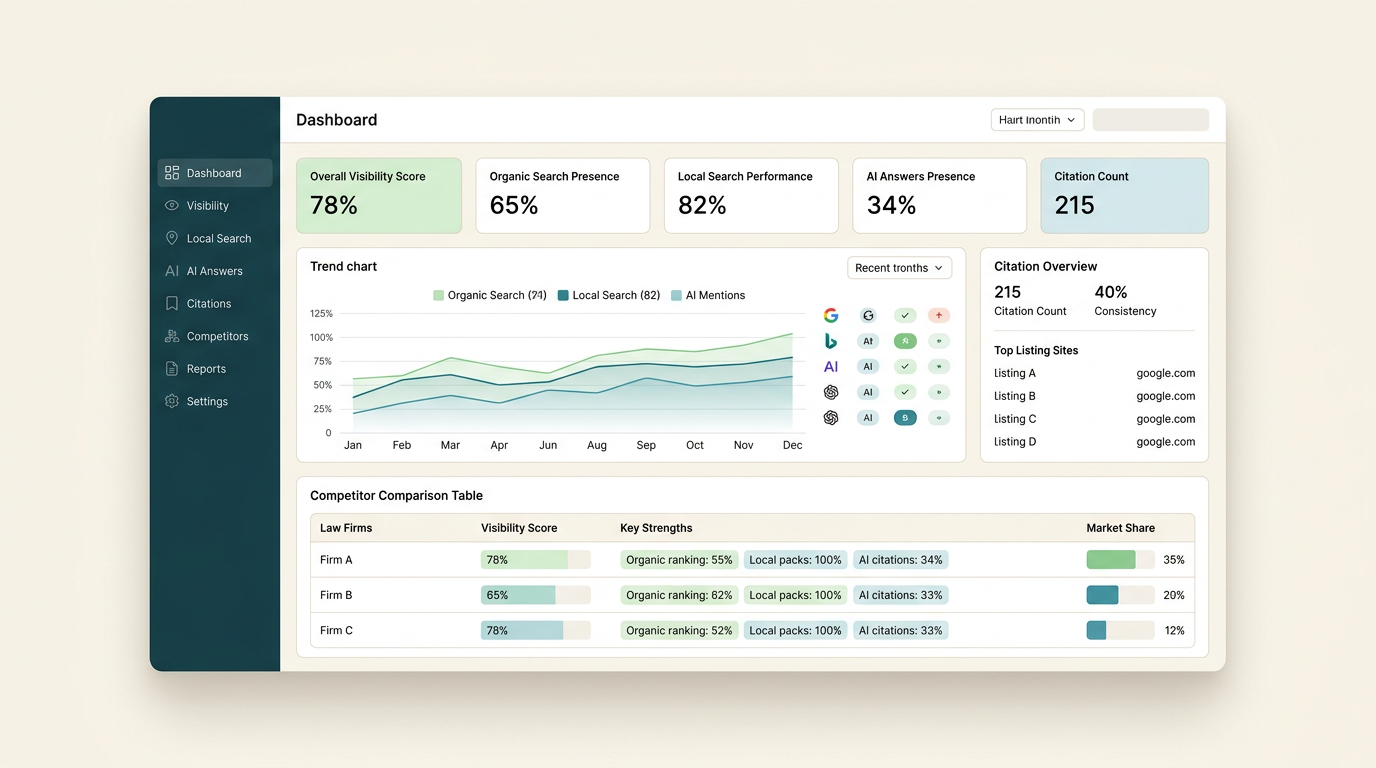
AI-mediated search can change how information is summarised, cited and presented, but law firms still need accessible pages, clear entities, useful expert-led content, visible authorship and reliable external signals.
Important pages must remain crawlable, indexable and understandable through ordinary search foundations.
The firm, lawyers, services, locations and authorship should be represented consistently.
Original analysis, credible sources and visible professional expertise are stronger than commodity summaries.
Readiness improvements can be tracked, but AI citations and recommendations cannot be guaranteed.
Special AI schema, forced micro-chunking or an llms.txt file should not be presented as guaranteed routes into AI answers. Strong conventional search foundations remain essential.
The interface is changing faster than the underlying need for clarity, evidence and technical access.
Translate the analysis into a focused review, roadmap or implementation decision without overstating likely outcomes.
Avoid treating AI search as a separate channel. Build one evidence-led visibility system around the questions, entities and expertise your prospective clients care about.
Plan Your AI Discovery FrameworkThe lower section examines the issue in detail, distinguishes verified facts from strategic interpretation and links to relevant sources, topic guides and practical resources.
Last updated: August 3, 2026
AI-enabled search can summarise information, combine multiple sources and present direct answers before a user visits a website. This may change click patterns and increase the importance of clear, source-supported and quotable explanations.
Pages still need to be crawlable, indexable, internally linked and technically understandable. Weak foundations cannot be replaced by AI-specific tactics.
The firm’s name, lawyers, services, locations and authorship should be consistent across the website and relevant public profiles. Ambiguity makes it harder for systems to connect people, organisations and topics.
Useful analysis should add more than a commodity summary. Distinct professional perspective, practical structure, citations and visible authorship strengthen credibility.
Schema should describe what is genuinely visible on the page. It should not introduce hidden claims, invented awards or unsupported relationships.
Consistent directories, professional profiles, citations and third-party references can support entity understanding and public trust.
AI-mediated discovery is also changing how lawyers compare research, drafting and knowledge tools. The relevant question is not which platform is universally best, but which system fits the firm’s research sources, drafting workflows, security requirements, integration needs and professional-review controls.
For focused comparisons, review the dedicated guides to Harvey AI alternatives, CoCounsel alternatives, Lexis AI alternatives and Westlaw alternatives. These pages separate legal AI assistants from broader legal-research databases and avoid treating unlike products as direct substitutes.
Traditional analytics may not fully reveal how often content appears in AI answers. Third-party visibility tools can be directional, but they should not be presented as platform truth.
No vendor can guarantee citation or recommendation by an AI system. Readiness work should focus on verifiable improvements rather than invented ranking factors.
This claim should not be presented as established fact. The page should explain the limitation and use qualified language.
This claim should not be presented as established fact. The page should explain the limitation and use qualified language.
This claim should not be presented as established fact. The page should explain the limitation and use qualified language.
This claim should not be presented as established fact. The page should explain the limitation and use qualified language.
This claim should not be presented as established fact. The page should explain the limitation and use qualified language.
This article combines current public guidance, official platform documentation where relevant, and ARD strategic interpretation. Verified facts, analytical conclusions and practical recommendations should remain clearly distinguishable.
It means preparing the firm’s digital presence for AI-mediated discovery while retaining strong conventional SEO foundations.
It matters because users may increasingly encounter summaries and citations before visiting a law-firm website.
Common mistakes include chasing unverified GEO tactics, publishing generic AI summaries and placing unsupported claims in schema.
Start with technical access, entity clarity and useful expert content before advanced experimentation.
Specialist support is useful when the firm needs to align entities, authorship, content architecture, structured data and external corroboration.
Translate the analysis into a focused review, roadmap or implementation decision without overstating likely outcomes.
Additional context on legal technology, search visibility, AI discovery and digital growth for law firms.
A strong strategy for AI Search for Law Firms begins with the questions a prospective client or referring professional needs answered before taking the next step. The page should make the relevant firm, lawyer, service, jurisdiction and evidence relationships explicit. Important claims should be easy to verify from the visible page and, where appropriate, from authoritative external sources. This creates useful material for ordinary search, direct readers and AI-assisted discovery without assuming that any platform will surface or cite the page. The durable objective is clarity, accuracy and retrieval quality, because those factors remain valuable even when interfaces, ranking systems or answer products change.
Work on AI Search for Law Firms should distinguish whether a page can be crawled and interpreted from whether it deserves to be selected as a useful source. Canonicals, internal links, structured data and performance can support eligibility, but they do not create expertise by themselves. The editorial layer still needs a clear answer, appropriate scope, current evidence and enough context for a passage to remain accurate when read independently. Separating these layers helps diagnose problems more effectively. A technically sound page may still need stronger evidence or information gain, while an excellent article may remain difficult to discover if the site architecture isolates it.
A page addressing this topic should be reviewed for two separate qualities: whether the material is technically available for retrieval, and whether the passage itself is clear enough to be trusted and reused. Confirm that the page is crawlable, internally linked and canonically consistent, then inspect the substantive sections for explicit entities, scoped claims, current evidence and visible qualifications. Important statements should still make sense when read outside the surrounding page. This produces content that is useful to a human reader and easier for search or AI systems to interpret, without assuming that technical markup or a preferred-source action can guarantee ranking, citation or inclusion in an answer.
Turn research into an action plan across content, entities, technical foundations, external corroboration and measurement.
Request an AI Visibility ReviewCompare current Legal AI platforms by workflow, security, integrations, implementation fit and professional-verification requirements.