Demonstrate Legal Depth
Create authoritative guides and lawyer profiles.

A criteria-led comparison of Paxton AI alternatives covering product scope, security, procurement terms, integrations, implementation and professional verification.
Save or follow this source
Add AdvocateRahulDev.com to Google Preferred Sources or open this page in your preferred AI tool.
Need help connecting your Paxton AI Alternatives for Legal Research evaluation to a broader legal-tech, client-service or growth decision? Share the workflow, constraints and outcome you want to improve.
Discuss Paxton AI Alternatives for Legal Research with Dr. Rahul Dev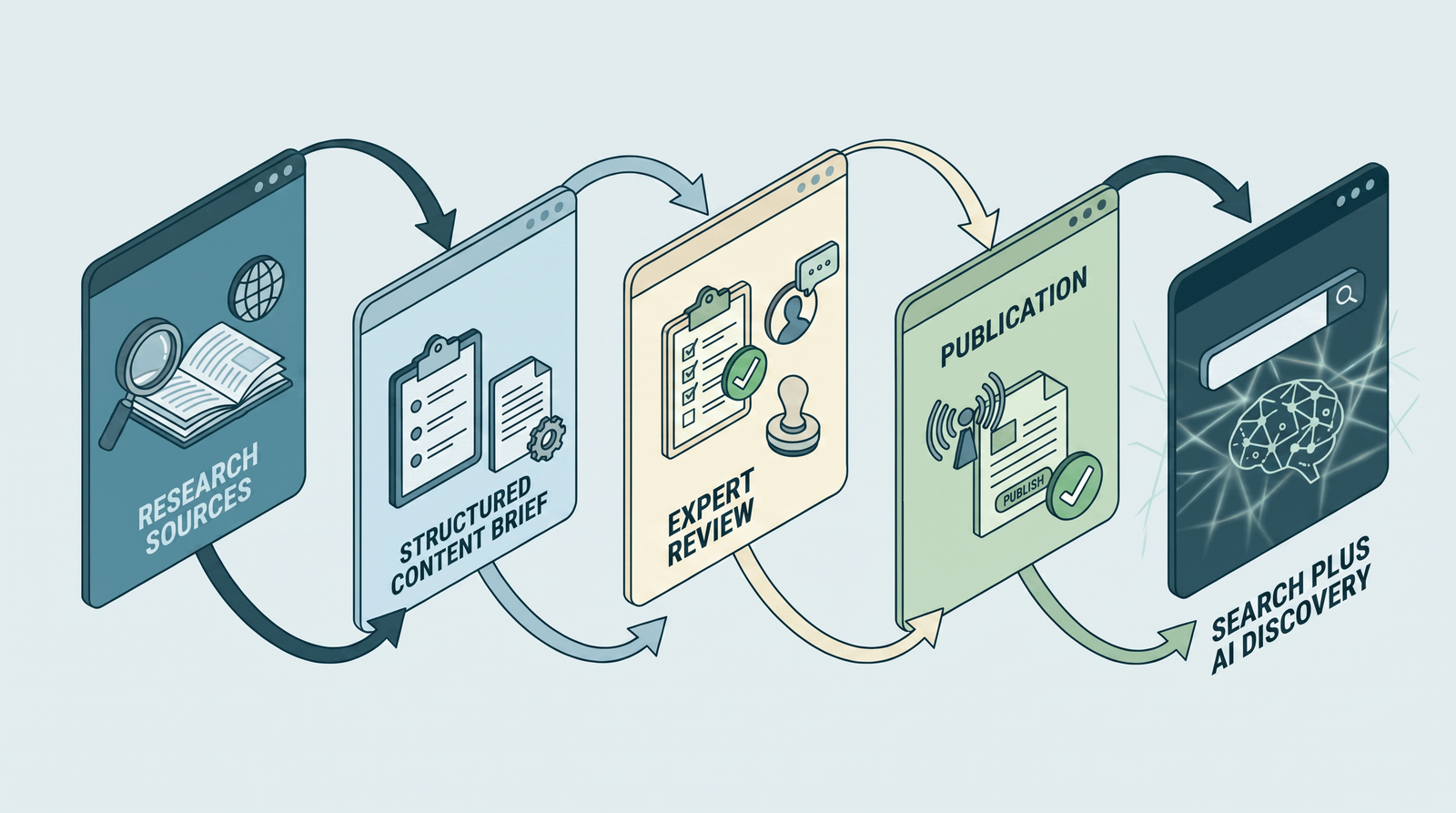
Law firms adopting AI research tools should also strengthen the public evidence of their expertise through authoritative content, lawyer profiles, technical SEO and strong information architecture.
Councl can help translate the firm’s technology and legal expertise into a modern website, stronger service positioning, faster performance, search visibility, AI-search readiness and a clearer client journey.
Create authoritative guides and lawyer profiles.
Connect lawyers, services, locations and topics.
Build content around legal questions clients investigate.
Improve speed, mobile usability and technical foundations.
Councl evaluates law firms through public signals connected to performance, reputation, experience and reliability.
Its services focus on identifying digital gaps and improving the website, search architecture, content, technical performance and client journey.
Need help connecting your Paxton AI Alternatives for Legal Research evaluation to a broader legal-tech, client-service or growth decision? Share the workflow, constraints and outcome you want to improve.
Discuss Paxton AI Alternatives for Legal Research with Dr. Rahul DevLegal AI procurement should sit within a wider plan covering service positioning, website experience, content authority, search visibility, AI discovery and client conversion.
This video provides additional context alongside the comparison and digital-growth guidance on this page.
Published and last updated: August 5, 2026
This page evaluates Paxton AI alternatives using the incumbent platform’s current positioning, official vendor information, security and implementation considerations, and a use-case-specific shortlist. It does not identify a universal winner. Legal AI output must remain subject to qualified professional review.
Paxton AI combines US legal research, drafting, document analysis, medical chronologies and billing summaries, with federal and all 50-state coverage and citation links.
Paxton states SOC 2, ISO 27001 and HIPAA standards, encryption, no customer-data model training and enterprise administrative controls.
Best suited for: US legal research and drafting
Incumbent benchmark with published individual procurement terms.
Best suited for: Global legal research
Best suited to multi-jurisdictional work.
Best suited for: Authoritative enterprise research
Strong for research grounded in established legal content.
Best suited for: Lexis-integrated research AI
Relevant to teams already operating within the Lexis ecosystem.
Best suited for: Westlaw-integrated research AI
Relevant to teams prioritising Westlaw content and workflows.
Best suited for: Broad Legal AI workspace
Broader than research alone.
Best suited for: Enterprise Legal AI
Adjacent option for larger firms and wider legal workflows.
| Use case | Candidate | Qualification |
|---|---|---|
| US legal research and drafting | Paxton AI | Incumbent benchmark with published individual procurement terms. |
| Global legal research | Vincent AI | Best suited to multi-jurisdictional work. |
| Authoritative enterprise research | CoCounsel | Strong for research grounded in established legal content. |
| Lexis-integrated research AI | Lexis AI | Relevant to teams already operating within the Lexis ecosystem. |
| Westlaw-integrated research AI | Westlaw | Relevant to teams prioritising Westlaw content and workflows. |
| Broad Legal AI workspace | Legora | Broader than research alone. |
| Enterprise Legal AI | Harvey AI | Adjacent option for larger firms and wider legal workflows. |
Accessible US research-and-drafting AI; Vincent is global and incumbent databases are enterprise research systems.
The best-fit Paxton AI alternatives depend on the legal workflow, organisation size, jurisdiction, source requirements, integrations, security expectations, budget and implementation capacity. The shortlist should be evaluated by use case rather than by a universal ranking.
The answer depends on workflow fit, authoritative source coverage, security, integration, implementation and professional-verification requirements.
The best-fit Paxton AI alternatives depend on the legal workflow, organisation size, jurisdiction, source requirements, integrations, security expectations, budget and implementation capacity. The shortlist should be evaluated by use case rather than by a universal ranking.
Procurement terms should be confirmed directly with each vendor because plans, usage limits, enterprise terms, implementation, integrations and support can change.
Qualified legal professionals should verify citations, authorities, contract language, factual summaries and strategic recommendations before reliance, filing or client delivery.
Connect Legal AI adoption with website strategy, service positioning, technical performance, content architecture, AI-search visibility and intake optimisation.
A legal-research tool should be tested with questions that reflect the firm's real work rather than with only straightforward demonstration prompts. Create a small benchmark covering different jurisdictions, authorities, procedural questions and levels of ambiguity. For each answer, reviewers can record whether the cited authority exists, whether the proposition is supported by the cited passage, whether controlling or more recent authority was missed, and how much additional research was needed before the answer could be relied upon. The purpose is not to create a universal score. It is to understand how a product behaves on the matters the team actually handles and where lawyer verification remains essential. The same benchmark can then be reused when comparing Paxton AI with other research systems.
Legal research involves professional judgment that cannot be reduced to whether an answer sounds plausible. Firms evaluating alternatives should define who may use the system, which matter types are appropriate, how confidential facts are handled, and what verification steps are required before research is cited or used in advice. A useful internal protocol can require reviewers to open the underlying authorities, check jurisdiction and date, distinguish binding from persuasive material and record unresolved uncertainty. Procurement can also examine export, audit and matter-management features that affect supervision. These governance questions help separate a useful research assistant from an output stream that creates additional checking work or introduces uncertainty into the firm's research process.
Need help connecting your Paxton AI Alternatives for Legal Research evaluation to a broader legal-tech, client-service or growth decision? Share the workflow, constraints and outcome you want to improve.
Discuss Paxton AI Alternatives for Legal Research with Dr. Rahul Dev