Structured content
Human-readable organization of questions, answers, evidence and relationships.

Organize expert legal information with clear page purpose, descriptive headings, direct answers, evidence, authorship and meaningful internal relationships.
Save or follow this source
Add AdvocateRahulDev.com to Google Preferred Sources or open this page in your preferred AI tool.
Need a practical plan around Structure Expert Legal Content So People and AI Systems Can Understand It Faster? Discuss how content, search, entity clarity and AI discovery can support the outcome your firm is targeting.
Discuss your Structure Expert Legal Content So People and AI Systems Can Understand It Faster plan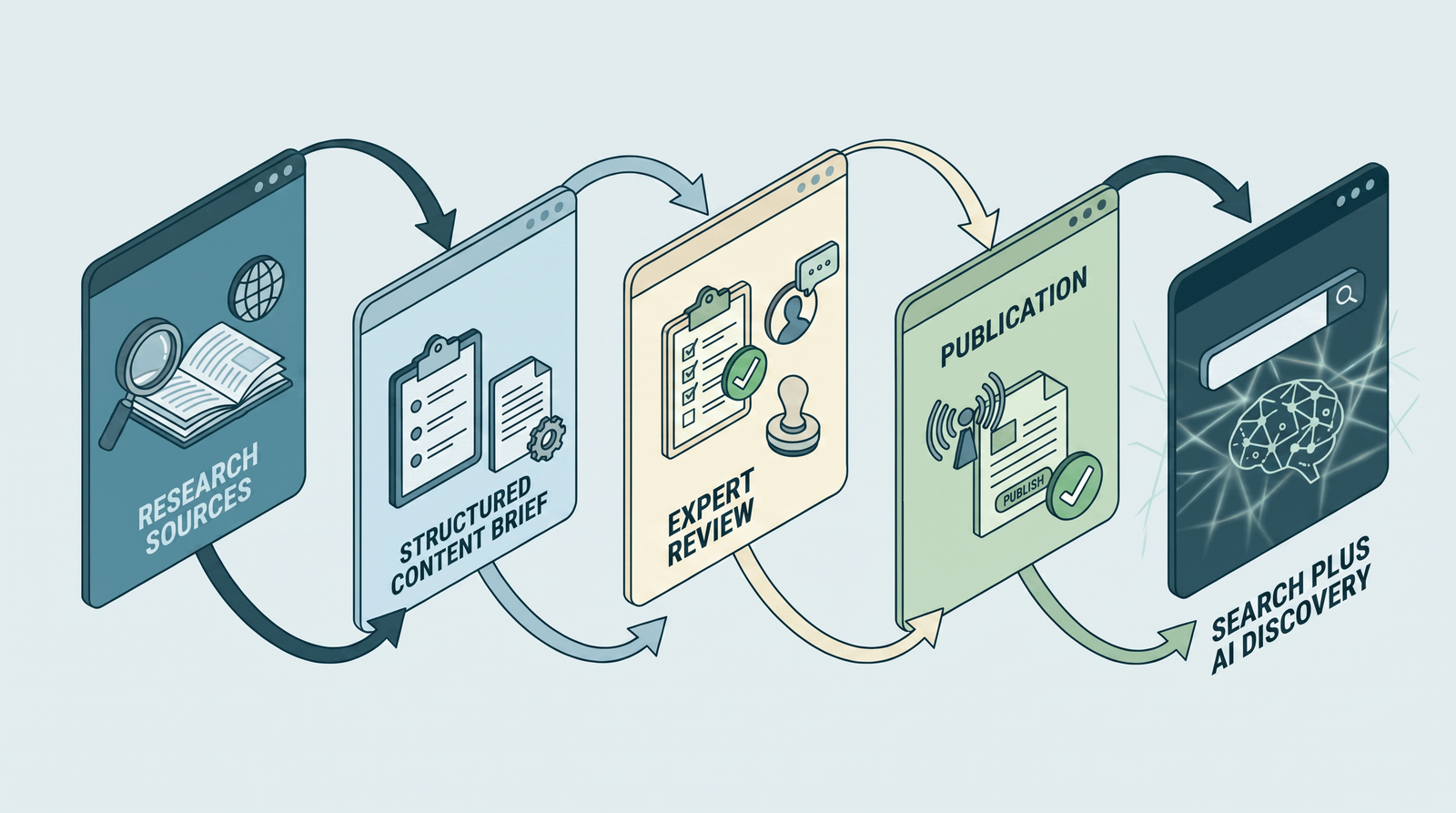
Content becomes harder to use when multiple intents are mixed together, headings are vague, the answer appears late or supporting evidence is disconnected. Structured content solves organization; structured data is a separate machine-readable layer.
Human-readable organization of questions, answers, evidence and relationships.
Machine-readable markup describing visible entities and content.
Concise responses that improve clarity without guaranteeing rankings.
Contextual links that clarify the site's topic architecture.
Councl can combine structured expert content, technical SEO, appropriate schema, entity consistency and conversion pathways into one content architecture.
Need a practical plan around Structure Expert Legal Content So People and AI Systems Can Understand It Faster? Discuss how content, search, entity clarity and AI discovery can support the outcome your firm is targeting.
Discuss your Structure Expert Legal Content So People and AI Systems Can Understand It Faster planAdditional context on legal technology, search visibility, AI discovery and digital growth for law firms.
Structured content for AI search means organizing human-readable information clearly through page purpose, headings, direct answers, evidence, authorship and meaningful internal links. It is distinct from structured data, which is a separate machine-readable layer such as Schema.org markup.
Last updated: August 10, 2026
Structured content describes the human-readable organization of a page: its purpose, headings, definitions, answers, evidence and internal relationships.
Structured data is a separate machine-readable layer, such as Schema.org markup, that describes visible entities and content.
Pages that mix several unrelated intents make it harder for users and search systems to understand what the page is meant to answer.
Clear intent ownership also reduces cannibalization between similar legal topics.
H2 and H3 headings should explain the section's role rather than act as vague labels.
A good heading structure lets users scan the page and helps machines interpret the relationships between sections.
Important questions can be answered early, but the page should then provide the legal, technical or commercial context needed for accuracy.
This avoids the false tradeoff between clarity and expertise.
Contextual internal links should connect the page to relevant hubs, supporting research and commercial pathways.
Internal linking should explain relationships rather than merely repeat the same keyword across dozens of pages.
Schema can support machine-readable understanding when it truthfully represents what users can see on the page.
It should not be treated as a mechanism for forcing AI citations or as a substitute for good content architecture.
This page prioritizes current primary-source guidance from Google, OpenAI, Perplexity and Google Gemini documentation where applicable. Statements about crawler access, technical eligibility, published platform behavior and measurement are separated from strategic interpretation. No ranking, citation, referral, AI visibility, lead or revenue outcome is guaranteed.
It is clearly organized human-readable content using descriptive headings, direct answers, definitions, evidence, authorship and meaningful internal relationships.
Structured content is the visible information architecture of the page. Structured data is machine-readable markup such as Schema.org.
No. Schema can accurately describe visible content, but it does not guarantee that an AI platform will cite or surface the page.
No. FAQs should be used when they genuinely answer recurring user questions and improve the page.
A clear page purpose, descriptive headings, concise answers, defined terms, expert context, evidence and logical internal links.
Use the research as a starting point for diagnosing technical accessibility, authority, expert content, website quality and measurable visibility across the firm's public digital presence.
Work on Structure Expert Legal Content So People and AI Systems Can Understand It Faster should begin by identifying the part of the commercial system that is constraining growth. The issue may sit in market selection, service positioning, discovery, website conversion, intake, follow-up, pricing communication or coordination between vendors and internal teams. Treating every problem as a traffic problem can lead to more activity without better outcomes. A clearer diagnosis connects the chosen work to a specific user journey and an observable business result. This also helps decide which tasks should happen first, because improvements at the top of the funnel may have limited value if the website, intake process or service proposition cannot convert the additional attention.
A useful framework for Structure Expert Legal Content So People and AI Systems Can Understand It Faster follows the steps a prospective client takes from the first question through evaluation and contact. At each stage, identify what the person needs to understand, which page or professional profile should answer that need and what evidence supports the next decision. This can expose gaps that channel-by-channel plans miss. A firm may rank for an important query but fail to explain the relevant service, or it may publish strong research without a clear path to the lawyer or consultation route. Mapping the complete journey allows content, search, design and intake work to support the same commercial objective.
Measurement for Structure Expert Legal Content So People and AI Systems Can Understand It Faster should connect activity to the result the firm is trying to improve. Depending on the project, that may include qualified visibility, engagement with priority service pages, consultation requests, conversion quality, referral support or movement in a defined target market. Each metric should have a clear source and review period. This avoids giving excessive weight to isolated rankings, traffic totals or platform-specific indicators that may not reflect business value. A balanced dashboard can combine leading signals, such as discovery and page engagement, with downstream signals, such as qualified enquiries, so the team can see where the commercial system is working and where it is losing momentum.
A page addressing this topic should be reviewed for two separate qualities: whether the material is technically available for retrieval, and whether the passage itself is clear enough to be trusted and reused. Confirm that the page is crawlable, internally linked and canonically consistent, then inspect the substantive sections for explicit entities, scoped claims, current evidence and visible qualifications. Important statements should still make sense when read outside the surrounding page. This produces content that is useful to a human reader and easier for search or AI systems to interpret, without assuming that technical markup or a preferred-source action can guarantee ranking, citation or inclusion in an answer.
Need a practical plan around Structure Expert Legal Content So People and AI Systems Can Understand It Faster? Discuss how content, search, entity clarity and AI discovery can support the outcome your firm is targeting.
Discuss your Structure Expert Legal Content So People and AI Systems Can Understand It Faster planCompare current Legal AI platforms by workflow, security, integrations, implementation fit and professional-verification requirements.