Different practice economics
A viable acquisition cost for one practice area may be inappropriate for another.

CAC is not just a media-spend problem. Targeting, organic visibility, website conversion, intake speed, qualification and attribution all affect acquisition economics.
Save or follow this source
Add AdvocateRahulDev.com to Google Preferred Sources or open this page in your preferred AI tool.
Want to apply the ideas in Reduce Law Firm Client-Acquisition Cost by Fixing the Entire Funnel to your firm? Share the desired outcome, current position and the most important constraint so the discussion can focus on a practical next step.
Discuss Reduce Law Firm Client-Acquisition Cost by Fixing the Entire Funnel with Dr. Rahul Dev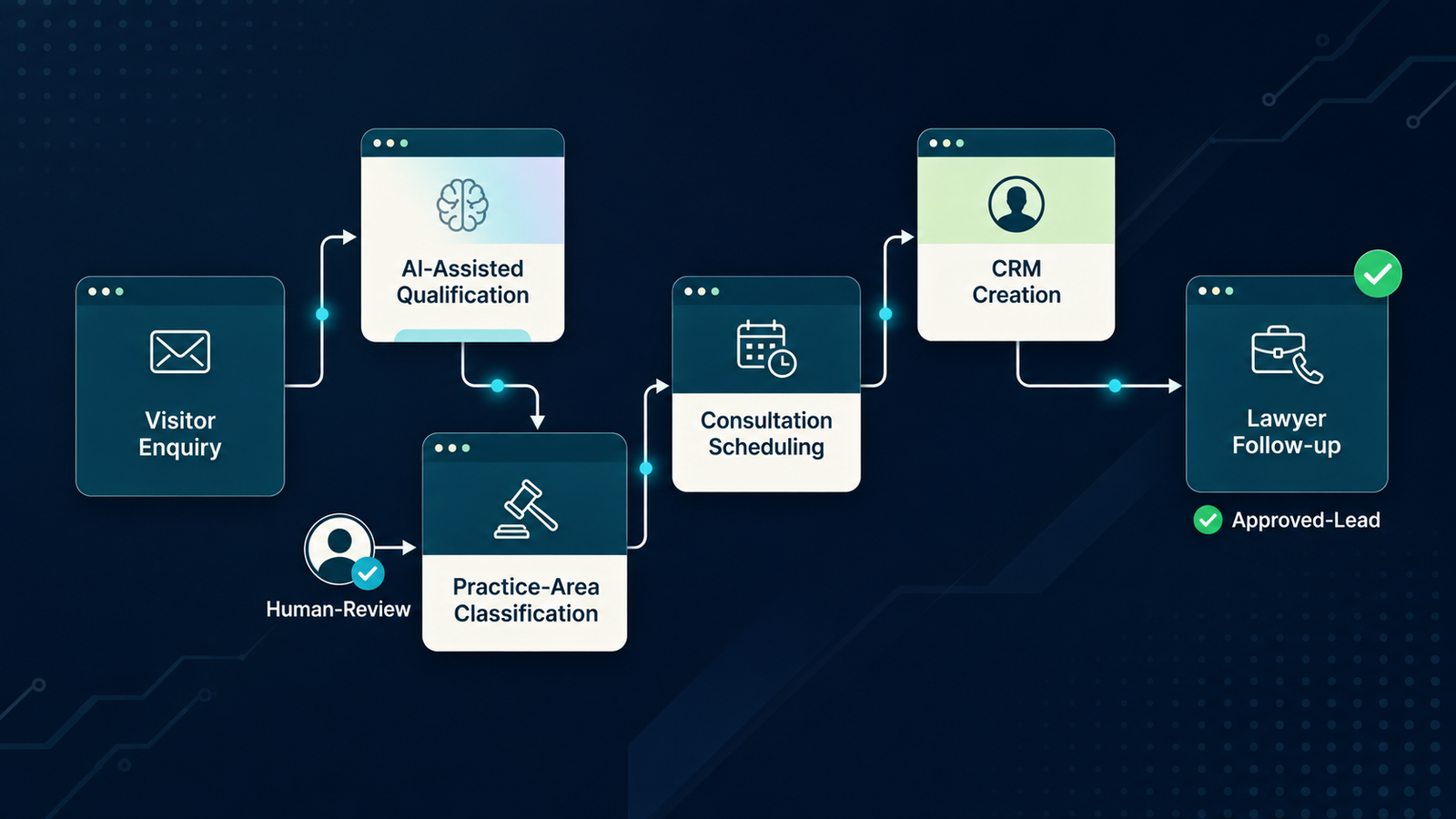
A law firm may respond to rising acquisition costs by cutting a channel, but the real issue may sit elsewhere: poor targeting, weak organic visibility, low landing-page conversion, slow intake, weak lead qualification or incomplete attribution. CAC optimization should examine the whole acquisition path.
A viable acquisition cost for one practice area may be inappropriate for another.
Search, referrals, reviews, brand exposure and paid campaigns can influence the same client journey.
Owned search and authority investments behave differently from short-cycle paid acquisition.
Lower CAC is not useful if lead quality or matter value deteriorates.
By connecting organic visibility, AI discovery, website conversion, digital authority and intake architecture, Councl can help firms evaluate acquisition efficiency across the whole discovery-to-enquiry journey rather than treating CAC as a media-buying metric.
Want to apply the ideas in Reduce Law Firm Client-Acquisition Cost by Fixing the Entire Funnel to your firm? Share the desired outcome, current position and the most important constraint so the discussion can focus on a practical next step.
Discuss Reduce Law Firm Client-Acquisition Cost by Fixing the Entire Funnel with Dr. Rahul DevAdditional context on legal technology, search visibility, AI discovery and digital growth for law firms.
Law firm customer acquisition cost should be treated as a decision metric that connects acquisition investment with new-client outcomes. It should be interpreted alongside lead quality, conversion, matter economics, channel mix and attribution limits. There is no responsible universal 'good CAC' benchmark for all law firms.
Last updated: August 10, 2026
At a conceptual level, customer acquisition cost is the attributable acquisition expenditure required to generate new clients over a defined period. The exact accounting method should be consistent and transparent.
A simple conceptual expression is acquisition expenditure divided by new clients acquired. The difficulty lies less in the arithmetic than in deciding which expenditures and client journeys are attributable to acquisition.
A client may hear about the firm from a referral, search the firm's name, read reviews, visit several pages, return through an advertisement and then make contact. Assigning the entire client to one channel can therefore oversimplify the journey.
Brand-building, SEO and authority investments also operate over longer time horizons than some paid channels. CAC analysis should acknowledge those differences instead of comparing channels as though they behave identically.
The research conducted for this batch did not identify an authoritative universal CAC figure that responsibly applies across law-firm practice areas, jurisdictions, matter values and business models.
A 'good' acquisition cost must therefore be assessed relative to the firm's own client economics, lead quality, capacity and strategic objectives.
Lower acquisition cost can come from improving the relevance of traffic rather than simply reducing marketing expenditure. Better practice-area targeting, more precise geographic focus, stronger content intent and improved lead qualification can reduce wasted demand.
CAC rises when acquired traffic fails to convert. Website clarity, trust, landing-page relevance, form design, response time, scheduling and follow-up all influence the number of new clients produced from the same acquisition effort.
SEO, useful content, digital authority and AI-search readiness can create owned discovery assets that continue to attract relevant visitors over time. Those investments still have costs, but their economics differ from channels where every additional visit requires direct media spend.
CAC should be interpreted alongside client or matter value, margin, conversion, time to engagement and capacity. A lower CAC is not automatically better if the associated clients are poorly matched to the firm.
Councl can address several acquisition-efficiency levers at once: organic discovery, AI visibility, website conversion, digital authority and intake architecture. The page should position this as a system-level approach, not as a promise that Councl will achieve a specific CAC reduction.
This page applies the AdvocateRahulDev.com research methodology: authoritative sources are prioritized, verified facts are separated from strategic interpretation, and recommendations are qualified where results depend on market, competition, implementation or user behavior. No ranking, lead, revenue, AI-citation or provider-fit outcome is guaranteed.
A simple conceptual approach is attributable acquisition expenditure divided by new clients acquired over the same period, but firms should define attribution rules consistently.
There is no responsible universal benchmark. Appropriate CAC depends on practice area, matter value, margin, conversion, geography and the firm's economics.
Common levers include better targeting, more owned visibility, stronger website conversion, faster intake, improved qualification, reduced channel waste and better attribution.
Yes in an economic sense because SEO requires content, technology, staff or vendor investment, even though each organic visit may not carry direct media cost.
CAC should be interpreted alongside matter value, margin, retention, repeat work and the quality of the clients acquired.
Explore Councl for Law Firms for a connected approach to website strategy, search visibility, AI discovery, digital authority, intake and conversion.
Work on Reduce Law Firm Client-Acquisition Cost by Fixing the Entire Funnel should begin by identifying the part of the commercial system that is constraining growth. The issue may sit in market selection, service positioning, discovery, website conversion, intake, follow-up, pricing communication or coordination between vendors and internal teams. Treating every problem as a traffic problem can lead to more activity without better outcomes. A clearer diagnosis connects the chosen work to a specific user journey and an observable business result. This also helps decide which tasks should happen first, because improvements at the top of the funnel may have limited value if the website, intake process or service proposition cannot convert the additional attention.
A useful framework for Reduce Law Firm Client-Acquisition Cost by Fixing the Entire Funnel follows the steps a prospective client takes from the first question through evaluation and contact. At each stage, identify what the person needs to understand, which page or professional profile should answer that need and what evidence supports the next decision. This can expose gaps that channel-by-channel plans miss. A firm may rank for an important query but fail to explain the relevant service, or it may publish strong research without a clear path to the lawyer or consultation route. Mapping the complete journey allows content, search, design and intake work to support the same commercial objective.
Before relying on this page, confirm whether your question is about the site's general information, a policy governing use of the platform, a research method, or a specific professional engagement. Check the linked source or policy page that owns the issue, note any date-sensitive information, and use the contact route where your facts differ materially from the general explanation. This review step matters because a large research-led site can contain several layers of information serving different purposes. Keeping those layers distinct helps users understand what the page can answer directly, what requires a more specific source, and when a tailored discussion is the more appropriate next step.
Want to apply the ideas in Reduce Law Firm Client-Acquisition Cost by Fixing the Entire Funnel to your firm? Share the desired outcome, current position and the most important constraint so the discussion can focus on a practical next step.
Discuss Reduce Law Firm Client-Acquisition Cost by Fixing the Entire Funnel with Dr. Rahul Dev