
Keep all website, paid and third-party promotion within the Singapore professional-conduct framework.
SINGAPORE LAW FIRM DIGITAL GROWTH
Law Firm Marketing in Singapore: Professional Publicity, Regional HQs and Cross-Border Growth
Singapore law firms need a growth system that respects the local professional-publicity framework while connecting regional-headquarters demand, cross-border expertise, search and AI visibility, useful authority content and qualified client intake.
Save or follow this source
Add AdvocateRahulDev.com to Google Preferred Sources or open this page in your preferred AI tool.
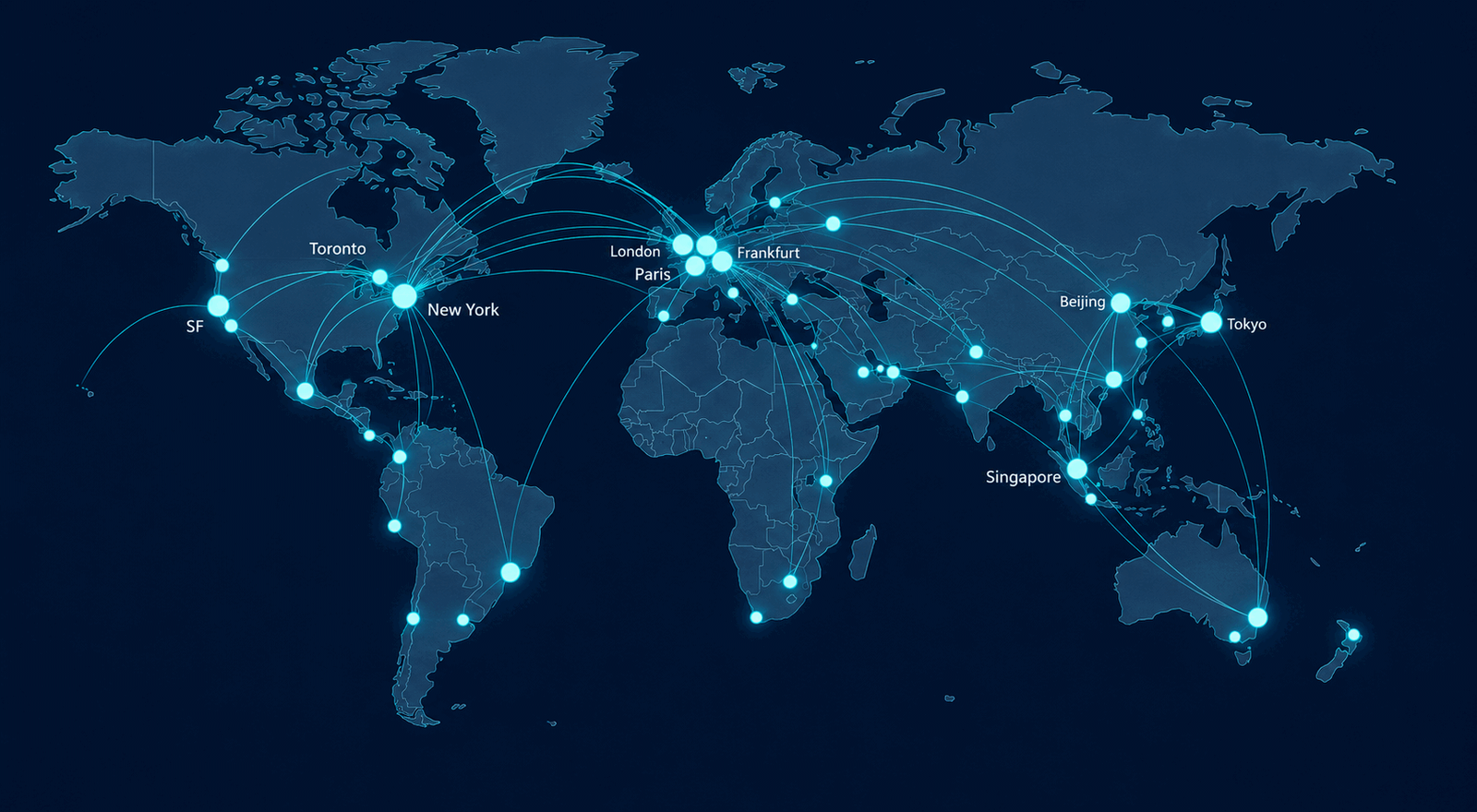
Build a Singapore Growth Strategy Around Regional and Cross-Border Demand
Identify where your firm is losing visibility or qualified enquiries in Singapore, then prioritize the market positioning, search, content, website and intake improvements most likely to matter.
Discuss your Singapore growth prioritiesThe growth problem
Build a Distinct Market Growth Architecture
Singapore needs a city-state growth page that combines professional-publicity controls with corporate, finance, technology, arbitration, private-wealth and regional-headquarters demand. Because Singapore is both jurisdiction and city-state, the page must carry both regulatory authority and high-value commercial acquisition without creating a redundant city child.
Commercial framework
Build Visibility Around Real Professional Authority
Connect multinational and regional-HQ demand to genuine corporate, employment, technology and regulatory capability.
Use finance and wealth themes only where the firm's professional services support them.
Build deeper pathways around real dispute-resolution capability rather than generic international positioning.
Connect technology and international business themes to actual professionals and research.
Route enquiries by matter type, organization, jurisdiction and professional fit.
Strategic reframing: Singapore should function as a distinct city-state and regional-hub page, with professional-publicity constraints, cross-border business demand and regional-headquarters relevance guiding the client journey.
Turn Singapore Market Authority Into Qualified Enquiries
Connect genuine Singapore market relevance with credible professional authority, useful research and a clear path from discovery to consultation.
Review your Singapore client-acquisition strategyConnect Search, Authority and Client Discovery
Councl for Law Firms is the primary commercial pathway for firms evaluating how search visibility, content authority, website architecture, AI-assisted discovery and client intake can operate as one connected system.
Research and analysis
Research: Law Firm Marketing in Singapore
Published and updated: September 3, 2026
Direct answer: Singapore law-firm marketing should be built as a single city-state authority page. It should apply the Legal Profession (Professional Conduct) Rules 2015 publicity framework, especially the responsibilities around publicity carried out by or on behalf of a practice and the prohibition on misleading, deceptive, inaccurate, false or expectation-inflating promotion. Commercially, the page should connect Singapore’s role as a regional headquarters, finance, technology, arbitration and cross-border business centre to real professionals and services.
Professional responsibility extends to publicity by others
Singapore’s current Legal Profession (Professional Conduct) Rules 2015 contain a dedicated Part 5 on touting and publicity. Rule 42 places responsibility on the legal practitioner to ensure that publicity relating to the practice complies with the rules whether the publicity is carried out directly or by another person on the practitioner’s behalf. That makes outsourced digital campaigns, agencies, directories, lead generators and paid-media partners relevant to professional governance rather than separate from it. A practical consequence is that a firm should maintain a single factual source for lawyer biographies, office information, practice descriptions, awards and client-reference claims, then require external marketers to use that verified source. If publicity becomes improper, the rules contemplate correction or withdrawal rather than passive reliance on the supplier.
Rule 44 is central to digital claim control
Rule 44 restricts publicity that may diminish confidence in the profession, be misleading, deceptive, inaccurate, false or otherwise unsuitable. It also treats material misrepresentation, omission of material facts, unverifiable information and messaging likely to create unjustified expectations about results as problematic. For digital production, this supports a strict claim-screening process. Strong marketing can still be persuasive through specificity: identify the service, matter type, sector, jurisdiction, professional and research basis rather than escalating the promise.
Singapore should not be split into redundant country and city pages
Singapore is both a sovereign state and city-state. A second Singapore-city page would add little user value and could create internal competition for the same query family. The stronger architecture is one Singapore page that owns both professional-jurisdiction context and city-level commercial acquisition. The preferred route is Singapore → corporate / finance / technology / arbitration / private wealth / regional headquarters → practice → lawyer → research → enquiry.
Regional headquarters and international business are strong commercial themes
Singapore’s economic role makes it particularly relevant to regional headquarters, multinational businesses and companies coordinating operations across Asia. That supports legal buyer journeys involving corporate structuring, employment, technology agreements, data and privacy, financing, disputes, arbitration, transactions, IP and regulatory matters where a firm can substantiate capability. The city-state page should therefore be written for both local and international buyers without making unsupported claims about regional coverage, government relationships or guaranteed outcomes.
Content architecture and buyer pathways
A geographic page should operate as part of a wider legal information system rather than as an isolated landing page. It should link upward to the correct jurisdiction parent and downward to practices, lawyer profiles, sector pages and supporting research. A user arriving through a location query should be able to understand the firm's relevance quickly, then move to the professional or service that matches the matter.
Market evidence should guide emphasis, not justify unsupported professional claims. A strong page can explain why finance, technology, logistics, life sciences or another sector matters in a location, but every commercial statement should remain connected to actual legal capability. The same principle applies to calls to action: they should help users find the right service or professional without implying a guaranteed outcome.
Reciprocal internal links matter. Parent pages should link to genuine child markets, and child pages should link back to the relevant parent. Practice pages, lawyer profiles and research should link into the geographic layer where the relationship is real. This reduces orphan pages, supports clearer crawling and gives search systems a more coherent picture of the site's authority structure.
Search and AI-assisted discovery
Search and AI-assisted discovery should extend strong technical, editorial and professional foundations rather than replace them. Important legal information should remain crawlable, internally connected, current and useful to human readers. Clear lawyer identities, canonical professional profiles, accurate office data, substantive practice pages, primary-source citations and readable HTML all improve the chance that search systems can interpret the firm's authority correctly.
Public pages may be eligible for AI-assisted search when relevant crawlers can access them, but eligibility does not guarantee citation, recommendation, rankings, traffic, enquiries or revenue. The practical objective is to improve factual clarity, professional authority and buyer journeys rather than promise platform outcomes.
For these East Asian markets, English-language content should be framed primarily for international, cross-border and English-speaking buyer intent. It should not imply that English alone reaches the full domestic market. Firms considering multilingual expansion should use a separate architecture with native-language professional review, local keyword research, canonical consistency and careful duplication management.
Governance and measurement
Every geographic page should be maintained as a professional and commercial record. Review it when professional rules, office information, lawyer assignments, sector evidence or service offerings change. Canonical lawyer and office records should remain centralized, while geo pages link to those records rather than duplicating details that can become stale.
Commercial measurement should prioritize qualified matters rather than raw sessions. Useful intake fields include market, jurisdiction, practice, matter type, client type, source, qualified status and outcome. For international markets, language requirement and originating jurisdiction can also help distinguish true cross-border demand from general informational traffic.
Desktop and mobile QA should verify navigation, hero responsiveness, video behavior, source links, internal links, canonical tags, structured data, the full disclaimer and clean list rendering. Promotional statements used in paid media, directories, referral campaigns or by third-party marketers should be screened against the same professional baseline used on the website.
Practical implementation framework
- 1. Confirm the current professional-promotion baseline.
- 2. Verify office, lawyer and regulatory-status information.
- 3. Preserve the fixed jurisdiction and city hierarchy.
- 4. Keep sector claims tied to actual capability.
- 5. Maintain canonical lawyer and practice records.
- 6. Add deeper sector pages only where legal depth exists.
- 7. Keep paid, organic and third-party claims consistent.
- 8. Strengthen reciprocal internal links.
- 9. Improve intake attribution by market and jurisdiction.
- 10. Measure qualified-client outcomes rather than traffic alone.
Frequently Asked Questions
Which professional rules govern Singapore law-firm publicity?
The Legal Profession (Professional Conduct) Rules 2015, including Part 5 on touting and publicity.
Does responsibility extend to outsourced marketing?
Yes. Publicity carried out by another person on behalf of the practice remains relevant to the practitioner’s obligations.
Should Singapore have separate country and city pages?
No. One city-state authority page is the stronger architecture.
Can a firm promise results or use unverifiable promotional claims?
Those statements create significant professional-risk concerns and should not be used.
Can AI visibility or rankings be guaranteed?
No.
Sources and References
Related Pages
About Dr. Rahul Dev
Dr. Rahul Dev is a PhD Data Scientist, Technology Law and Patent Attorney, AI Educator, and international business advisor with more than 20 years of professional experience.
Ready to Strengthen Law-Firm Growth in Singapore?
Discuss how your firm can improve Singapore visibility, buyer trust, digital authority and qualified enquiry pathways without relying on generic location-page tactics.
Discuss your Singapore growth strategy