
Use CourtListener with Claude to Find Cases—and Verify Every Citation
Learn what the listed CourtListener connector can retrieve, how to check court records, and which legal-research decisions still require human verification.
Save or follow this source
Add AdvocateRahulDev.com to Google Preferred Sources or open this page in your preferred AI tool.
- Locate relevant United States court records
- Check citations and source provenance
- Understand API, access and professional limits
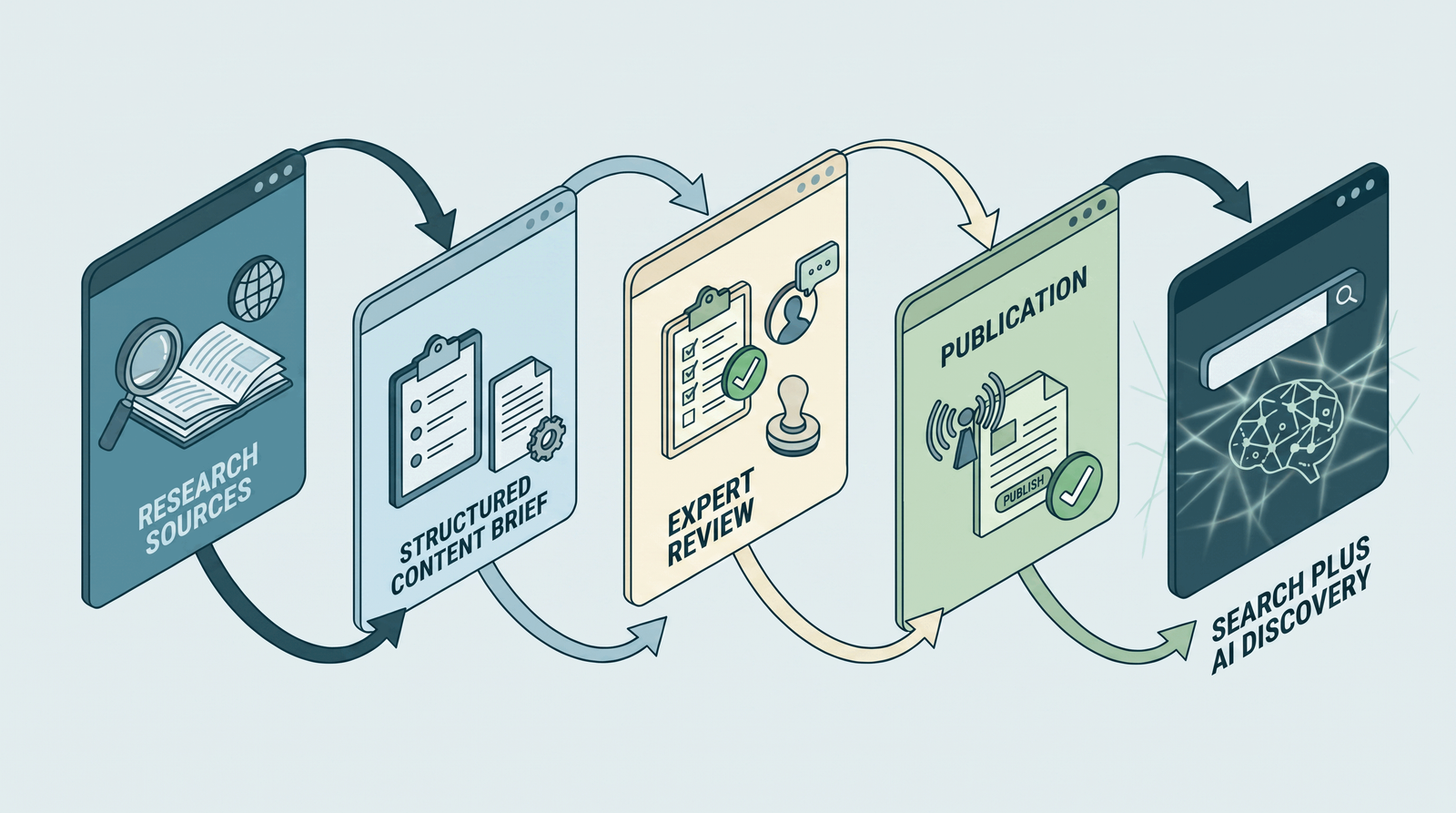
Need Better Source Checks for AI-Assisted Case Research?
Begin with court jurisdiction, the official case record and a verifiable citation trail—not a generated conclusion alone.
Review Our Case-Law Research WorkflowWhat Would This Connection Help You Check?
Learn what the listed CourtListener connector can retrieve, how to check court records, and which legal-research decisions still require human verification. The central decision is evaluate official courtlistener claude connector and u.s. authority/citation checking. This is an independent research guide, not a product certification, official partnership or completed customer deployment.
A Careful Integration Review Starts Here
Confirm the capability
Inspect the named provider listing, documented tools, region and account prerequisites.
Set access boundaries
Identify permitted source records, user roles, relevant restrictions and actions requiring approval.
Verify legal outputs
Compare the response with original sources, record missing evidence and assign human review.
Check Court Records and Citations Against the Originals
Use a controlled research set and preserve links to court opinions, docket records and correct case metadata.
Review Our Case-Law Research WorkflowTechnology and Legal Practice: An Overview
This general approved video is supplementary. The product-specific research below explains exact integration limits and source checks.
CourtListener with Claude: Case-Law Research and Citation Checks: Detailed Research and Implementation Decisions
Author: Dr. Rahul Dev: PhD Data Scientist, Technology Law & Patent Attorney, and AI Educator with 20+ years advising global CEOs and CXOs on tech, business, and legal innovation. Author profile · Contact
This independent research guide focuses on evaluate official courtlistener claude connector and u.s. authority/citation checking. It distinguishes provider-confirmed capabilities, recommended testing, professional responsibilities and functions not established by the cited documentation. It is not a claim of certification, affiliation, tested performance, or service delivery. Source availability and product configurations should be rechecked before implementation.
Confirm the official CourtListener connection
Anthropic lists CourtListener as a connector made by the Free Law Project. The provider describes access to U.S. court opinions, docket information, judge profiles and citation-related records through a named MCP endpoint. This is a documented connector path; it does not mean Claude independently becomes a legal authority or that every court record is complete. Begin by confirming the actual connector, linked CourtListener account and permitted tools. The described tool list includes search, endpoint calls and citation-analysis capabilities. Technical users should inspect the current product documentation before relying on any tool’s exact behavior. Source: Anthropic — CourtListener connector.
Illustrative check: Example: a researcher records the source opinion identifier, court, decision date and CourtListener link for every retrieved authority before drafting a memo.
Limit jurisdiction and procedural posture explicitly
CourtListener focuses on U.S. legal materials. A search for an issue such as employment discrimination can return opinions from different courts, time periods and procedural settings. The relevance of an opinion depends on jurisdiction, hierarchy, facts and subsequent treatment, not merely keyword similarity. Frame each request with the governing court and legal issue, then evaluate the results against primary authority. Avoid writing a generic global legal-research guide under a United States-specific source name. When another country’s law is relevant, the team needs its own authoritative sources and cannot rely on U.S. court material as a substitute. Source: Anthropic — CourtListener connector.
Illustrative check: Example: a motion concerning a federal appellate jurisdiction should distinguish binding circuit authority from persuasive district-court decisions.
Keep a traceable citation chain from the first query
A common failure in AI-assisted research is a plausible citation without a corresponding genuine judicial record. CourtListener offers citation-extraction and analysis features, but each identified citation still needs verification. Check that the case exists, the court and year match, the opinion supports the stated proposition and any subsequent treatment is current. Capture the source URL and relevant passage rather than quoting an AI summary in isolation. A citation checker can help find discrepancies but does not replace legal judgment about the authority or the law’s current status. Record uncertainty where materials are unavailable or incomplete. Source: Anthropic — CourtListener connector.
Illustrative check: Example: ask Claude to extract citations from a draft, then open each opinion and compare the quoted paragraph with the original document.
Distinguish opinions from dockets and filing metadata
A case-law research assistant may retrieve docket entries, filings, opinion metadata or full judicial text. These records serve different purposes. A docket entry might show that a motion was filed, but it may not establish how the court resolved the issue. A judge profile is context, not a legal holding. Before relying on the result, identify the source type, its completeness and the use it can support. Certain PACER-linked documents or bulk collections may involve access constraints, and some case materials may be missing from a public repository. Avoid a misleading claim of universal coverage of all U.S. court records. Source: Anthropic — CourtListener connector.
Illustrative check: Example: a docket entry references an order unavailable in the current corpus; report the missing order instead of inventing its contents.
Understand automated access and credential restrictions
The Free Law Project publishes terms for CourtListener services including its REST API, MCP server and alerts. Those terms address credential confidentiality, rate limits and automated use. A legal team should use authorized user accounts and avoid pooling credentials or circumventing usage limits. If the workflow supports multiple lawyers or a commercial product, verify the applicable permission and agreement requirements before building a shared integration. Restrictions on attribution and AI-generated analyses matter for content publication as well as technical access. A public data source is not a blanket license to run unlimited automated collection or represent the operator as endorsing AI outputs. Source: Free Law Project — CourtListener Terms of Service and Policies.
Illustrative check: Example: an internal research service identifies each actual account holder, logs API requests and checks whether a team or product license is needed.
Use current CourtListener API versions for new development
Free Law Project has expressly warned that its v3 CourtListener API is deprecated for new projects and points developers toward v4. Older online tutorials, AI-generated code and library examples may still mention v3. A new integration should validate its endpoints, authentication, response schemas and usage policies against the current documentation rather than copying an obsolete sample. If the team uses the official Claude connector, do not assume direct API v3 access is needed at all. Distinguish connector behavior from a separately coded application: they may have different authentication, maintenance and licensing obligations. Source: Free Law Project — Deprecated API v3 notice.
Illustrative check: Example: a developer reviewing a draft script rejects a v3 endpoint and checks the corresponding v4 documentation before proceeding.
Test whether the sources support the stated legal proposition
The legal task is not just finding cases; it is identifying what a court actually decided. Build evaluation examples with a known holding, quoted reasoning, dissenting opinions and changed procedural posture. Compare the assistant’s proposed proposition with the opinion text, noting omitted qualifiers or reliance on non-binding dicta. Differentiate headnotes, summaries and actual judicial passages where available. The reviewer should confirm whether the cited case has been superseded, distinguished or affected by later decisions using appropriate research sources. CourtListener records can be part of the research process, not necessarily the only authority or citator needed. Source: American Bar Association — Formal Opinion 512 (2024).
Illustrative check: Example: a generated brief attributes a standard of review to an appellate case; the lawyer checks the actual passage and subsequent decisions before including it.
Use citation-analysis tools as supervised checks
The official connector lists citation-analysis capabilities, which may assist in finding references and checking source relationships. Their outputs should be treated as research aids, not dispositive answers on validity or legal effect. Log the citation extracted, the source record linked, the tool’s proposed analysis and the reviewer’s determination. Test intentionally malformed citations, nonexistent reporter references and genuine cases quoted for a proposition they do not support. A high match rate on simple citations is not sufficient to show reliable treatment analysis. Design an escalation path when the original record is unavailable or an opinion’s status is uncertain. Source: Anthropic — CourtListener connector.
Illustrative check: Example: submit a brief containing one genuine case with a wrong year, one invented case and one real but irrelevant case, then record which problems the process detects.
Separate legal-research verification from technical retrieval
A technical workflow may successfully authenticate, fetch records and return source links while producing a weak legal conclusion. Measure both layers separately. Technical tests concern permission, endpoint availability, response completeness and source metadata. Legal-quality tests concern authority selection, issue matching, proposition accuracy and current validity. When comparing a CourtListener-plus-Claude workflow with Westlaw, Lexis or another research system, disclose coverage and citator limitations rather than assert they are interchangeable. A firm may benefit from a layered workflow using public sources for discovery and additional professional databases for authoritative validation. Source: Anthropic — CourtListener connector.
Illustrative check: Example: retrieve a public opinion through CourtListener, then verify its treatment through the firm’s existing approved citator before final submission.
Apply professional duties and decide when not to use AI
The American Bar Association’s Formal Opinion 512 addresses competence, confidentiality, supervision and court candor when lawyers use generative AI. The SRA has also warned about hallucinated case citations and disclosure of confidential material, within its own jurisdiction. These do not make a specific connector inherently compliant. A lawyer should use the applicable local ethical framework, protect client information and review every consequential citation. Where the answer depends on restricted filings, sealed materials or unverified authority, a traditional research route may be more appropriate. The final decision should document approved matters, expected source checks, person responsible for review and how errors will be corrected. Source: American Bar Association — Formal Opinion 512 (2024).
Illustrative check: Example: the firm authorizes public case-law discovery but prohibits uploading privileged case strategy or filing machine-drafted citations without independent source review.
Questions to Resolve Before Proceeding
Is this an official integration or a custom connection?
The named provider connector is listed in the official Anthropic catalog; account access, enabled functions and local policy must still be checked.
Does a connector replace human legal review?
No. Permission checks and source-linked outputs support the workflow, while qualified professionals remain responsible for reviewing consequential work.
Can every user access every record?
No. Access depends on the original system’s permissions and the exact authentication arrangement; test those limits using approved accounts.
Are all actions documented and available?
Not necessarily. The provider listing describes a finite tool set. Do not assume unsupported write or workflow actions are enabled.
The provider documentation confirms listed connection paths, but does not prove that access, accuracy, suitability or regulatory compliance has been established in your organization. Review documented differences between vendor statements, local configuration, proposed custom work and user-facing demonstrations.
Sources and Material Limitations
Vendor listing and product terms are time-sensitive. Professional rules and data rights depend on the relevant firm, matter and jurisdiction. The research examples above are hypothetical test plans, not verified test results. Readers should recheck current provider functionality, source licensing, permissions, contractual restrictions and professional responsibilities before deployment.
- Anthropic — CourtListener connector — Legal research, search and citation tools; provenance concerns.
- Free Law Project — CourtListener Terms of Service and Policies — Automated access, credential, rate-limit and attribution restrictions.
- Free Law Project — Deprecated API v3 notice — New API work should use v4; v3 is deprecated.
- Claude Help Center — Use connectors to extend Claude’s capabilities — Source-system permission inheritance; custom shared credentials require separate scrutiny.
- American Bar Association — Formal Opinion 512 (2024) — U.S. Model Rules analysis; jurisdiction-specific applicability.
- Solicitors Regulation Authority — Misuse of AI warning (17 August 2026) — Professional oversight, inaccurate outputs, confidential information; England and Wales.
Related Research and Practical Next Steps
Use these links to understand the broader connector architecture, source-specific risks and existing evaluation pathways. Each page addresses a different buyer decision; none implies an official affiliation with the named product providers.
Plan an Evidence-Based Legal Research Review
Bring your jurisdiction, case types, citation-check requirements and access arrangements. A clear verification workflow matters more than a confident AI answer.
Review Our Case-Law Research WorkflowAbout Dr. Rahul Dev
Dr. Rahul Dev is a PhD Data Scientist, Technology Law and Patent Attorney, AI Educator, and international business advisor with more than 20 years of professional experience. His work spans artificial intelligence, emerging technology, intellectual property, digital growth, technical research, and business strategy. Read the author profile.