
See Whether Eve Fits Your Personal Injury Firm’s Work
Review Eve’s plaintiff-firm workflows for intake, case information and drafting, with clear checks before your staff rely on automated results.
Save or follow this source
Add AdvocateRahulDev.com to Google Preferred Sources or open this page in your preferred AI tool.
- Explore intake evaluation, medical record organization, chronology drafting, discovery and routine plaintiff-case tasks
- Compare actual provider functionality with your team’s needs
- Keep people responsible for verification and approvals
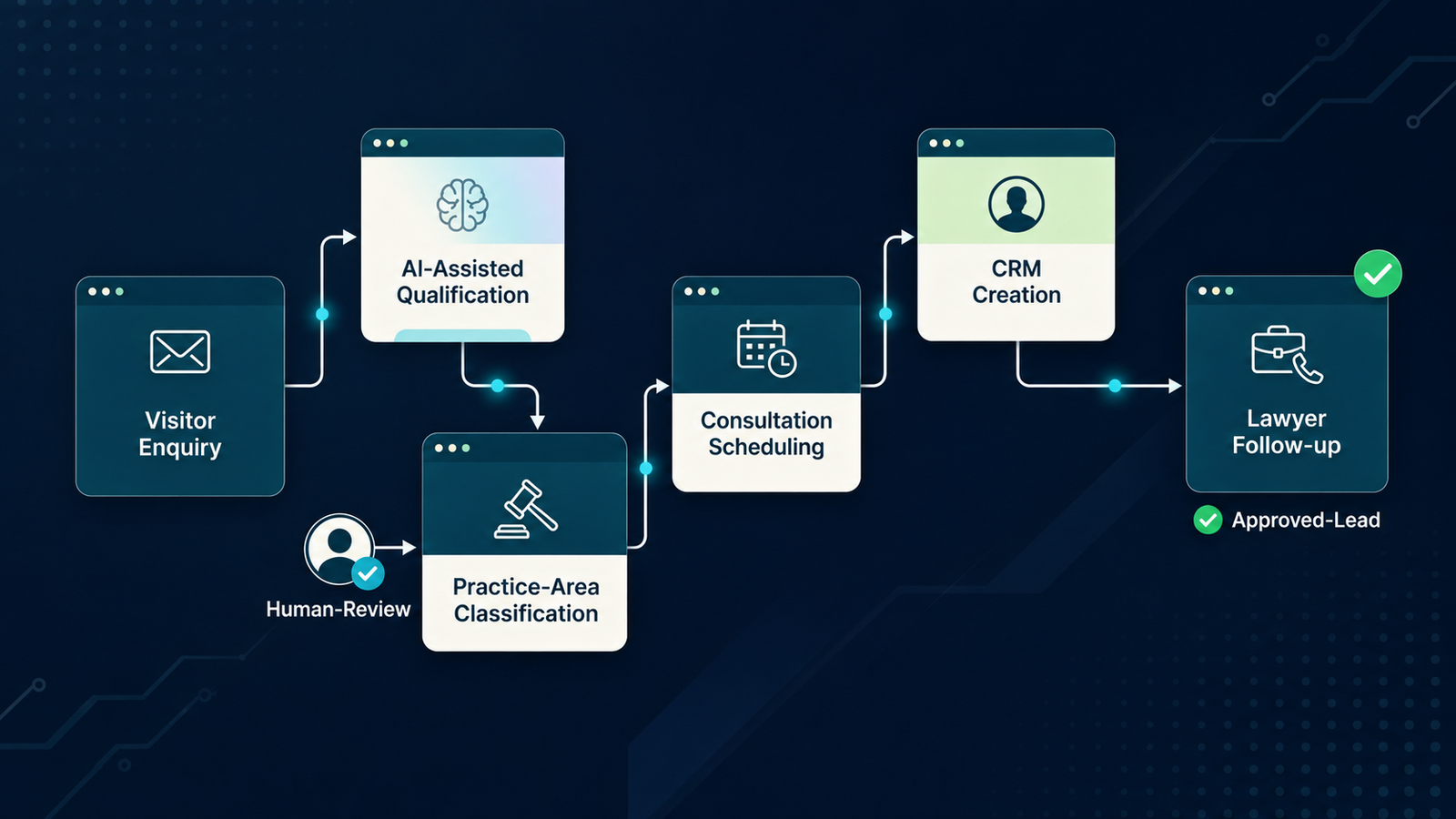
Would This Fit Your Legal Work?
Bring one real task and a clear team question about Eve AI for Personal Injury Firms. We can discuss what should be checked before a supervised pilot.
Review Eve for My Plaintiff FirmWhat Could Work Better for Your Team?
Review Eve’s plaintiff-firm workflows for intake, case information and drafting, with clear checks before your staff rely on automated results. The key task is Eve-specific plaintiff matter workflow evaluation across intake and litigation. This independent guide explains product evidence, suitability tests and limitations without implying an official relationship with the vendor.
How to Make a Careful First Decision
Choose the task
Identify the professional work that matters and the person who approves its result.
Check permissions
Confirm the product environment, source access, confidentiality and current provider restrictions.
Test and verify
Compare results with known examples and record unresolved errors before extending use.
Plan a Careful Evaluation
Start with authorized materials, an explicit professional reviewer and a test of a set of anonymized intake and injury scenarios with known escalation triggers, missing pages, inconsistent records and labeled outcomes.
Review Eve for My Plaintiff FirmTechnology and Legal Practice: An Overview
The video provides general context. Product-specific evidence, professional checks and limitations appear in the research below.
Eve AI for Personal Injury Firms: Independent Research Guide
Author: Dr. Rahul Dev: PhD Data Scientist, Technology Law & Patent Attorney, and AI Educator with 20+ years advising global CEOs and CXOs on tech, business, and legal innovation. Author profile · Contact
Research reviewed: 30 October 2026. Recheck vendor and regulatory statements before implementation.
Direct answer
Eve AI for Personal Injury Firms may be relevant for intake evaluation, medical record organization, chronology drafting, discovery and routine plaintiff-case tasks. Its suitability depends on current licensed features, source coverage, permissions, professional oversight and a controlled evaluation. Begin with one defined task and verify every consequential result independently. This page is a research guide, not a claim of affiliation, implementation or guaranteed improvement.
- What work is this tool supposed to improve?
- What has the provider actually documented?
- What evidence should a lawyer inspect?
- Which permissions and records belong in the pilot?
- How should the legal team compare results?
- What should an implementation decision include?
- Three issues that commonly change the result
- How does this differ from neighboring guides?
- What legal and professional safeguards apply?
- A practical decision checklist and next action
What work is this tool supposed to improve?
The first decision for Eve AI for Personal Injury Firms is not whether artificial intelligence is impressive; it is whether a specific legal team can explain a recurring task that the product might support. Relevant work includes intake evaluation, medical record organization, chronology drafting, discovery and routine plaintiff-case tasks. Map the work from an incoming instruction to the approved final output. Identify who owns the matter, which documents may be accessed, which party or client the team represents, and which legal judgments must remain with a qualified professional. If the task has several stages, choose one to test rather than assuming the platform will manage the whole matter. Make the intended result observable: a research note with verifiable authorities, a tracked amendment in a specified document, or an intake record routed to the right reviewer. The team should agree in advance which unresolved issues make an output unusable.
What has the provider actually documented?
According to the provider's published product information, eve presents a plaintiff-work operating layer with intake, data organization, drafting and agent-assisted matter workflows. That statement describes a product position, not a feature guarantee for every subscriber, a validated benchmark or confirmation of access in a particular office. Before adopting Eve AI for Personal Injury Firms, obtain the product's current feature list, relevant release notes, access controls and actual demonstration environment. Confirm whether the proposed task requires a licensed research collection, a particular account configuration, an external connector or data imported from existing systems. The product may distinguish between an assistant's response and an automated workflow that can change a document or route a task. Ask the vendor to identify which actions need permission and which remain suggestions. Record the exact product version and date of the source used for the assessment, especially where the published workflow is changing rapidly. Source for product/legal context: Eve, Plaintiff Law Firm AI Platform.
What evidence should a lawyer inspect?
For Eve AI for Personal Injury Firms, every proposed fact in a chronology or demand draft needs a traceable record, and intake decisions need supervised escalation rules. A citation or hyperlink is a navigation aid, not automatic proof that an interpretation is sound. Open the source, verify its identity, applicability and date, and check for an amendment, later judgment, missing schedule or contradictory record. Separate factual claims extracted from matter documents from legal conclusions drawn from outside authorities. Record the passage or page that supports each consequential assertion; mark any unsupported statement as pending review. Where a draft relies on a document repository, test both complete and incomplete collections. Where an answer concerns law, verify the relevant legal system and controlling authority rather than relying on a search-result summary. Establish a review record that another lawyer can reconstruct without trusting the AI output itself. Source for product/legal context: Eve, Plaintiff Law Firm AI Platform.
Which permissions and records belong in the pilot?
The team should specify user roles, named reviewers, approved datasets and access restrictions before entering any confidential material into Eve AI for Personal Injury Firms. Relevant potential failures include wrong claimant identity, missed limitations dates, inaccurate medical summaries, incomplete records and unsafe automated client communication. Determine whether the proposed workspace is permitted to access existing matters, company systems, case-law libraries, clinical records or contract repositories. Test a deliberately restricted item, with synthetic or authorized data, to confirm a user cannot retrieve content beyond their role. Confirm provider handling of prompts, documents, retention and sub-processors through contractual and administrative evidence rather than assuming that a marketing statement answers those questions. Decide who can upload material, who may export outputs and how access is revoked after a person leaves a matter or team. The security team and responsible legal professional should approve the pilot boundaries before real client data are introduced.
How should the legal team compare results?
An appropriate evaluation of Eve AI for Personal Injury Firms starts with a set of anonymized intake and injury scenarios with known escalation triggers, missing pages, inconsistent records and labeled outcomes. Prepare a short ground-truth answer or a set of expected findings independently, including at least one obvious case, a borderline case, a missing-source case and a deliberately misleading input. Define correctness and traceability separately: a response may read well yet omit a qualification, or cite a real source while describing it inaccurately. Record false positives, missed issues, unsupported statements and whether a human reviewer could correct the result efficiently. Do not turn a single successful demonstration into a claim that the system is reliable across matters. If the vendor changes its model or product, rerun material portions of the test. Maintain a short review sheet linking question, approved input, output, source, reviewer, finding, correction and final disposition. Source for product/legal context: Eve, Plaintiff Law Firm AI Platform.
What should an implementation decision include?
The relevant choice is precise: plaintiff-firm leadership must prioritize intake accuracy versus matter support, since the data and oversight requirements differ materially. Start with an inventory of active workflows and software dependencies. A firm with centralized records and limited permissions may need a different test from a distributed practice operating separate client workspaces. Assign an executive sponsor, professional owner, administrator and security reviewer, even if one person initially holds several roles. Establish which outputs can be circulated internally as drafts and which require a second reviewer before reaching a client or court. Document escalation procedures for unverified sources, unusual contractual terms, identity mismatches and requests involving sensitive data. A phased evaluation should end with a clear decision to proceed, restrict scope, require changes, or stop. Keep the assessment separate from any vendor marketing or the consulting provider's commercial interest.
Three issues that commonly change the result
A platform decision can turn on facts that are easy to miss: wrong claimant identity, missed limitations dates, inaccurate medical summaries, incomplete records and unsafe automated client communication. Test the specific exception rather than only the ideal case. For example, add an intentionally outdated instruction, an incomplete document bundle, or a query whose most relevant source falls outside a licensed collection. Ask whether Eve AI for Personal Injury Firms identifies its uncertainty and whether the human reviewer can see the missing materials. Do not infer that a failure has occurred in the vendor's system; these are prospective checks for an independent trial. If the issue cannot be tested in the current environment, record it as unverified instead of treating the absence of evidence as a pass. A useful procurement note also identifies what further documentation, a technical demonstration, or a controlled live trial would establish. Source for product/legal context: Eve, Plaintiff Law Firm AI Platform.
How does this differ from neighboring guides?
The editorial scope of this page is narrow: eve alternatives is a broad comparison; this page examines Eve-specific client intake and plaintiff matter control decisions. General technology overviews explain a category, while alternatives pages compare options against explicit buyer criteria. This product-use guide instead helps an identified professional decide what the named platform could do for one authorized workflow, and how to evaluate that claim using real constraints. A related legal research guide may help verify a citation but will not establish provider permissions. A contracts guide may clarify redlining methodology without confirming this product's current implementation. Follow the related links where the decision shifts rather than multiplying near-identical keyword pages. The purpose is to keep search intent, evidence and the reader's next action consistent across the directory.
What legal and professional safeguards apply?
Use of Eve AI for Personal Injury Firms must be assessed under the professional rules applicable to the actual lawyer, matter and jurisdiction. ABA Formal Opinion 512 discusses competence, client confidentiality, communications and supervision for lawyers using generative AI in the United States. The SRA's August 2026 warning addresses inaccurate citations, disclosure of confidential information and accountability for its regulated firms and lawyers in England and Wales. Neither source is a global authorization to use a tool with client documents. The team should investigate local professional conduct, data protection, privilege, document retention, contractual confidentiality and client instructions where relevant. Professionals remain responsible for reviewing evidence and final work. Legal opinions and court submissions need verification beyond a generic model response; the tool should not be portrayed as a substitute for competent licensed judgment. Source for product/legal context: Solicitors Regulation Authority, Misuse of AI Warning (August 2026).
A practical decision checklist and next action
Conclude the Eve AI for Personal Injury Firms assessment with a written checklist: defined use case, intended users, authorized sources, product functionality confirmed on the relevant account, known integration dependencies, confidential-data controls, independent reference answers, error classifications, named reviewer and escalation owner. Include the results of the sample trial and the questions the trial could not answer. Confirm whether the next action is specialist research, user training, a revised playbook, a permission review or a separate technical implementation engagement. Revisit the decision when the provider changes workflows or the applicable professional rules change. An independent adviser may help structure the comparison, but provider affiliation, guaranteed improvements, client results and actual software deployment must never be implied without evidence and explicit agreement.
Illustrative Review Scenarios
These are proposed controlled tests, not completed vendor performance measurements or client results.
Intake consent boundary
Illustrative hypothetical test for Eve AI for Personal Injury Firms: A potential claimant provides sensitive medical details; the firm tests what is recorded, routed and held for human review. The responsible professional first prepares the expected findings and the authorized materials, including one known exception. After the tool is used in a permitted environment, a reviewer traces each consequential output to original evidence and records where it is incomplete or misleading. The outcome is a documented suitability decision for this single task, not proof of product accuracy for an entire profession. The test can be adapted to the applicable rules, data rights, team skill and workload.
Medical chronology
Illustrative hypothetical test for Eve AI for Personal Injury Firms: A treatment sequence contains duplicate dates and an omitted emergency visit; the reviewer checks citations to the original record. The responsible professional first prepares the expected findings and the authorized materials, including one known exception. After the tool is used in a permitted environment, a reviewer traces each consequential output to original evidence and records where it is incomplete or misleading. The outcome is a documented suitability decision for this single task, not proof of product accuracy for an entire profession. The test can be adapted to the applicable rules, data rights, team skill and workload.
Discovery draft
Illustrative hypothetical test for Eve AI for Personal Injury Firms: A draft discovery response is compared to verified case facts, privileged material and actual court deadlines. The responsible professional first prepares the expected findings and the authorized materials, including one known exception. After the tool is used in a permitted environment, a reviewer traces each consequential output to original evidence and records where it is incomplete or misleading. The outcome is a documented suitability decision for this single task, not proof of product accuracy for an entire profession. The test can be adapted to the applicable rules, data rights, team skill and workload.
Choose the Guide That Matches Your Question
| Decision | Related guide | Scope |
|---|---|---|
| Current product decision | Eve Legal Ai Alternatives | Vendor comparison, category guidance or procurement research |
| Adjacent legal task | Evenup For Personal Injury Firms | Related but distinct buyer problem |
| Tool selection | Legal Ai Tools For Law Firms | Broad category and independent tool discovery |
Practical Follow-up Questions
Can Eve AI for Personal Injury Firms replace a qualified lawyer?
No. Eve AI for Personal Injury Firms may support tasks such as intake evaluation, medical record organization, chronology drafting, discovery and routine plaintiff-case tasks, but independent judgment, supervision and the applicable professional duties remain essential. Verify the tool’s actual capabilities and the sources before use.
What should our team test first in Eve AI for Personal Injury Firms?
Select one bounded workflow and use authorized example material. Establish expected answers independently, document wrong claimant identity, missed limitations dates, inaccurate medical summaries, incomplete records and unsafe automated client communication, and record a named reviewer’s findings.
How do we decide if Eve AI for Personal Injury Firms fits our jurisdiction?
Confirm available legal sources, product access and professional rules for the relevant jurisdiction. A provider may describe global or national coverage, but the firm must test specific authorities and constraints before relying on results.
Sources and Research Limitations
First-party product statements describe the provider's position, not independently established results. Sources are dated by review context. These pages do not claim vendor affiliation, verified search volume, software access, client outcomes or universal legal compliance.
- Eve, Plaintiff Law Firm AI Platform — Vendor describes plaintiff intake, records, legal research and case drafting..
- Eve, Company and Product Mission — Provider describes plaintiff-law-firm focus..
- American Bar Association, Formal Opinion 512 (July 2024) — U.S. professional guidance on duties of competence, confidentiality, supervision and communication..
- Solicitors Regulation Authority, Misuse of AI Warning (August 2026) — Applies to SRA-regulated practitioners; concerns inaccurate output and confidentiality..
- NIST, Generative AI Risk Management Profile — Voluntary AI risk-management reference, not an automatically applicable law..
Discuss a Practical Next Step
Explain your team, current software, jurisdiction and intended use of Eve AI for Personal Injury Firms. Any consultation must be scoped to available evidence and capabilities.
Review Eve for My Plaintiff FirmAbout Dr. Rahul Dev
Dr. Rahul Dev is a PhD Data Scientist, Technology Law and Patent Attorney, AI Educator, and international business advisor with more than 20 years of professional experience. His work spans artificial intelligence, emerging technology, intellectual property, digital growth, technical research, and business strategy. Read the author profile.