
Set Up ChatGPT to Help Your Law Firm with Marketing
Turn occasional ChatGPT conversations into a consistent planning and drafting routine that your team can check and reuse.
Save or follow this source
Add AdvocateRahulDev.com to Google Preferred Sources or open this page in your preferred AI tool.
- Organize your firm’s approved marketing information
- Set up repeatable briefs and review instructions
- Train staff to check outputs before they go public
Discuss a Practical First Step
Individual team members may use ChatGPT with different instructions, versions of firm facts and review standards. A defined firm workflow creates consistency without pretending the software can verify itself.
Discuss Our ChatGPT Marketing SetupWhat Could Improve for Your Firm?
Individual team members may use ChatGPT with different instructions, versions of firm facts and review standards. A defined firm workflow creates consistency without pretending the software can verify itself.
What You Can Work Toward
A scoped engagement can help the firm pursue these practical objectives; specific outcomes depend on the agreed work.
- Create a structured reference set for marketing use
- Prepare recurring briefs and content templates
- Assign review and escalation responsibilities
- Test current ChatGPT capabilities against actual staff tasks
What the Proposed Service Can Include
The following are candidate components for a tailored scope, not a claim that every account or integration supports every item.
- Approved information and instruction inventory
- Suggested ChatGPT Project structure and task patterns
- Example briefs and content-checking rules
- Pilot acceptance scenarios
- Staff handover guide and platform-change watchlist
Why a Supervised Approach Matters
The setup is defined around marketing outcomes and current official product capabilities. Existing custom GPT arrangements require special attention because OpenAI has announced changes to custom GPT availability and migration.
Make the Next Step Specific
Share the marketing process you want to improve and the software your team already uses. Review the firm’s accounts and permissions, agree marketing-only data boundaries, configure supported reusable context, test staff examples and document updates. Final platform configuration depends on the client environment.
Discuss Our ChatGPT Marketing SetupHow a First Engagement Would Work
Review the firm’s accounts and permissions, agree marketing-only data boundaries, configure supported reusable context, test staff examples and document updates. Final platform configuration depends on the client environment.
Is This the Right Fit?
For firms using ChatGPT for public marketing assistance. It is not a promise of permanent model memory, automatic citations or unrestricted external system access.
Technology and Legal Practice: An Overview
This overview provides general context. The evidence-linked guide below addresses the specific marketing use case and its limits.
Set Up ChatGPT to Help Your Law Firm with Marketing: Research and Decision Guide
Author: Dr. Rahul Dev: PhD Data Scientist, Technology Law & Patent Attorney, and AI Educator with 20+ years advising global CEOs and CXOs on tech, business, and legal innovation. Author profile · Contact
Direct answer: Turn occasional ChatGPT conversations into a consistent planning and drafting routine that your team can check and reuse. The starting decision is whether your firm has verified facts, approved tools, designated reviewers and one manageable workflow. The appropriate implementation differs by firm and does not guarantee marketing results.
Research review: 5 November 2026. Product functionality and professional obligations may change; verify current primary sources.
What should a law-firm ChatGPT marketing setup include?
A practical setup includes four elements: verified firm information, instructions for recurring marketing tasks, a human review method and an owner who keeps the materials current. The objective is to reduce repeated re-explanation while preventing invented firm facts from moving into public content. Begin with tasks that the firm already performs, such as weekly topic briefs, draft newsletter outlines or repurposing an approved article for a professional social channel.
The setup is not a substitute for a marketing strategy, legal advertising guidance or source checking. A fluent draft can still misstate jurisdictions, practice areas, lawyer experience or legal procedures. The firm needs to control both the information that enters the assistant and the way outputs are checked before use.
Understand Projects and reusable context
OpenAI documents ChatGPT Projects as a way to group related chats, reference files and instructions. For marketing work, a firm can consider organizing approved facts, brand guidance, editorial briefs and recurring questions within an access-controlled workspace, depending on the account’s current capabilities. A documented Project structure can help staff understand which material belongs to marketing and which must never be uploaded.
A Project is not a factual verification service. Users must still check whether it is referring to the correct version of a document and whether shared context is visible to the appropriate people. The adviser should test actual product behavior in the firm’s account rather than assume every user has the same features.
Plan around the custom GPT transition
OpenAI has announced a transition away from custom GPTs toward plugins, with a standard scheduled retirement date of 11 December 2026 and exceptions for certain workspaces. The official migration FAQ states that permissions, access and migration availability can vary by account. A new marketing setup should not depend on an assumption that clients can always create fresh GPTs or move old custom actions automatically.
Inventory any GPTs the firm already uses and document their instructions, reference content and test prompts. Determine which functions can be implemented through current Projects or available plugins and which require another supported approach. The setup should remain useful even if a particular interface or feature changes.
Choose approved public information first
Build a minimal fact sheet with the firm’s name, practice areas, lawyers, office locations, current website pages, approved descriptions of services and public contact routes. Record who confirmed each item. Use examples of the firm’s preferred style without including confidential client matter details. Separate verified statements from proposed language, and identify any claims that require professional approval.
Some files will contain older material that conflicts with current services or staff details. Resolve contradictions before sharing them as context. Good input organization is more important than simply uploading a larger document collection. A smaller trustworthy reference set also makes it easier to identify when an AI-generated statement has no real source.
Create a weekly marketing brief the team can repeat
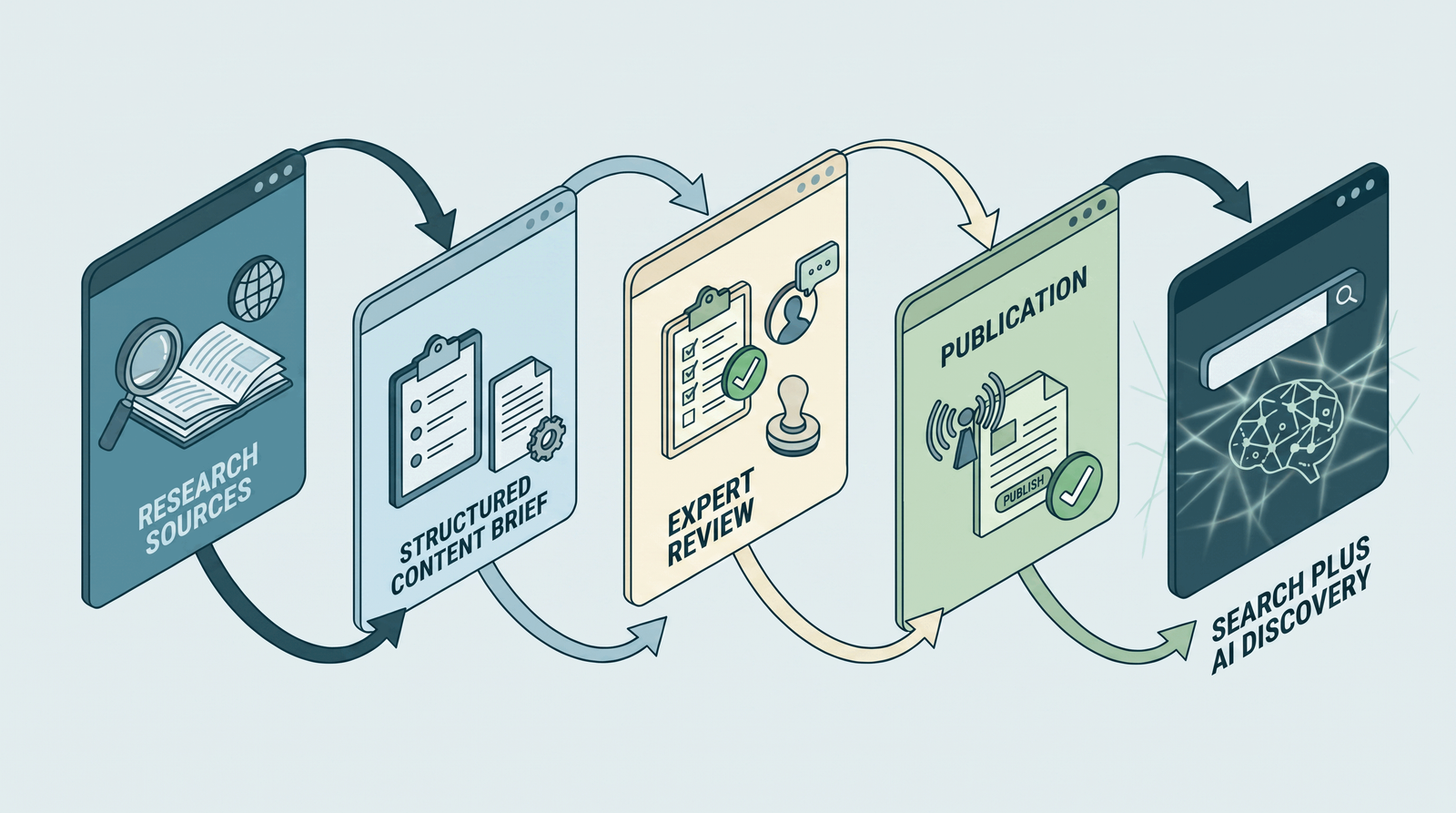
The team should be able to start from a simple request: explain a service to a particular audience, in an identified jurisdiction, for a chosen channel. A standard brief records the intended reader, user problem, evidence sources, claims to avoid, approval owner and desired next action. ChatGPT can help reorganize this information into an outline and draft questions, but the team should confirm the source material before accepting a suggested fact or case reference.
A useful workflow stores approved briefs and tracks revisions. It should not turn every variation of a question into a new website page. Google’s people-first guidance favors substantive, reliable content rather than mass-produced repetitions. The same discipline benefits a law firm’s readers.
Keep a distinct brand and compliance review
Marketing drafts need checks that extend beyond spelling or tone. Verify whether the lawyer biography is current, whether the page refers to the correct jurisdiction, whether descriptions of legal services are accurate and whether the copy suggests unsupported results. Review citations independently against the actual primary source. Do not describe a legal outcome as guaranteed or imply a professional qualification the firm does not hold.
The assistant may help identify missing evidence, but it should not be the final judge of its own output. A human reviewer needs a clear way to pause the draft, request corrections and document approval. For legal professionals, ABA Formal Opinion 512 highlights supervision and confidentiality obligations that require attention.
Do not connect client data by default
A marketing assistant rarely needs privileged case material to draft a general explainer or weekly newsletter outline. Use public descriptions and invented training scenarios during setup. If staff want to connect email, CRM, shared drives or other systems, verify the proposed permission scope, administrator approval and applicable confidentiality rules first. This assessment should also consider what happens when a user revokes access or an integration fails.
Avoid treating “available connector” as equivalent to “approved use of all connected data.” Integration authorization is a firm-specific decision. An initial marketing workflow can remain entirely within reviewed reference documents and manual copy-and-paste while the firm evaluates whether more extensive connections are justified.
Run practical test cases before handover
Prepare several realistic, nonconfidential tasks. One asks for a clear weekly brief using approved practice information. Another intentionally includes an outdated location or unsupported claim. A third requests a social post that could be mistaken for individual legal advice. The reviewers should identify the problems, request corrections and record whether the instructions helped. Test a long and a short version of the same brief to reveal whether the process behaves consistently.
An acceptable handover includes the instruction set, location of approved sources, operating steps, example outputs and the person responsible for future revisions. Staff should be able to reproduce the process without depending on a consultant to remember hidden conversation context.
What can be measured after setup?
Measure whether staff use the approved process, how many drafts require source correction, how long review takes and whether the templates produce understandable content for a lay reader. Establish a baseline before configuration. Marketing results, search visibility and client enquiries may also be monitored through existing tools, but changes in these measures cannot automatically be attributed to ChatGPT. Channel selection, content quality, client demand and website usability all matter.
The setup should include a small ongoing review routine: recheck product features, refresh approved facts, sample published content for accuracy and revise instructions when a recurring error appears. A reliable system is maintained, not merely installed once.
How this differs from general ChatGPT training
General training explains prompts, interface features and common risks. A marketing setup applies those principles to one firm’s actual public information, selected tasks and approval process. It asks staff to perform a repeatable weekly brief and verify that its sources and instructions are correct. The project should explicitly exclude legal advice, unapproved client data use and any unsupported claims about specialized tools.
For broad AI adoption across the whole firm, review the existing ChatGPT for Law Firms guide. For a tool-neutral marketing process or a wider workflow, consider the 30-Day Sprint or personalized AI marketing build.
Primary Sources and Limitations
The following official sources support the general technical and professional statements above. They do not establish client-specific marketing results or product access.
Related Guides and Options
Talk Through Your Firm’s Next Step
Explain the current task, approved software and preferred outcome without sharing confidential client information.
Discuss Our ChatGPT Marketing SetupAbout Dr. Rahul Dev
Dr. Rahul Dev is a PhD Data Scientist, Technology Law and Patent Attorney, AI Educator, and international business advisor with more than 20 years of professional experience. His work spans artificial intelligence, emerging technology, intellectual property, digital growth, technical research, and business strategy. He advises law firms, founders, CEOs, and CXOs on how technology, content, data, and legal systems influence authority, visibility, innovation, and commercial growth.
Explore his professional background, the research library, or contact options.