
Set Up Claude to Help Your Law Firm with Marketing
Help your team plan, draft and review marketing work with Claude—using the firm’s approved facts and a clear human sign-off process.
Save or follow this source
Add AdvocateRahulDev.com to Google Preferred Sources or open this page in your preferred AI tool.
- Organize accurate firm facts and writing preferences
- Plan campaigns and review content with current Claude capabilities
- Give staff a documented process and approval checklist
Discuss a Practical First Step
Claude already offers marketing functions, so the practical work is not simply creating prompts. It is deciding which firm information is reliable, which tasks should use which supported feature and who checks public output.
Discuss Our Claude Marketing SetupWhat Could Improve for Your Firm?
Claude already offers marketing functions, so the practical work is not simply creating prompts. It is deciding which firm information is reliable, which tasks should use which supported feature and who checks public output.
What You Can Work Toward
A scoped engagement can help the firm pursue these practical objectives; specific outcomes depend on the agreed work.
- Agree what the firm wants Claude to help with
- Create a clear, permissioned source and brand guide
- Test a repeatable campaign brief and editorial review process
- Document staff instructions and safe handoffs
What the Proposed Service Can Include
The following are candidate components for a tailored scope, not a claim that every account or integration supports every item.
- Firm-approved brand and reference inventory
- Campaign planning and draft examples
- Brand review and evidence checklist
- Tool and connector access assessment
- Pilot record and handover instructions
Why a Supervised Approach Matters
The scope starts from documented Anthropic features and adds a law-firm-specific layer of source control, professional review and responsibility. No claim of Anthropic certification or partnership is made.
Make the Next Step Specific
Share the marketing process you want to improve and the software your team already uses. Review the existing Claude plan and account settings, identify permitted marketing uses, test current Marketing plugin functions where available and document the firm’s final review and distribution steps.
Discuss Our Claude Marketing SetupHow a First Engagement Would Work
Review the existing Claude plan and account settings, identify permitted marketing uses, test current Marketing plugin functions where available and document the firm’s final review and distribution steps.
Is This the Right Fit?
For firms considering Claude for public-facing marketing activities. Do not treat general AI drafting features as legal verification or assume every plugin and connection is available in every account.
Technology and Legal Practice: An Overview
This overview provides general context. The evidence-linked guide below addresses the specific marketing use case and its limits.
Set Up Claude to Help Your Law Firm with Marketing: Research and Decision Guide
Author: Dr. Rahul Dev: PhD Data Scientist, Technology Law & Patent Attorney, and AI Educator with 20+ years advising global CEOs and CXOs on tech, business, and legal innovation. Author profile · Contact
Direct answer: Help your team plan, draft and review marketing work with Claude—using the firm’s approved facts and a clear human sign-off process. The starting decision is whether your firm has verified facts, approved tools, designated reviewers and one manageable workflow. The appropriate implementation differs by firm and does not guarantee marketing results.
Research review: 5 November 2026. Product functionality and professional obligations may change; verify current primary sources.
What can Claude contribute to a law firm marketing workflow?
Claude can assist with planning, preparing and reviewing marketing material when given a sufficiently clear brief and reliable supporting information. Anthropic’s Marketing plugin describes functions for drafting content, planning campaigns, checking brand voice, creating competitive briefs and producing performance reports. These are vendor-described capabilities, not evidence that the software can publish legally compliant marketing material without professional supervision.
The implementation decision is therefore what the firm wants to accomplish with its existing resources. A small law firm may need one weekly brief and one review step. A larger team may require several practice-area owners, consistent brand guidelines and a separate approval system. Both should begin with human-readable operating instructions.
Check product availability and permissions first
Before promising a workflow, verify the firm’s Claude account, supported environment, tool access and organization policies. Anthropic describes its Marketing plugin in the context of Claude Cowork and relevant connected tools. A page listing those functions does not establish that every law firm already has the necessary access or approvals. The setup should begin by checking the current supported documentation, available features and whether administrators permit the desired use.
Do not design the core process around an integration simply because it appears in a demonstration. If a connector is unavailable or inappropriate for confidential information, use approved public examples and manual handoffs. A useful process can be tested before any external marketing application is connected.
Build an approved brand and service information set
Gather the firm’s current public descriptions of practice areas, lawyers, contact routes and website content, then resolve contradictions. Add a writing guide that states preferred language, explanations for prospective clients, restricted terms and rules for claims requiring evidence. Identify which jurisdictions the guidance covers. The firm should decide who can edit these source files and when an approved change becomes effective across its marketing materials.
Because AI-generated content can reflect errors in supplied documents, source management remains a separate responsibility. A brand review may compare copy with a style guide, but it cannot independently establish that an attorney is admitted in a particular jurisdiction or that a legal statement is current. Those claims require authoritative verification.
Use campaign planning without copying generic templates
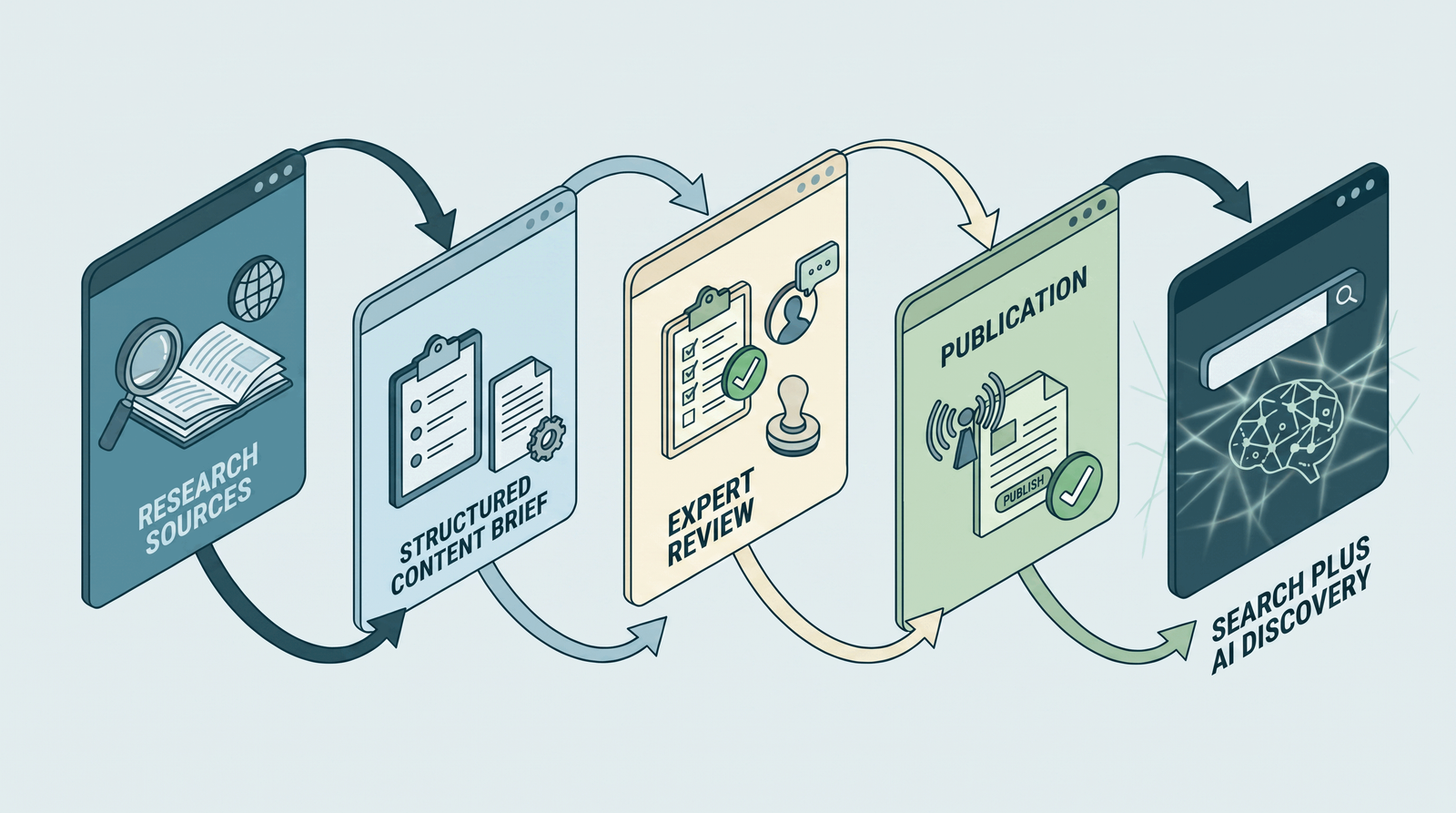
A useful brief identifies the business objective, the reader’s question, the relevant service, the appropriate channel, the sources to consult and the intended next action. Claude can help organize these into a calendar or campaign outline. The human team should decide whether the proposed themes are genuinely relevant to its target clients and whether the firm can publish accurate supporting material.
Marketing does not improve merely because a system proposes more content. For a research-led website, the team should review existing URLs before creating new ones and look for gaps that require actual new analysis. Google’s guidance on helpful content encourages original information and substantive value over repeated keyword variations.
Prepare drafts and review them independently
A drafting workflow should carry approved facts into a clear explanation suitable for someone unfamiliar with legal terminology. The reviewer then checks any statements about legal processes, the firm’s services and professional qualifications. A brand check may identify inconsistent tone or missing descriptions, but the firm still needs a substantive evidence check and final approval before publication.
Create two separate records: the drafting brief and the editorial decision. The first explains what the assistant was asked to do; the second documents what a qualified human accepted, changed or rejected. This distinction is useful when multiple people contribute to an article or when the firm must correct older public material.
Separate safe marketing assistance from legal advice
A general marketing assistant should not answer individual legal questions as though it represents the firm, and it should not use confidential case files to make generic posts sound more authentic. Use fictional training scenarios or already-public reference material where possible. The output should communicate the firm’s capabilities in a measured manner while inviting prospective clients to obtain appropriate professional advice.
Lawyers remain responsible for applicable competence, confidentiality and supervision obligations. ABA Formal Opinion 512 identifies these issues in the context of generative AI. Comparable local advertising and privacy requirements should be checked for the jurisdictions where the firm practices or markets.
How to use competitive research responsibly
Competitive briefs can help identify the types of questions other firms answer and how services are described online. That information is useful for deciding which genuine client questions are being neglected. It should not become a request to imitate another firm’s confidential material, fabricate market share data or assert that a competitor’s tool performs differently without evidence.
Use publicly accessible information and record the sources and access date. The team should distinguish observations from assumptions and verify each claim before using it in a sales page. The resulting analysis can support better positioning without turning the firm’s marketing into repetitive restatements of competitor content.
A controlled pilot using one weekly campaign
Choose a modest example: one approved practice-area question, an outline, a short public article draft, a professional social summary and a brand review. Record the approved reference sources and the reviewer responsible for every item. Deliberately test a draft that contains a questionable jurisdiction statement or a vague claim of professional success. A good review process should catch these issues before anything is sent or published.
Measure whether the workflow is reproducible, whether staff understand its limitations and whether changes are documented. Do not switch on an automated publishing or messaging step merely to demonstrate technical completeness. A manually approved process may be the right endpoint for the first phase.
Compare Claude setup with a broader marketing system
A Claude-specific setup concentrates on the capabilities and limitations of that product in the firm’s environment. A broader AI marketing system may coordinate several tools, reporting sources and staff workflows, with Claude as one possible component. The two services should not be represented as identical offerings with different brand names. A law firm may also decide to remain on another assistant if its current security and training model is already working.
For firm-wide adoption beyond marketing, the existing Claude for Law Firms research page provides a broader context. For a technology-neutral implementation, review the personalized marketing build instead.
What a responsible handover looks like
The handover should include an inventory of approved reference material, the location of marketing instructions, sample briefs, the review checklist, examples of rejected outputs, staff responsibilities and a procedure for updating the workflow as product features change. The firm should know how to disable access, correct an incorrect draft and avoid accidental publication. Complex integrations require separate permission checks and may need specialist technical support.
A short acceptance exercise asks someone who did not configure the process to create a brief, prepare a draft and apply the approval guide using only written instructions. That test shows whether the workflow belongs to the firm or remains dependent on undocumented knowledge held by the consultant.
Primary Sources and Limitations
The following official sources support the general technical and professional statements above. They do not establish client-specific marketing results or product access.
Related Guides and Options
Talk Through Your Firm’s Next Step
Explain the current task, approved software and preferred outcome without sharing confidential client information.
Discuss Our Claude Marketing SetupAbout Dr. Rahul Dev
Dr. Rahul Dev is a PhD Data Scientist, Technology Law and Patent Attorney, AI Educator, and international business advisor with more than 20 years of professional experience. His work spans artificial intelligence, emerging technology, intellectual property, digital growth, technical research, and business strategy. He advises law firms, founders, CEOs, and CXOs on how technology, content, data, and legal systems influence authority, visibility, innovation, and commercial growth.
Explore his professional background, the research library, or contact options.