
Legal-Tech Go-to-Market Consulting for Legal AI and Software Companies
A strong legal-tech product can still struggle if the market, buyer, message and sales motion are not aligned. Legal-tech go-to-market consulting helps define where to compete, who to target, which legal problem to own, what proof buyers need, and which commercial motion should carry the product into sustained use.
Save or follow this source
Add AdvocateRahulDev.com to Google Preferred Sources or open this page in your preferred AI tool.
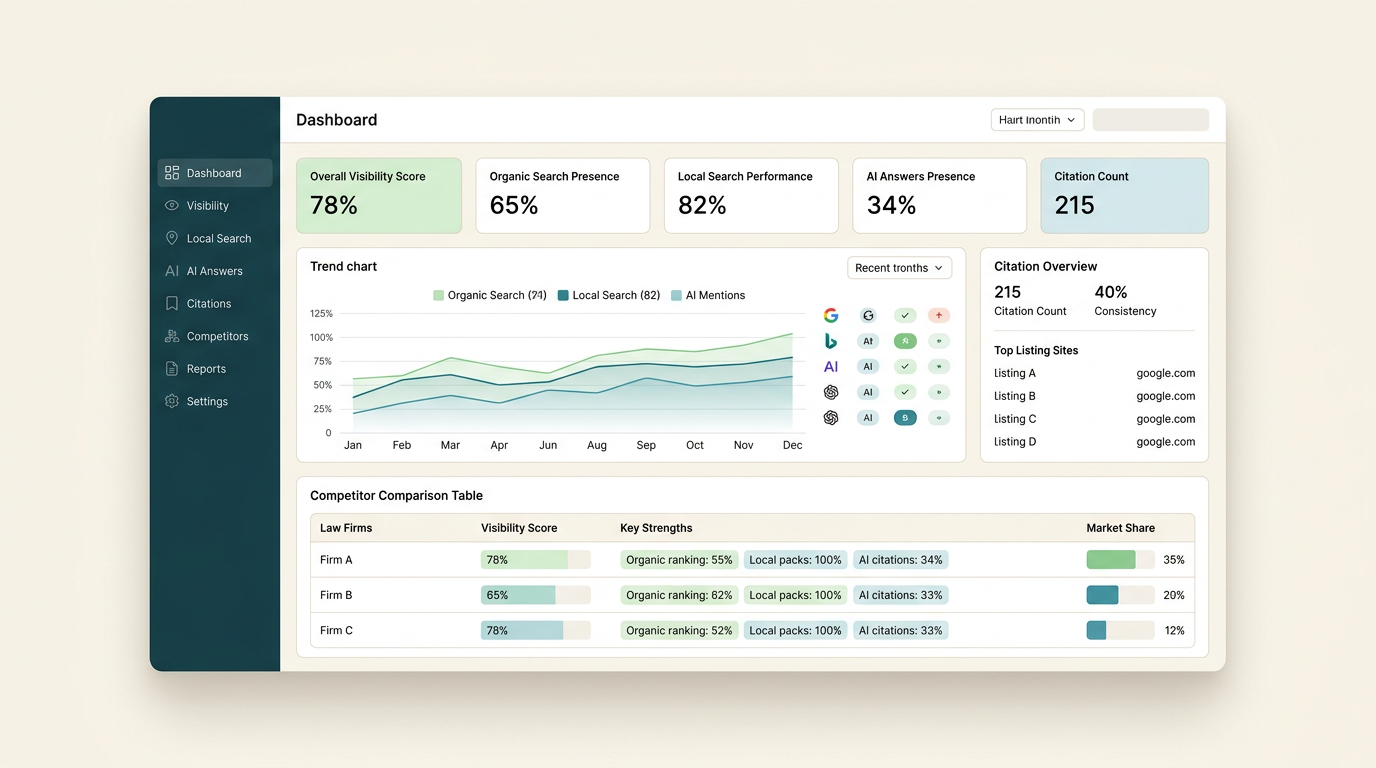
Turn Legal-Tech Positioning Into a Clear Growth Plan
Clarify the market, ideal buyer, legal workflow problem and proof required before investing further in outreach, partnerships or demand generation.
Discuss Your Legal-Tech GTM PrioritiesProduct strength does not solve market ambiguity
A legal-tech company may already have a working product, early customers, strong engineering, funding and an experienced sales team. Growth can still remain inconsistent if the company has not answered a few commercial questions precisely enough.
- Which legal market should we enter first?
- Which customer segment should receive priority?
- Who actually owns the buying decision?
- Which legal workflow matters most?
- What proof does the buyer require?
- Which sales motion fits the account?
- What should happen after a successful pilot?
The first job of go-to-market strategy is not more activity. It is commercial focus.
Legal-Tech GTM Sequence
Market → Segment → Buyer → Problem → Positioning → Proof → Channel → Sales Motion → Adoption → Expansion
Trust, Legal Engineering and data operate across the sequence where they support buyer confidence, workflow proof and commercial learning.
Start with the market, not the campaign
A legal-tech GTM strategy should begin with market selection. Relevant questions can include buyer concentration, legal-tech maturity, practice-area relevance, competitor presence, procurement norms, security expectations, local partnerships and jurisdiction-specific positioning.
For international expansion, these questions become more important. A motion that works in one country should not automatically be copied into another without testing the assumptions behind it.
Market
Choose the jurisdiction, legal segment and use case where the product has a credible route to buyers.
Segment
Prioritize commercially distinct groups such as large firms, midsize firms, corporate legal teams, financial institutions or specialist practices.
Buyer
Identify who owns budget, workflow, technical approval, procurement and adoption.
Define the ICP before scaling demand
A broad target such as “law firms” is rarely precise enough. The ideal customer profile may need to identify firm size, practice area, jurisdiction, technology maturity, workflow complexity, existing systems, buying trigger and purchasing authority.
The goal is not to shrink the addressable market unnecessarily. It is to make the commercial motion specific enough to be testable and repeatable.
Map the entire buying group
| Stakeholder | Typical commercial question |
|---|---|
| Economic buyer | Why should we fund this? |
| Legal workflow owner | Does it improve the legal process? |
| Innovation / KM | Can it work across the organization? |
| IT / Security | Can it operate within technical and security requirements? |
| Procurement | Can this vendor pass the purchasing process? |
| End user | Can I use it reliably in my work? |
| Executive sponsor | Is this strategically worth scaling? |
This AdvocateRahulDev.com buyer map is an analytical framework, not an industry standard. Its purpose is to prevent a common error: treating the target organization as though it were one buyer.
Position around a legal problem, not around AI alone
The legal-AI market contains many broad claims. A stronger position begins with buyer + workflow + problem + product intervention + practical outcome.
Generic
AI contract technology.
Workflow-specific
AI-assisted first-pass review for a defined procurement contract workflow with explicit lawyer review before final approval.
The second description tells the buyer more about where the product fits, what work changes and who remains responsible. This is where Legal Engineering can strengthen GTM by testing positioning against actual legal work.
Build trust into the GTM architecture
For many legal buyers, trust questions arise before final procurement. Depending on the product, buyers may ask about confidentiality, data access, security, permissions, model behavior, reliability, integrations, human review and governance.
These questions can affect whether the buyer is willing to accept a demo, run a pilot, involve security teams or move toward deployment. Trust therefore belongs inside the commercial journey rather than being treated only as an end-stage compliance exercise.
Build proof in stages
Claim → Demo → Pilot → Reference → Rollout → Expansion
Claim
Explain the intended value and the workflow problem being addressed.
Demo
Show how the product participates in a specific legal workflow.
Pilot
Test a defined use case with defined users and success criteria.
Reference
Use credible customer evidence where available and permitted.
Rollout
Move from limited evaluation into broader operational use.
Expansion
Extend successful usage to more teams, users, workflows or markets.
Build the GTM System Before Scaling the Activity
More outbound, events or advertising will not solve an unclear market, buyer or position. Define the market, ICP, stakeholder map, workflow problem and proof requirement before increasing commercial activity.
Map Your Market and BuyerDesign demos around legal work
A product demo should not only show what the software can do. It should show how a specific legal team performs a specific task differently.
- Current process
- Current friction
- Product intervention
- Human-review point
- Target workflow
- Testable outcome
The GTM page owns the commercial motion. Legal Engineering owns the deeper workflow-design, pilot and implementation discipline.
Choose channels according to the buyer
Enterprise Sales
Often relevant for complex, higher-value products involving multiple stakeholders.
Founder-Led Sales
Useful during early market learning when positioning and use cases are still being refined.
Account-Based Marketing
Potentially useful where the target-account universe is relatively concentrated.
Events & Partnerships
Can support relationship development, credibility, integration or regional market access.
Search & AI Discovery
Can capture buyers actively researching problems, categories or vendors.
Product-Led / Self-Service
More appropriate where implementation and purchasing friction are sufficiently low.
The channel should follow buyer + product complexity + deal economics + proof requirement, rather than channel popularity.
Align Marketing, Sales, Product and Customer Success around one market model
A recurring GTM failure occurs when every function operates from a different definition of the buyer. Marketing may sell productivity, Sales may discover risk, Product may demonstrate automation, and Customer Success may implement knowledge retrieval.
A coherent GTM system should maintain continuity through:
ICP → Problem → Positioning → Demo → Pilot → Onboarding → Adoption
Adapt GTM to the company's stage
Early Stage
Prioritize ICP learning, founder-led discovery, use-case clarity and initial proof.
Growth Stage
Build repeatable pipeline, enterprise sales, product marketing, Legal Engineering and customer success.
Post-Funding
Coordinate hiring, RevOps, account segmentation, partnerships and market expansion.
International Expansion
Re-test market selection, localization, buyer mapping, regional partnerships and procurement assumptions.
Diagnose the GTM bottleneck
| Commercial symptom | Possible constraint |
|---|---|
| High awareness, weak pipeline | ICP or positioning |
| Many meetings, few qualified opportunities | Buyer or segmentation |
| Strong demos, few pilots | Proof or workflow fit |
| Successful pilots, little rollout | Adoption or sponsorship |
| Very long sales cycle | Procurement or stakeholder complexity |
| Strong home market, weak new-market traction | Localization or buyer mismatch |
| Heavy outbound, weak response | Message or market fit |
| Strong customers, limited expansion | Adoption or customer-success handoff |
This is a diagnostic framework, not a deterministic formula. The same symptom can have several causes.
What Legal-Tech GTM consulting can include
Market Selection
Jurisdiction analysis, segment selection, target-account universe and competitive context.
ICP & Buyer Mapping
Economic buyer, workflow owner, technical buyer, procurement and end-user mapping.
Positioning
Category, problem, differentiation, value proposition and commercial narrative.
Product Marketing
Use cases, solution pages, sales assets and market education.
Demo & Pilot Architecture
Workflow demonstrations, pilot scope, proof criteria and rollout paths.
Enterprise Sales
Target accounts, discovery, stakeholder mapping and procurement planning.
Channel Strategy
Outbound, ABM, events, partnerships, search and thought leadership.
Market-Entry GTM
Local positioning, regional accounts, partnerships and localized content.
Adoption Handoff
Connect commercial promises with onboarding, customer success and expansion.
When this consulting model is relevant
Legal-Tech GTM consulting may be particularly useful when a company is preparing a product launch, moving beyond founder-led sales, entering enterprise accounts, scaling after funding, changing ICP, entering a new country, converting demos poorly, struggling to move pilots into rollout, or building regional commercial teams.
It is less likely to solve a situation where the underlying product problem or customer need remains unresolved. GTM can improve market alignment. It cannot manufacture product-market fit.
The research behind legal-tech GTM
Legal-tech go-to-market strategy sits at the intersection of market selection, legal buying behavior, product positioning, enterprise sales, trust, Legal Engineering, procurement, adoption and international expansion. The research layer below examines why legal-tech GTM differs from ordinary SaaS and how proof, pilots and adoption fit into the commercial model.
What is legal-tech go-to-market strategy?
Legal-tech go-to-market strategy defines how a company chooses a legal market, identifies the right customer segment, maps the buying group, positions the product, creates proof, reaches prospective buyers and converts adoption into expansion.
Current legal-tech organizations provide useful evidence that this commercial system can extend beyond marketing. Clio's current sales organization includes Enterprise and Strategic Account Executives, Legal Architects, business-development roles and solutions engineering. Harvey similarly combines Enterprise Account Executives with Legal Engineers and describes enterprise roles that span prospecting, contracting, onboarding and user growth.
Why legal-tech GTM differs from ordinary SaaS
Ordinary SaaS frameworks can still be useful, but legal technology can add specialized workflows, multiple stakeholders, security review, professional-risk concerns, procurement complexity and adoption requirements. The GTM system should therefore reflect the characteristics of the buyer rather than copying a generic motion unchanged.
Law firms and in-house legal teams are different markets
Law-firm buying groups can include partners, practice leaders, CIO/CTO functions, innovation, knowledge management, security, procurement, finance and lawyers who will use the system. Corporate legal departments can involve General Counsel, legal operations, compliance, IT, security, procurement, finance and business teams. The same product may therefore require different positioning, proof and stakeholder management.
A pilot should test a decision, not merely generate activity
A useful pilot defines the workflow, users, source material, existing process, intended change, human-review points and success criteria. A pilot can then help a buyer decide whether and how broader deployment makes sense rather than simply generating temporary product usage.
Enterprise legal-tech sales is multi-stage
Current company structures show that enterprise selling can span prospecting, workflow discovery, demonstrations, security review, procurement, contracting, onboarding and expansion. This supports designing GTM around the full buying and adoption process rather than lead acquisition alone.
Legal Engineering can support GTM without replacing Sales
Within GTM, Legal Engineering can support workflow discovery, practice-specific demonstrations, pilot design, use-case development, proof-of-value and implementation planning. Current Harvey role descriptions place Legal Engineers inside Sales alongside Account Executives, providing direct evidence for this type of legal-domain support during customer evaluation.
Adoption belongs inside GTM
A product that is purchased but not used has not completed the intended commercial journey. Enterprise roles at current legal-tech companies increasingly connect sales with onboarding, customer success and user growth. For many products the relevant commercial model is therefore acquisition → sale → implementation → adoption → expansion.
Limitations
GTM does not guarantee demand, pilots do not guarantee rollout, more channels can create more fragmentation, buyer structures differ materially by segment, and market entry is jurisdiction-specific. The framework provides a structured method for decision-making rather than a universal sales formula.
Practical conclusion
Legal-tech GTM should answer five questions in sequence: Where should we compete? Who exactly should we sell to? Which legal problem should we own? What proof will that buyer require? Which commercial motion can move the product from evaluation into sustained use?
Frequently Asked Questions
What is legal-tech go-to-market strategy?
It is the process of selecting the market and customer segment, identifying the buying group, positioning the product, selecting channels, creating proof and designing the sales and adoption motion.
How does legal-tech GTM differ from SaaS GTM?
Legal-tech products can involve legal-domain workflows, multiple stakeholders, security and procurement requirements, professional-risk concerns and adoption challenges that may require a more specialized commercial process.
Should law firms and corporate legal departments use the same GTM strategy?
Not automatically. Their stakeholders, budgets, workflows, objections and purchasing processes can differ.
What role does Legal Engineering play in GTM?
Legal Engineering can support workflow discovery, demonstrations, pilot design and proof-of-value while Sales retains ownership of the commercial process.
When should a legal-tech company use a pilot?
A pilot can be useful when buyers need to test workflow fit, implementation requirements or product performance before broader deployment.
Does GTM end when the customer signs?
Not necessarily. For many enterprise products, onboarding, adoption and expansion remain part of the commercial lifecycle.
Sources and Further Reading
- Clio Sales Careers — current Enterprise AE, Strategic AE, Legal Architect, BDR and Solutions Engineering role context.
- Clio New York Careers — current enterprise legal-market and Legal Architect context.
- Clio Careers — current organizational structure across Sales, Enterprise, Customer Success, Marketing and Data & Business Operations.
- Harvey Enterprise Account Executive — full-cycle enterprise sales including contracting, onboarding and user growth.
- Harvey Enterprise Sales — multi-stakeholder selling, procurement, security and account expansion context.
- Harvey Legal Engineer — workflow-specific discovery, demonstrations and sales support.
- Harvey Careers — current regional Sales and Legal Engineering role context.
- Stackmatix legal-tech GTM analysis — secondary perspective on legal-tech buyer segmentation, trust and pilot-led selling.
Research note: Company roles and examples illustrate current market structures and do not imply endorsement of AdvocateRahulDev.com or its GTM frameworks.
Build the Commercial Path into the Market
Choose the market, buyer, legal problem, proof requirement and sales motion before scaling GTM activity.
Build Your Legal-Tech Go-to-Market Plan