
Legal-Tech Growth Consulting: Build Pipeline, Adoption and Market Expansion
A strong legal-tech product does not automatically create a scalable commercial business. Build the positioning, demand, enterprise sales, legal engineering, adoption and expansion systems around the product.
Save or follow this source
Add AdvocateRahulDev.com to Google Preferred Sources or open this page in your preferred AI tool.
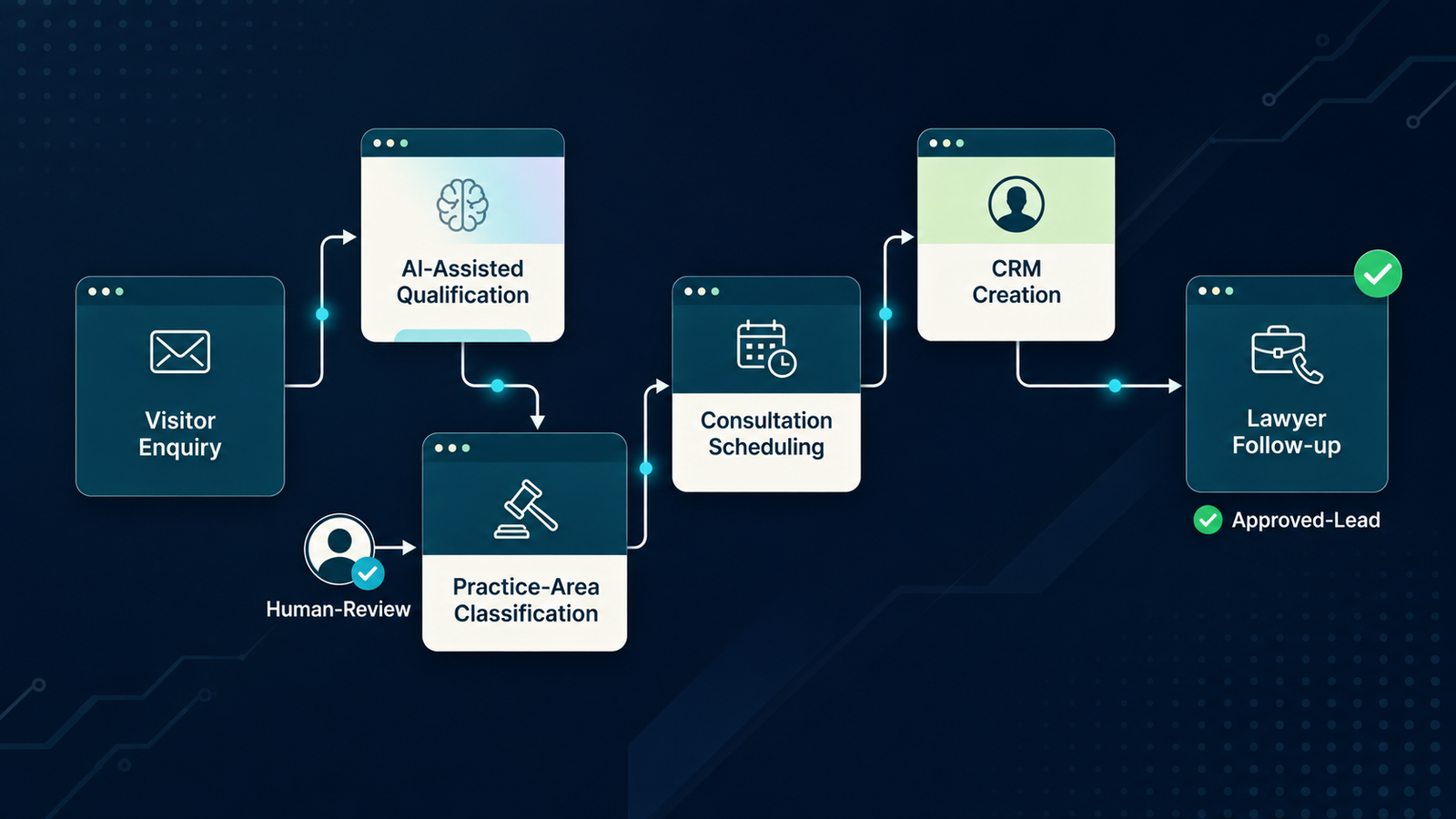
Build the Commercial System Around the Product
Map positioning, demand, enterprise sales, legal engineering, adoption and expansion before adding more disconnected growth activity.
Discuss the Current Growth ArchitectureThe product may be ready before the commercial system is
A legal-tech company may already have a functioning product, initial customers, new funding, a sales team and customer-success resources. Growth can still remain uneven when those functions do not operate around one clear commercial model.
Common symptoms include weak differentiation, many demos but few larger closes, pilots that do not expand, new-market launches without enough local buyer intelligence, feature-led demos that do not translate into legal workflows, and customer-success teams focused on support rather than adoption and expansion.
The problem is often not one missing tactic. It is the absence of a connected growth system.
Legal-Tech Growth System
Positioning → Demand → Enterprise Sales → Legal Engineering → Adoption & Expansion → Revenue Intelligence
Market intelligence, AI and data operate across the system where they support a defined commercial workflow.
Build around the way legal buyers actually buy
Law-Firm Buyers
Potential stakeholders can include partners, practice leaders, innovation, knowledge management, IT, security, procurement, finance and the lawyers who will ultimately use the product.
In-House Legal Buyers
Buying groups may include the General Counsel, legal operations, compliance, IT, security, procurement, finance and business stakeholders.
That means legal-tech growth requires more than demand generation. It requires a commercial architecture that connects positioning, buyer understanding, enterprise sales, legal workflow expertise, implementation and adoption.
The six layers of the Legal-Tech Growth System
1. Positioning
Define the ideal customer profile, buyer, legal workflow, use case, category, market and differentiation.
2. Demand
Create qualified awareness through thought leadership, SEO and AI discovery, outbound, ABM, events, partnerships and product education.
3. Enterprise Sales
Build account selection, stakeholder mapping, discovery, workflow diagnosis, demos, pilots, procurement support and closing processes.
4. Legal Engineering
Translate product capability into legal workflows, practice-specific use cases, demos, proof-of-value and implementation scenarios.
5. Adoption & Expansion
Connect onboarding, training, workflow activation, customer success, internal champions, renewals and account expansion.
6. Revenue Intelligence
Measure pipeline, conversion, sales cycle, activation, adoption, account expansion, channel contribution and regional performance.
Product-market fit is not the same as commercial-system fit
A product can solve a real problem and still struggle commercially. AdvocateRahulDev.com uses commercial-system fit as an analytical concept for the degree to which positioning, demand, sales, implementation, adoption and expansion work coherently around the product.
Strong product, weak pipeline
Investigate positioning, category clarity, market visibility and segmentation.
Many demos, few closes
Investigate discovery, buyer alignment, demo strategy, procurement and proof-of-value.
Successful pilots, weak rollout
Investigate implementation, internal champions, workflow adoption and customer success.
Active customers, limited expansion
Investigate account intelligence, expansion playbooks and use-case development.
Legal engineering can become a commercial advantage
For many legal-AI companies, the gap between product capability and buyer understanding is substantial. Legal engineering connects product → legal workflow → demonstration → implementation → adoption.
The function can include workflow mapping, practice-specific demonstrations, pilot design, use-case libraries, implementation scenarios, customer education and feedback into product. It therefore sits between product, sales and customer success rather than operating as a purely technical discipline.
Enterprise sales should be built around legal decision-making
Legal buyers can be cautious, relationship-driven and sensitive to security, confidentiality, workflow fit and professional risk. The sales process may need to address legal relevance, data handling, integration, implementation, adoption, pricing, procurement and internal sponsorship.
A useful enterprise-sales narrative should answer: Why this problem? Why now? Why this product? Why this workflow? Why should this organization adopt it?
Identify the Growth Bottleneck Before Adding More Activity
More marketing, more salespeople or more software will not necessarily solve the problem if the constraint sits elsewhere in the commercial journey.
Discuss Your GTM and Revenue ArchitectureTurn funding into a commercial execution plan
Fresh capital can create simultaneous pressure to hire, expand sales, invest in product, enter new markets and increase customer success. A disciplined post-funding plan can reduce fragmentation.
Days 1–30
Review ICP, buyer segmentation, positioning, competitive context, target markets and the current growth bottleneck.
Days 31–60
Build or refine sales enablement, workflow demos, legal-engineering assets, account lists, CRM, content and adoption plans.
Days 61–100
Activate outbound, partnerships, customer-adoption programs, regional GTM and commercial reporting.
This 100-Day Post-Funding Growth model is an AdvocateRahulDev.com planning framework, not a guaranteed formula.
Use hiring signals to understand what the business is scaling
Enterprise AEs
Often signal investment in larger accounts, buyer mapping, full-cycle sales and enterprise enablement.
Legal Engineers
Often signal investment in workflow commercialization, tailored demos, pilots, implementation and adoption.
Customer Success
Often signals greater emphasis on onboarding, activation, retention and account expansion.
Regional Leaders
Can signal market-entry priorities, local buyer mapping, partnerships and geographic expansion.
Hiring is not proof that a company needs external consulting, but it is useful evidence of the commercial capability being built.
Expand into new legal markets with a market-specific GTM
A sales model that works in one jurisdiction may not transfer unchanged into another. Markets differ in firm structure, buyer authority, legal-tech maturity, procurement, regulation, language, professional networks and incumbent vendors.
Market-entry work can include country prioritization, legal-market mapping, target-account research, local positioning, localized content, sales messaging, partnerships, events and regional performance measurement.
What legal-tech growth consulting can include
Growth Strategy
ICP, segmentation, market prioritization, competitive positioning and growth architecture.
Go-to-Market
Category positioning, messaging, launch strategy, product marketing and channel design.
Enterprise Sales
Account targeting, discovery, demos, pilots, proposals, RFPs and procurement support.
Legal Engineering
Workflow mapping, legal use cases, product demos, proof-of-concept and implementation design.
Customer Growth
Onboarding, enablement, activation, workflow adoption, expansion and renewals.
RevOps & Expansion
CRM, pipeline, attribution, forecasting, reporting, market selection, buyer research and regional GTM.
When this consulting model is most relevant
The model may be particularly useful when a legal-tech company is recently funded, launching a new AI product, entering enterprise sales, moving beyond founder-led sales, entering a new country, hiring legal engineers, building customer-success infrastructure, developing partnerships, facing long sales cycles, seeing pilots fail to expand or struggling to differentiate in a crowded category.
It is less useful where the core product problem or target market remains unresolved. Consulting cannot substitute for a product that does not solve a sufficiently important customer problem.
The research behind legal-tech commercial growth
Legal-tech growth sits at the intersection of SaaS GTM, enterprise legal sales, legal engineering, implementation, customer success, partnerships, revenue operations and market entry. The research below examines why selling legal technology differs from ordinary SaaS and why adoption and workflow translation increasingly matter to commercial scale.
What is legal-tech growth consulting?
Legal-tech growth consulting helps companies selling legal technology build the commercial system around the product. That system can include positioning, demand generation, enterprise sales, legal engineering, customer adoption, expansion and revenue intelligence.
The need arises because product capability and commercial execution are different problems. A legal-AI company may have strong technology, early customers, investor backing and talented product teams while still struggling to build a repeatable growth system.
Traditional legal-tech consulting often helps a law firm select or implement technology. Legal-tech growth consulting addresses the opposite side of the market: how the company selling the technology grows.
Why legal-tech growth differs from ordinary SaaS growth
Legal technology is sold into organizations with unusually strong requirements around trust, workflow fit, confidentiality, security and professional responsibility. That changes the sales process.
Current company structures illustrate this. Clio's sales organization includes enterprise account executives, strategic account roles, business-development representatives, solutions engineers and Legal Architect roles. Harvey combines enterprise account executives with Legal Engineers across discovery, demos, onboarding and customer growth. These structures support the broader observation that legal-tech commercialization can require commercial selling, legal workflow expertise and post-sale adoption working together.
How to identify the current growth bottleneck
| Commercial symptom | Possible bottleneck |
|---|---|
| Strong product, weak pipeline | Positioning or demand |
| High interest, few qualified opportunities | Segmentation |
| Many demos, few closes | Sales discovery or buyer alignment |
| Good demos, weak pilots | Workflow relevance or proof-of-value |
| Strong pilots, weak rollout | Implementation or adoption |
| Long enterprise sales cycle | Stakeholder, procurement or security complexity |
| Good customers, limited expansion | Customer success or account strategy |
| Strong home market, weak new-market traction | Market-entry strategy |
| Product features are difficult to explain | Legal engineering or product marketing |
The table is a diagnostic starting point rather than a conclusion based on a single metric.
Why the demo itself can become a growth bottleneck
Enterprise legal-tech companies often demonstrate technology rather than demonstrate outcomes. A feature-led demo shows interfaces, model capability and integrations. A workflow-led demo starts with what the legal professional does today, identifies the friction, shows where the product intervenes and makes human review explicit.
Harvey's Legal Engineering model provides a current example of workflow-led commercialization. Its Legal Engineers work with prospective and existing customers to understand legal work, tailor demonstrations, support pilots and help translate product capability into legal use cases.
The commercial question is therefore: Is the demo showing what the product can do, or why a specific legal team should change the way it works?
Enterprise sales to law firms
Law-firm selling requires understanding the firm as a multi-stakeholder organization. A partner may evaluate legal value, security may focus on data handling, finance may evaluate the commercial model, innovation may assess scalability and users may care about whether the product actually improves daily work.
A repeatable enterprise sales architecture should therefore anticipate distinct buyer questions instead of treating “the law firm” as a single buyer.
Enterprise sales to in-house legal teams
Corporate legal departments can have a different buying structure. The General Counsel may focus on legal value, risk and budget; legal operations may focus on workflow and implementation; IT and security may focus on architecture and data; procurement may focus on vendor review and commercial terms.
Legal-tech GTM should therefore distinguish selling to law firms from selling to corporate legal departments rather than assuming identical messaging, demonstrations and buying cycles.
Customer adoption is part of growth
Growth strategy should include what happens after the sale. Enterprise AI products may require onboarding, training, workflow configuration, internal champions, user activation, change management and usage monitoring.
Clio's organization separates Sales and Customer Success while also employing onboarding and activation roles. Harvey's Legal Engineering structure extends from pre-sale work into training, onboarding and post-sale solution development. These patterns support a simple distinction: contracted customer ≠ adopted customer ≠ expanded customer.
Partnerships can extend distribution and credibility
Legal technology can grow through ecosystems as well as direct sales. Potential partnerships include integrations, implementation firms, consultants, law firms, professional associations, research partners and regional channels.
A useful partnership strategy asks what value the partner receives, which buyer the partner reaches, who owns the customer relationship and how activity will be measured. The goal is not accumulating logos. It is building a channel that adds something the direct GTM cannot efficiently create alone.
Market expansion requires more than translating the website
Legal markets differ in firm structure, buyer roles, procurement practices, legal-tech maturity, data expectations, language, events, professional networks and incumbent vendors. Geographic growth therefore requires market-specific positioning and commercial execution.
Clio's continued investment in regional teams and offices illustrates how legal-tech growth can become geographically organized across sales, marketing, product and customer success. The broader lesson is that market entry should connect market research, target accounts, positioning, partnerships, sales and adoption.
Funding can accelerate both opportunity and complexity
New capital can create pressure to increase hiring, sales, marketing, product investment and geographic expansion at the same time. The risk is that activity grows faster than strategic coherence.
The ARD 100-Day Post-Funding Growth framework separates a strategic reset, commercial infrastructure build and focused execution. It should be treated as a planning framework, not as a guaranteed growth formula.
Hiring can reveal the capability being scaled
Current hiring at major legal-tech companies makes the commercial architecture visible. Harvey hires Enterprise Account Executives and Legal Engineers across major markets, while Clio lists enterprise AEs, Legal Architects, business-development roles, solutions engineering, customer success and renewals functions.
Hiring does not prove that a particular company requires consulting. It does reveal which capabilities legal-tech businesses are investing in as they move through enterprise selling, implementation, adoption and expansion.
What should legal-tech revenue operations measure?
Useful measures can include qualified accounts, source contribution, opportunity creation, stage conversion, demo-to-pilot progression, pilot-to-contract progression, sales-cycle length, onboarding completion, activated workflows, usage, expansion and renewals.
The purpose is not to maximize dashboard volume. It is to understand the relationship between stages. High pipeline with poor conversion may indicate qualification problems. Strong sales with weak adoption may indicate implementation issues. Strong adoption with weak expansion may indicate account-development gaps.
Limitations
Legal-tech growth consulting cannot manufacture product-market fit. Funding does not guarantee growth. A growing market does not guarantee that an individual vendor will succeed. Hiring more salespeople into an unclear GTM model can increase cost without improving conversion. Some adoption problems originate in product design, performance or workflow fit rather than customer-success execution.
Geographic expansion also carries local constraints around regulation, data handling, professional practice, procurement and buyer behavior. The commercial architecture should therefore begin with diagnosis rather than assume every company needs the same intervention.
Frequently Asked Questions
What is legal-tech growth consulting?
It is commercial consulting for companies that sell legal technology, covering positioning, GTM, enterprise sales, legal engineering, customer adoption, partnerships, revenue operations and market expansion.
How is this different from traditional legal-tech consulting?
Traditional legal-tech consulting commonly helps law firms select or implement technology. Legal-tech growth consulting helps technology vendors build the commercial systems around their products.
What is legal engineering?
In a commercial context, legal engineering connects legal workflow expertise with product capability, demonstrations, pilots, implementation and adoption.
Why do legal-tech pilots sometimes fail to expand?
Possible causes include weak internal sponsorship, limited workflow fit, inadequate training, poor implementation, unclear success measures or insufficient customer-success support.
Does every legal-tech company need enterprise sales?
No. The appropriate sales model depends on product price, customer size, complexity and buying process. Enterprise sales is most relevant where multiple stakeholders, procurement or implementation are involved.
When should a legal-tech company expand internationally?
Market entry should follow evidence that the target market has suitable buyer demand, product fit, competitive opportunity and an executable route to sales and adoption.
Sources and Further Reading
- Clio Sales Careers — current enterprise sales, Legal Architect and business-development roles.
- Clio New York Careers — enterprise, onboarding and activation roles in a major legal market.
- Clio Careers — current sales, customer success, marketing, product and operations structure.
- Clio U.S. Headquarters Expansion — regional growth and enterprise-market context.
- Harvey Careers — current commercial, legal-engineering and market-expansion hiring.
- Harvey Legal Engineer — current Legal Engineering responsibilities across discovery, demos, onboarding and customer work.
- Harvey Enterprise Account Executive — enterprise account ownership and full-cycle commercial responsibilities.
- Legora Careers — current legal-AI organizational and Legal Engineer context.
Research note: Company roles and examples illustrate current market structures and do not imply endorsement of AdvocateRahulDev.com or this consulting framework.
Build the Commercial System Around the Product
Identify whether the next constraint sits in positioning, demand, enterprise sales, legal engineering, adoption, partnerships, revenue operations or market expansion.
Discuss Legal-Tech Growth Consulting with Dr. Rahul Dev